Project Hail Mary, a new film based on the best-selling novel by Andy Weir, premiered this weekend to an amaze reception (as one of the film’s stars, Rocky, would say). But what inspired the scientific concepts behind the story?
The Science Behind the Story
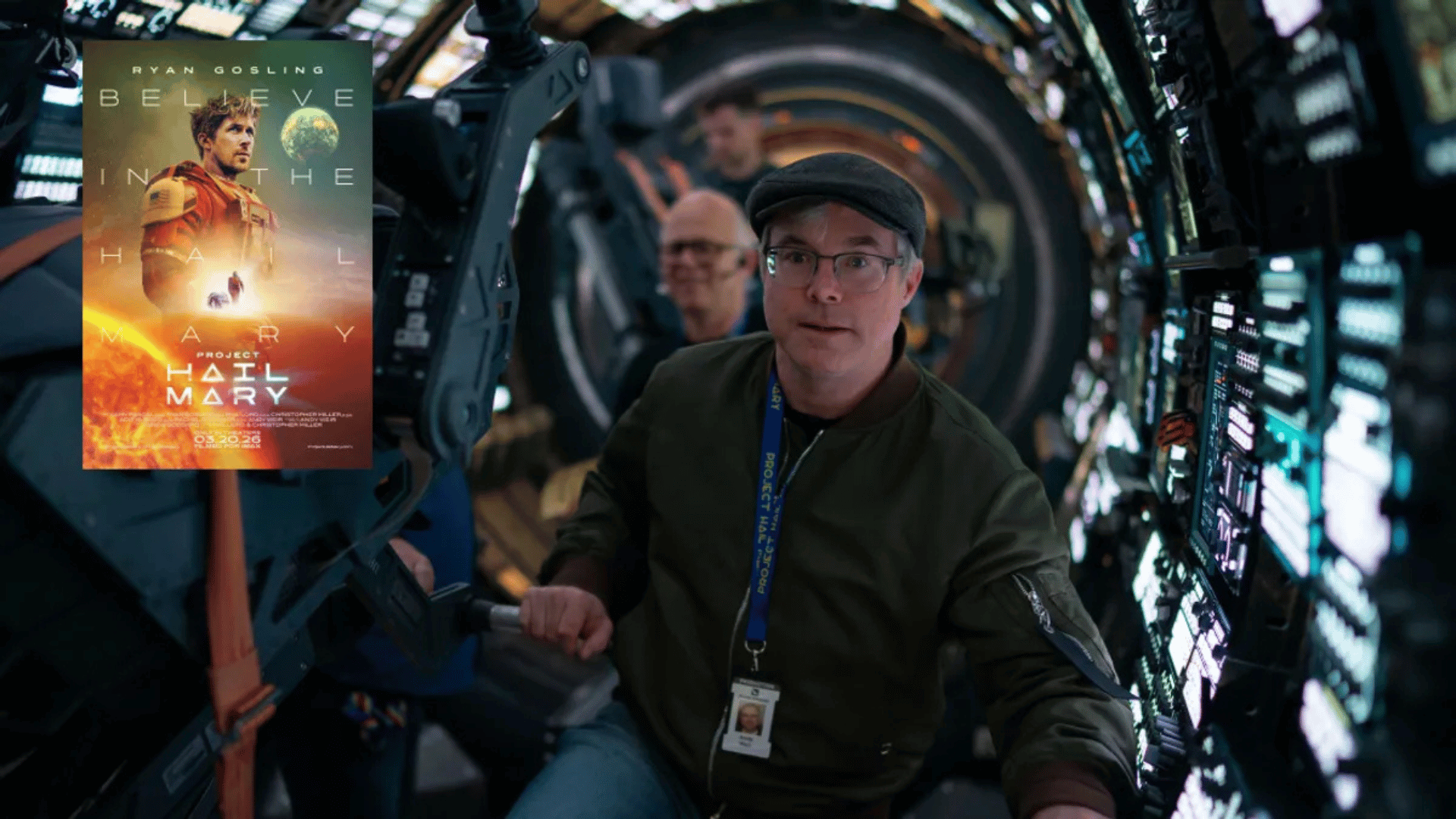
The opening of the intergalactic epic sees the film’s main character, Ryland Grace (played by Ryan Gosling), trapped on a spaceship with no idea who he is or how he came to be there. As the film progresses, Grace realizes that the fate of the Earth lies in his hands.
Grace is eventually joined by an alien named Rocky, from a planet called Erid, and the two work together to attempt to save their respective species from a deadly enemy: astrophage. The book and film cover real scientific concepts like solar dimming, the complexities of long-distance space travel, alien anatomy, planetary atmospheres, and more.
Advertisement
To create the world of the novel, Weir needed to invent an entirely new habitable planet and an apex predator to pair with it. Enter Rocky: an intelligent, strong, rock-like being from a planet located in the 40 Eridani star system, which is approximately 16.3 light-years from Earth.
“I started off with a real exoplanet that I chose, which has since been proven to not exist, but let’s get past that,” Weir told IFLScience. “At the time I wrote it, it was believed that it existed and it was a planet very close to the star 40 Eridani – so close that it orbits once every 46 days. So, it’s considerably closer to its star than Mercury is to ours.”
“So, I was like, well, that’s where I want a whole active biosphere to exist. It needs liquid water, but how can something be that close to a star and have liquid water? My answer was: it’ll be really hot, but it’ll also have a tremendous air pressure because if you increase the air pressure, you increase the boiling point of water.”
“That’s why when you get all the way down to the surface, you’ve got the Erdians, which is like the apex predator of their planet, just like we’re the apex predators of our planet, so I had to design their morphology and biology around those constraints.”
 Read Exclusive Stories
 Bookmark & Save Articles For Later