The human small intestine is a tough organ for doctors to reach. It measures over 20 feet long, sits deep inside the body, and is only an inch wide. It’s not easy for doctors to check for bleeding, lesions, or blockages.
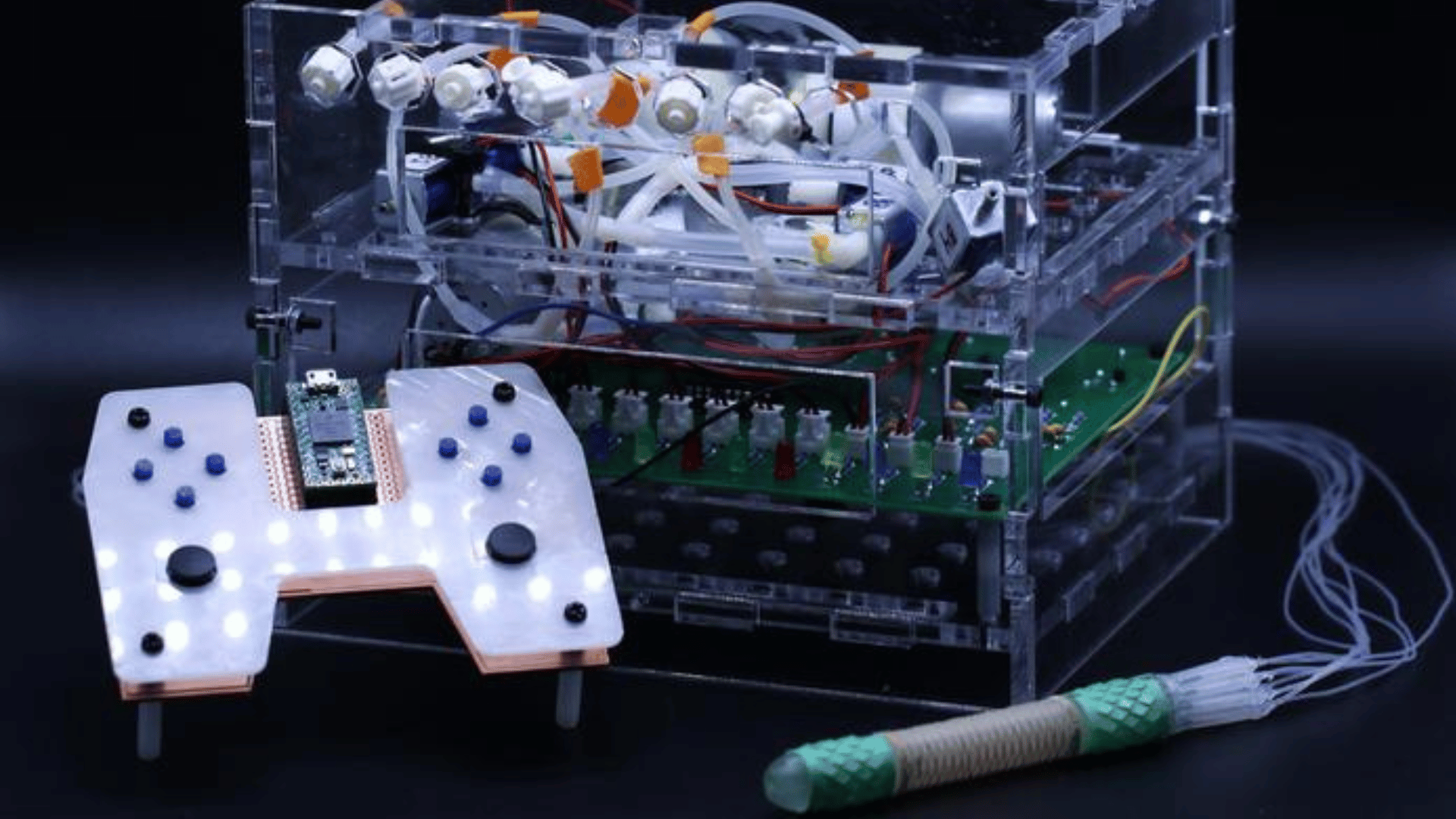
To address these issues, engineers at MIT made a soft, tube-like robot that crawls through the small intestine. It can snap images, spray drugs, and grab small tissue samples.
Right now, doctors rely on a procedure called double balloon enteroscopy. A health care worker manually inflates and deflates two balloons to push a scope through the gut. While a practical method, it is slow, tough work.
“The fundamental challenge that we’re trying to overcome is how to evaluate that 20-to-25-foot segment of the small intestine in a way that can be more automated,” said Giovanni Traverso, professor of mechanical engineering at MIT, a gastroenterologist at Brigham and Women’s Hospital, and senior author of the study.
Soft Robot Slithers Through the Small Intestine
Advertisement
To make a faster device, researchers studied how snakes slither and then translated that into a soft robot. The robotic device uses air chambers that inflate, bending and turning the tube in any direction.
“By tuning the amount of air that goes into these chambers, you can tune the direction that the robot is moving in,” Traverso explained.
To keep from slipping, the team turned to kirigami, an art form in the origami family that involves cutting and folding paper. Sleeves on the robot lie flat until tiny balloons expand inside them, causing small 3D needles to pop out like snake scales, gripping the wet lining without harming delicate tissue.
“By using kirigami sleeves to enhance surface friction, the robot can generate localized tissue engagement traction for locomotion without relying on excessive stretching of the delicate small intestinal tissue,” lead co-author Ahmad Mujtaba Jebran added.
In animal tests, the tethered robot traveled about six and a half feet through the organ while filming, spraying medicine, and removing small polyps.
“When we evaluate the small intestine, we do it for either diagnosis or treatment. If we find a little polyp that needs to be removed, this robot allows us to take a biopsy or remove it,” Traverso said. “We hope we can continue to move it forward to eventually develop systems that can help achieve more automated evaluation of the small intestine.”
 Read Exclusive Stories
 Bookmark & Save Articles For Later