Solar power has the inherent problem that the materials that are very good at absorbing sunlight are generally very poor at converting that light into electricity.
When sunlight hits a solar cell, it knocks electrons free, leaving holes behind. To generate electricity, you have to collect those charges before they all just crash into each other and annihilate. The problem with most materials is that they absorb light so strongly that the charges disappear very quickly.
Researchers at Oxford and Wuhan University think they’ve discovered a novel way to overcome this trade-off using a semiconductor known as bismuth sulfide.
Breaking the Solar Power Rules
In a paper in Nature, the researchers examined how bismuth sulfide responds to light. It has a very particular internal energy structure. It absorbs light via a strong primary pathway, with a second, weaker pathway right underneath that.
This second route is essentially a holding tank. The charges go in and stay there much longer rather than disappearing immediately. At room temperature, this yields a 75% reduction in charge loss compared with standard materials with the same light absorption.
Advertisement
“One of the longstanding challenges in developing efficient solar-energy materials is that the properties which make a semiconductor very good at absorbing sunlight also tend to make the resulting electrical charges disappear quickly,” said corresponding author Professor Laura Herz, from the Department of Physics at the University of Oxford. “Our work shows that this trade-off is not inevitable. By uncovering how an unusual electronic structure can combine strong light absorption with much slower recombination, we have identified a new principle for designing semiconductors that could help us harvest solar energy more efficiently.”
Creating Promising Technology
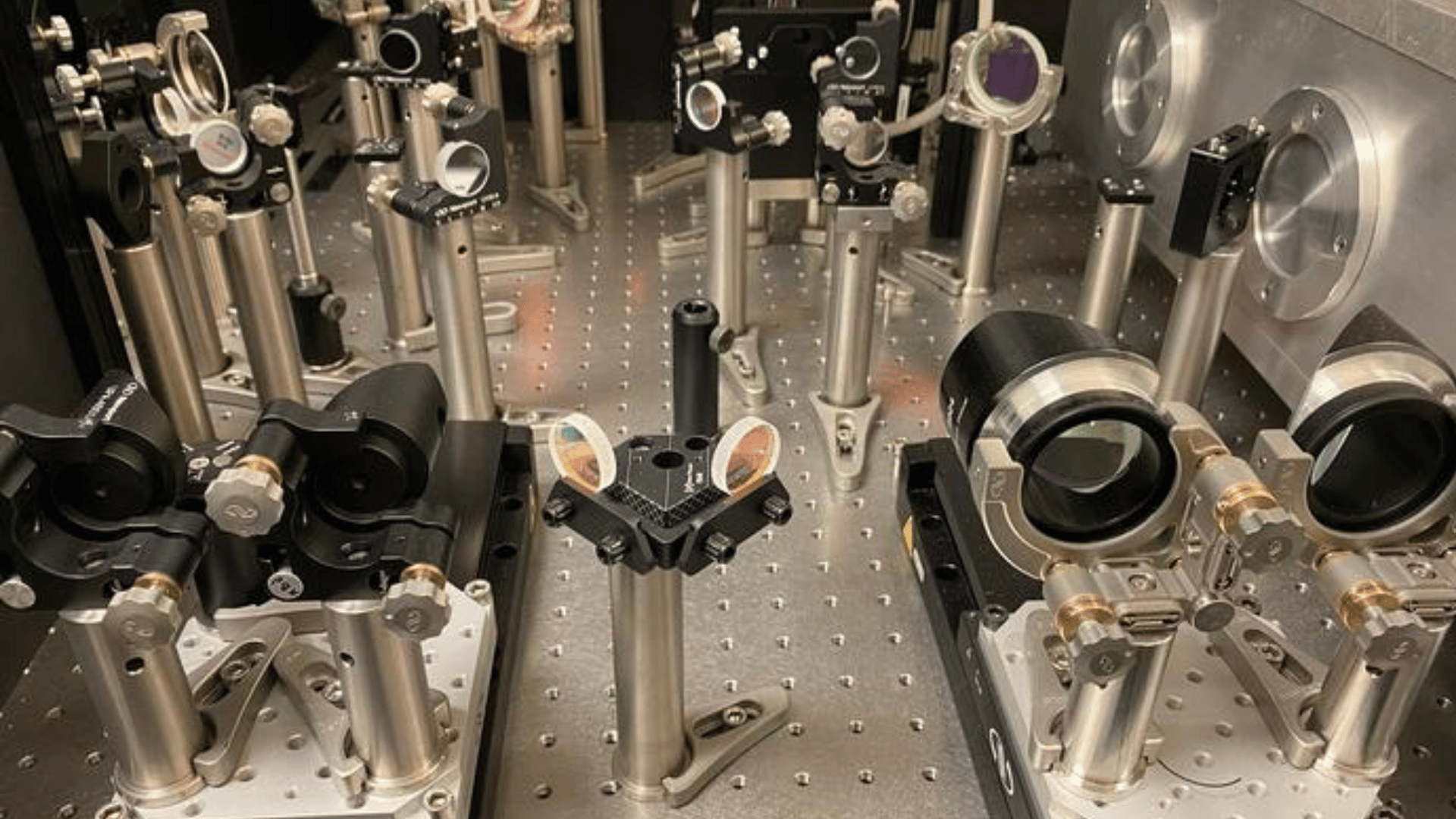
Giving the charges extra time to adjust makes them far easier to harvest, which could, in turn, lead to solar cells that extract more power from the same amount of sunlight. It could also give the complex chemical reactions (e.g., using solar power to make clean fuels) more time to proceed.
It’s a proof of concept at this stage, not a market-ready panel by any means. The point is that scientists can now search the database records to find, or indeed design, other materials that will behave in the same way.
“What makes this discovery particularly exciting is that we are not simply improving an existing semiconductor property but identifying a different way in which semiconductors can behave,” said Professor Herz. “Understanding this mechanism gives us a roadmap for discovering and potentially engineering other materials with similarly advantageous properties.”
 Read Exclusive Stories
 Bookmark & Save Articles For Later