Walk or drive through almost any city, and you’ll spot public art woven into the urban landscape. While a quick glance might catch a bright burst of color on a brick wall or a bridge pillar, stepping closer often reveals an intricate story—especially when it comes to mosaics.
Unlike traditional painted murals, mosaics are built piece by painstaking piece using colored glass, stone, ceramic tile, and recycled materials. Up close, all you see are individual shards set into mortar; step back, and a complete image comes into view. Across Pittsburgh, local artists and communities have turned blank walls, riverfronts, and public parks into permanent open-air galleries. Explore three remarkable mosaic installations throughout Pittsburgh’s neighborhoods.
1. Celebrating Cultural Heritage: The Tamburitzans Mosaic (Uptown)
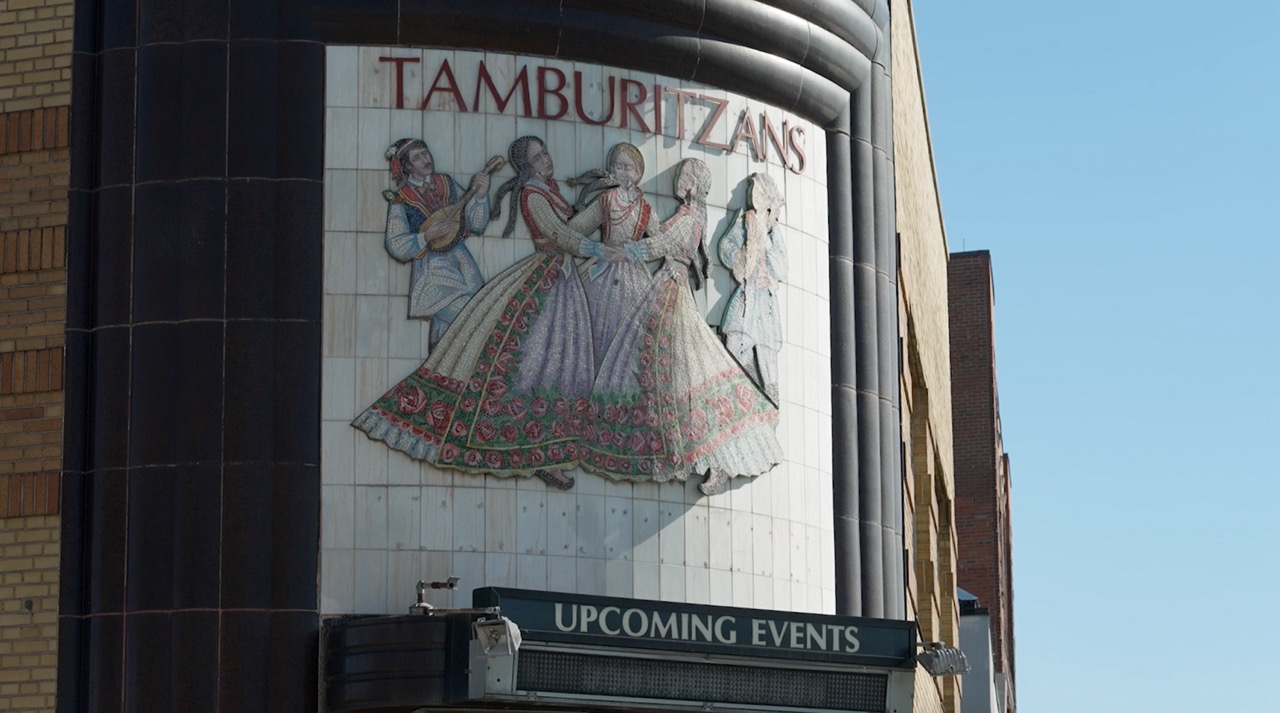
On the corner of Miltenberger Street and Boulevard of the Allies in Pittsburgh’s Uptown neighborhood stands a building rich with history. It was formerly home to the Tamburitzans, a folk performance ensemble dedicated to preserving international culture through music and dance. The structure features a stunning mosaic sweeping across its curved facade.
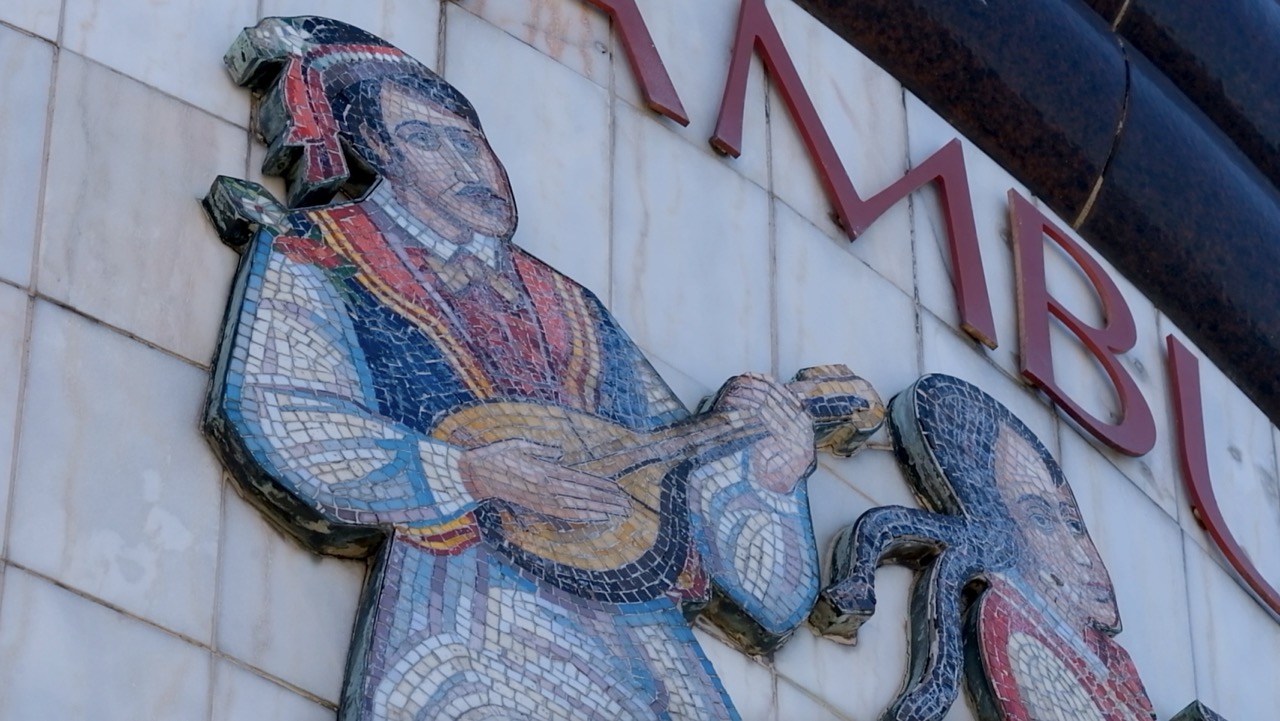
Commissioned in the late 1960s and crafted by a local architectural firm, the design was directly inspired by a 1950s photograph of folk performers. Composed of thousands of hand-painted, glazed ceramic tiles, the mosaic depicts five dancers in traditional folk attire playing instruments and moving in unison. It stands as a lasting monument to the community’s heritage and the vibrant energy of live performance.
2. Nature Meets Industry: “Mythic Source” at Allegheny Landing (North Side)
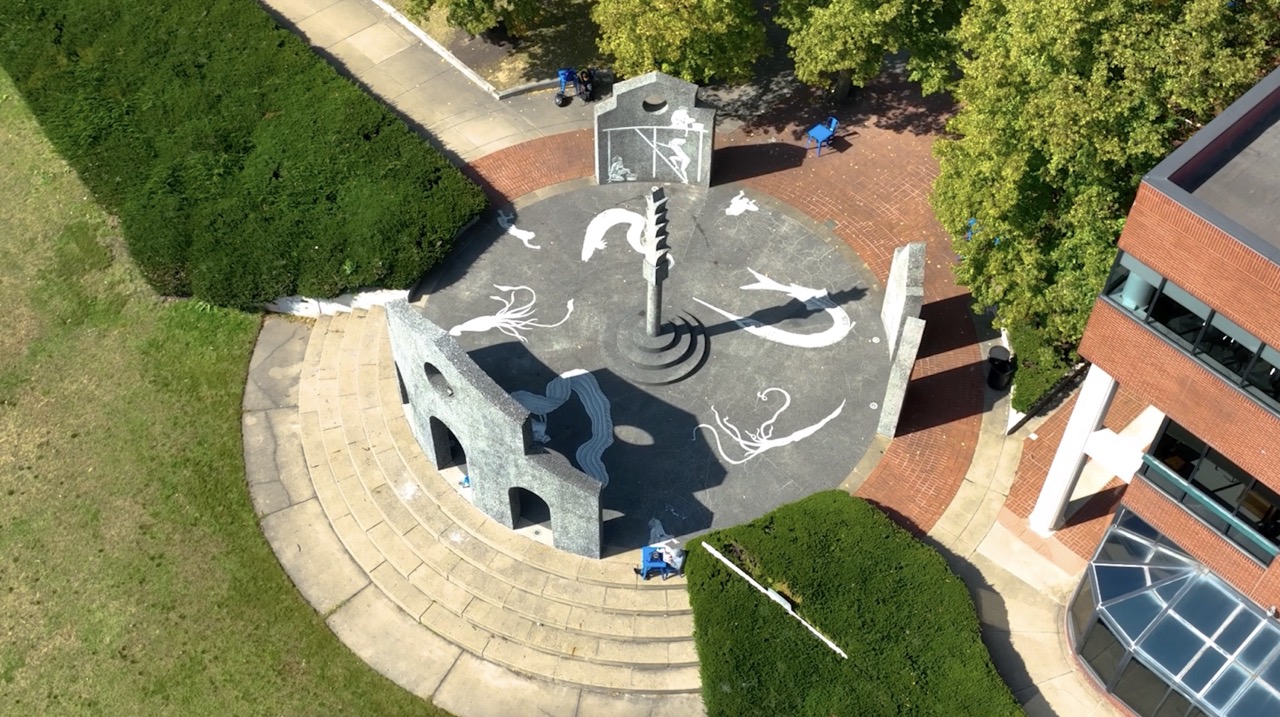
Nestled along the North Side riverwalk between the Andy Warhol and Roberto Clemente bridges lies Allegheny Landing, a park filled with public sculptures. Among these works sits “Mythic Source,” an expansive installation created in 1984 by New York artist Ned Smith and commissioned by the H.J. Heinz Company.
Built using aggregate and marble, the installation explores the connection between environmental origins and human development across two levels:
Advertisement
- The Lower Level (Mythic Source): Etched along the ground, mosaic marine life—including detailed squids and eels—symbolizes life’s aquatic beginnings and the primordial force of water.
- The Upper Level (Piazza Lavoro): Translating to “Work Square,” this section features soaring stone arches adorned with palm fronds and human figures at work, depicting civilizational progress.
Together, the installation serves as a reminder of the delicate balance between nature and human labor in shaping city history.
3. A Neighborhood Effort: “Animal Adventure” (Highland Park)
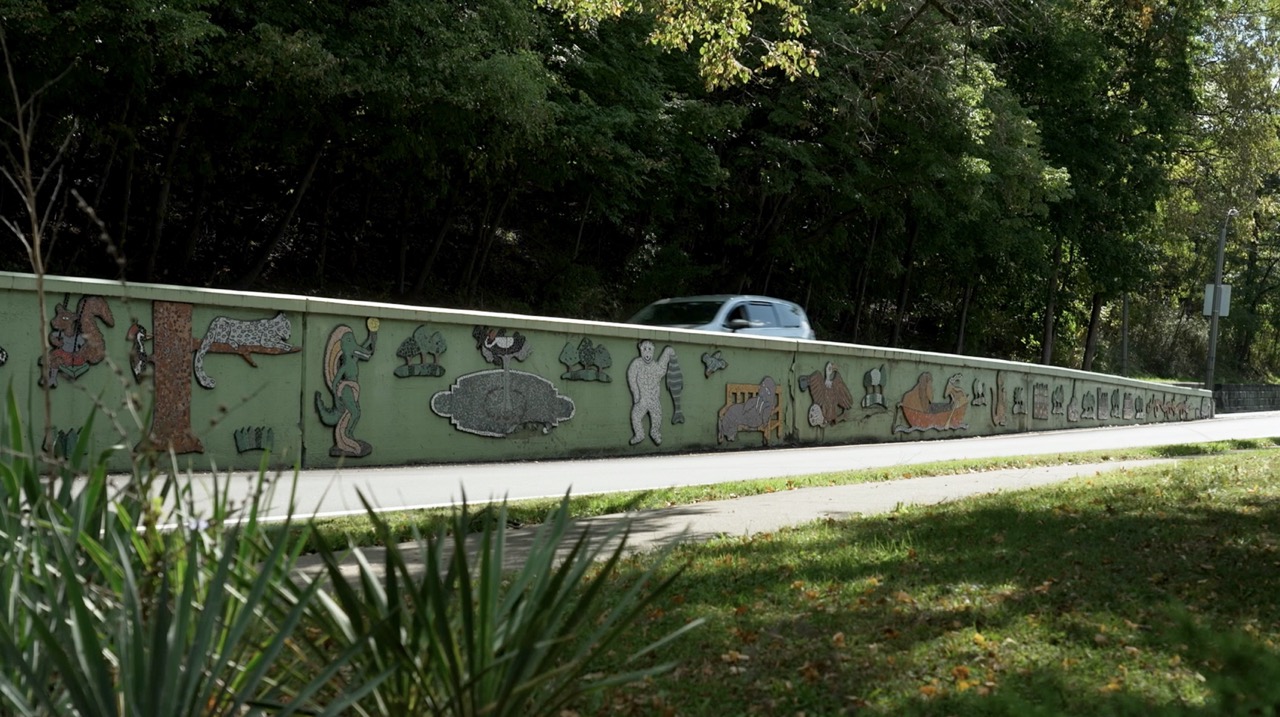
Outside the Pittsburgh Zoo in Highland Park, a long green retaining wall features playful imagery along the roadside. Local Pittsburgh artists Laura Jean McLaughlin and Bob Ziller created this mosaic, “Animal Adventure,” in 2007.
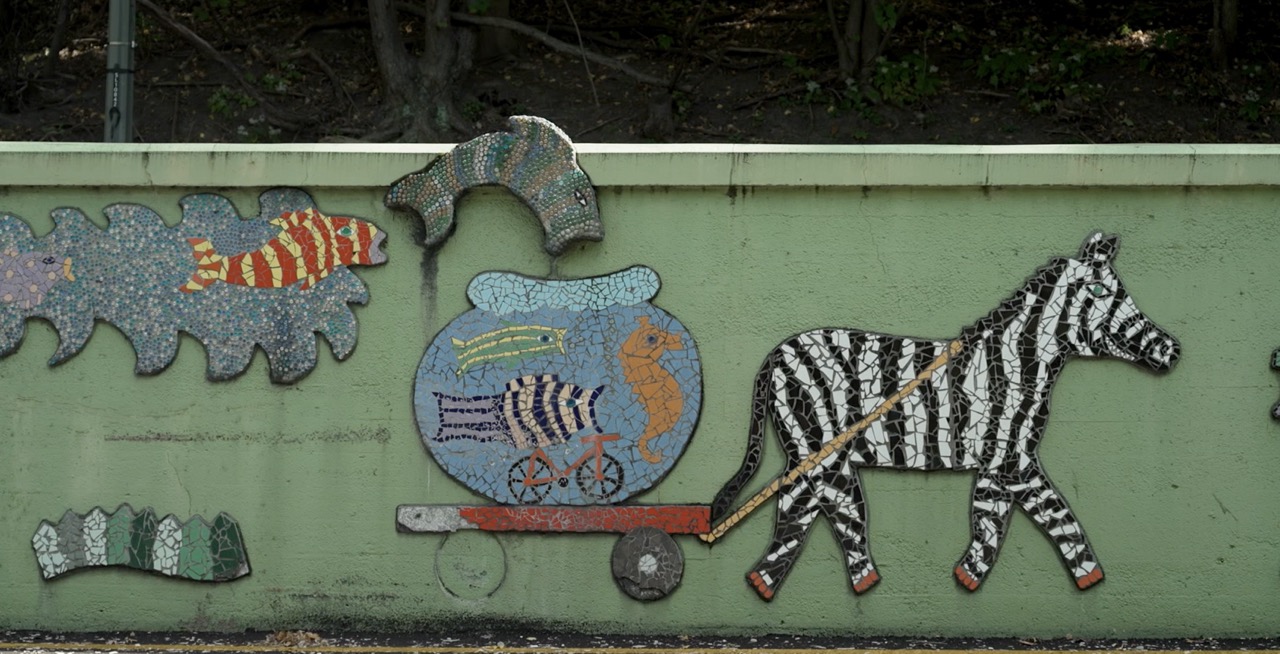
Photo by: Sofia Caloiero
McLaughlin and Ziller invited more than 1,000 community members, including children, to assemble the mural’s ceramic tiles. The whimsical scene features a walrus on a park bench, a bicycling fish, and familiar Pittsburgh landmarks. It stands as a testament to what happens when art becomes a shared community experience.
Public Art in Plain Sight
In conclusion, interesting art is around every corner, whether hidden in plain view or built into a neighborhood staircase. Ultimately, public mosaics offer a reminder to slow down, look closely, and appreciate the craftsmanship built into our everyday surroundings.
 Read Exclusive Stories
 Bookmark & Save Articles For Later