While this year has been an anomaly, the U.S. typically experiences about 14 named storms in an average Atlantic hurricane season, which spans from June 1 to November 30. According to the National Oceanic and Atmospheric Administration (NOAA), only three of those become major hurricanes.
While this is good news for coastal cities, it makes predicting future storm damage difficult. Meteorologists don’t have enough historical data to know exactly what will happen next.
So, Rice University researchers Avantika Gori and Guha Balakrishnan are turning to NASA’s artificial intelligence weather model. Using the Prithvi-WxC, the researchers built thousands of fake storms.
“AI gives us an opportunity to explore thousands of realistic storms that history alone cannot provide,” said Gori, an assistant professor of civil and environmental engineering and the project’s principal investigator. “Our goal is to turn those simulations into practical information that helps researchers and insurers better understand hurricane risk and how it may change.”
Creating 10,000 Synthetic Storms
Advertisement
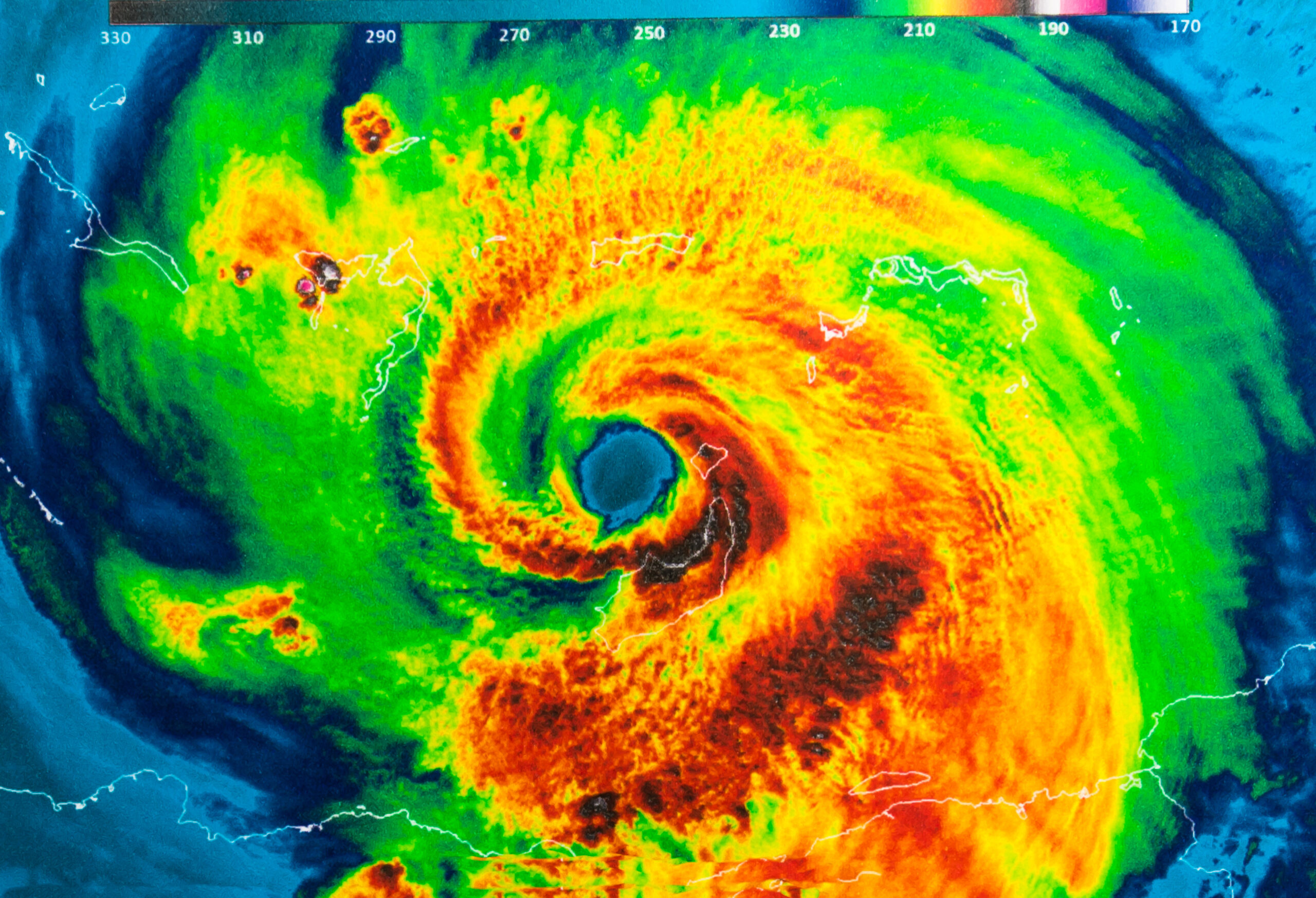
Traditionally, researchers used simple statistics to predict storms. As technology advances, though, AI models can now simulate storms quickly and factor in how they respond to their environment. The team wants to create an open-source tool that uses NASA’s model and a dataset of about 10,000 synthetic cyclones.
They will track these computer-generated storms from start to finish. Then, they will use physics models to estimate wind and rainfall details, right down to the spiral rainbands. Additionally, the tool will enable researchers to test how storms behave under different climate scenarios.
“Computer vision techniques can identify and learn complex patterns in data, and this project gives us an opportunity to combine those methods with our physical understanding of hurricanes,” said Balakrishnan, assistant professor of electrical and computer engineering and the project’s co-investigator. “Bringing those approaches together can help us build models that are useful while remaining grounded in how storms behave.”
 Read Exclusive Stories
 Bookmark & Save Articles For Later