Electric buses are no longer a futuristic concept. In a 2024 study, researchers concluded that approximately 1.2 million electric buses operate worldwide. Charging e-buses remains a complex challenge for engineers. Standard charging stations include huge depots and expensive batteries. Wireless charging does exist, but there’s still a substantial physical gap between the bottom of the bus and a charging pad. As a result, it wastes power.
An ETH Zurich spinoff called Winduction has a new solution that powers the batteries with the wheels.
Powering the Battery with the Wheels
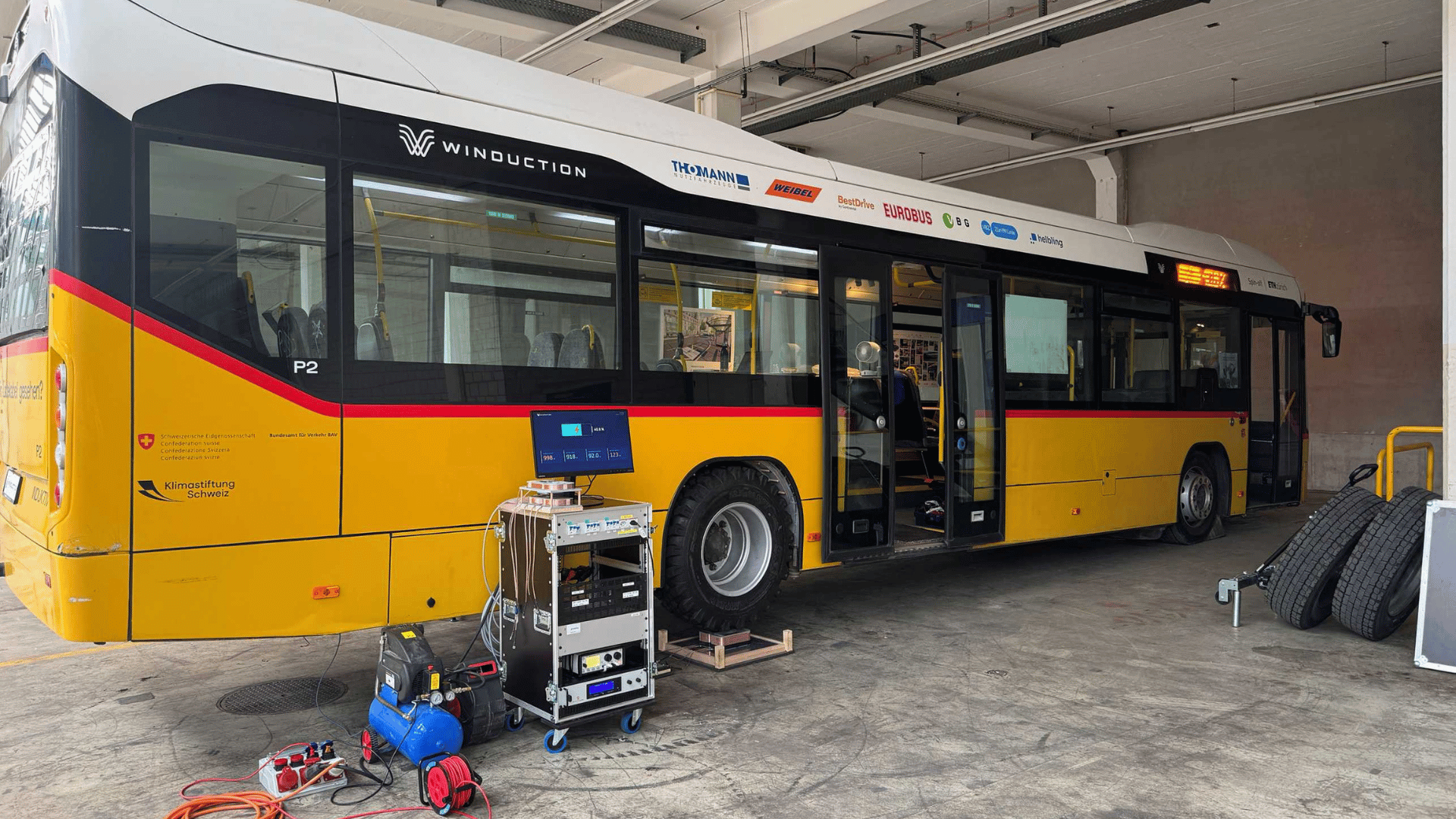
Instead of aiming for the undercarriage, the team puts induction coils inside a specially designed bus tire. A ground plate set into the road surface connects to the power grid, sending energy directly to the tire coils and the battery.
“In any vehicle, the only thing that’s always in contact with the ground is the wheels,” said Sylvain Fricker, who leads technology at the company.
By putting coils inside the tire, power transmission efficiency stays above 90 percent.
Advertisement
“We minimize the large transmission distance between the road and undercarriage by placing coils inside the wheel,” Fricker explained. “As our technology is also effective during short charging stops, the buses can make do with smaller batteries, making them significantly cheaper to buy and operate.”
Standard tires contain steel belts that heat up near magnetic fields, so the team had to create a steel-free tire with manufacturing partners. “For our system to function, we work with partners to develop a completely new steel-free tire,” said CEO Laurin Schwitter.
Cheaper Routes
Smaller batteries mean lighter, cheaper buses that hold more passengers. Recharging during quick stops throughout the day leverages cheap daytime solar energy and prevents power spikes from overnight charging. Along the line between Zurich Airport and Oerlikon, charging plates would be needed at only 2 of 24 stops.
“Our calculations show substantial savings compared with depot charging. How large they are depends on the route. A feasibility study with transport operators is currently quantifying this,” Schwitter said.
The team is building a test facility in Winterthur, aiming for a pilot launch at Zurich Airport in 2028.
 Read Exclusive Stories
 Bookmark & Save Articles For Later