NASA is moving forward with a new lunar mission, and it is relying on a recycling strategy to get there faster. The space agency announced plans to build the Polar Rover for Observation, Mapping, and In-Situ Exploration, or PROMISE. Set for a late 2028 launch, this six-wheeled robot will explore the Moon’s South Pole for 18 months.
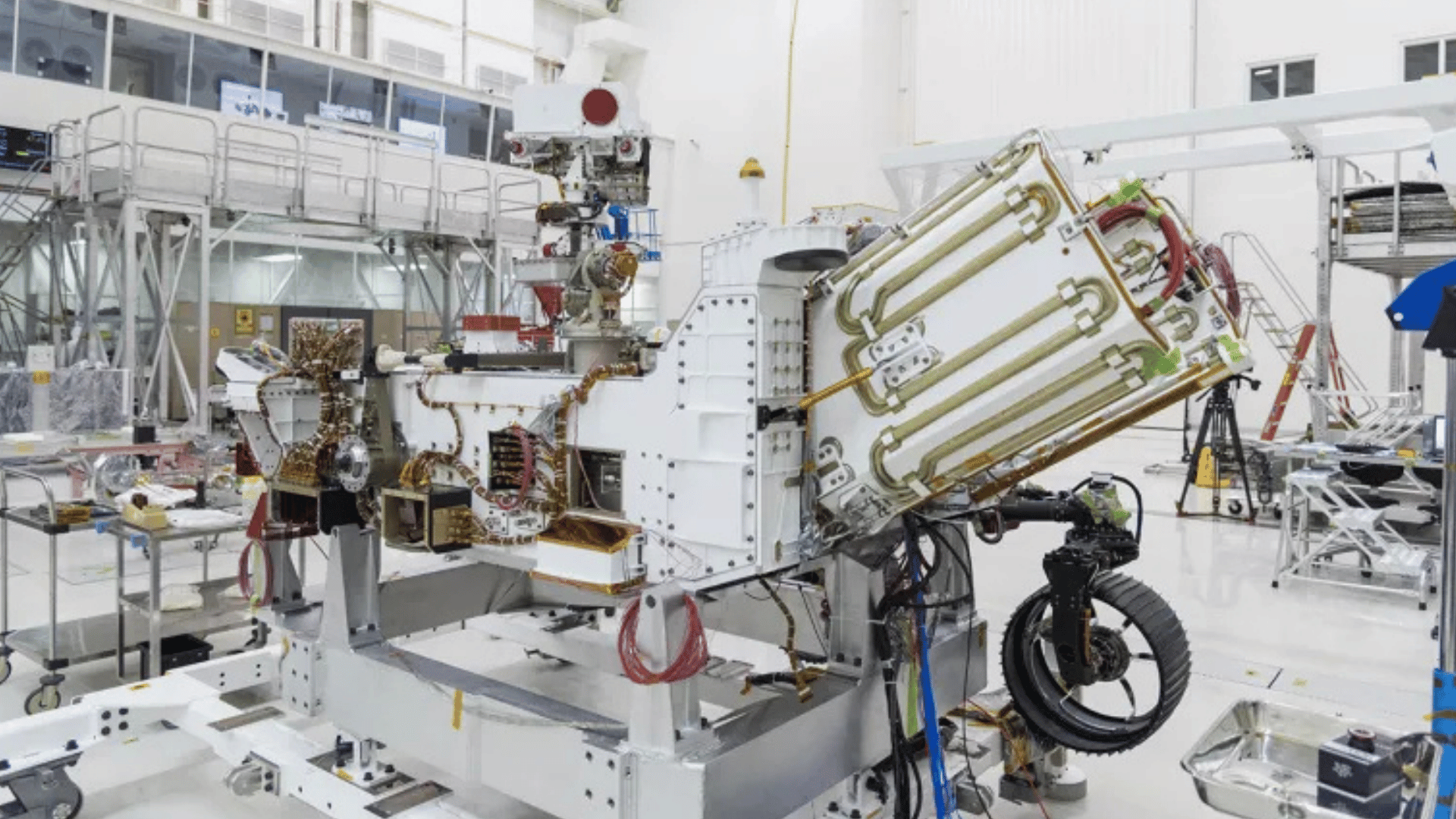
To keep costs down and speed up production, engineers at NASA’s Jet Propulsion Laboratory (JPL) in Southern California are building PROMISE using spare flight parts and engineering test models left over from the Curiosity and Perseverance Mars rovers.
They are even converting a duplicate test version of Curiosity into the new lunar rover’s main body, electronics, and mobility system. NASA examined the hardware and confirmed it can handle the harsh lunar environment, drawing on over three decades of Mars rover experience to make it work.
Nuclear Power in the Dark
The Moon’s South Pole has permanently shadowed regions that never see sunlight, alongside long lunar nights where solar panels cannot do the job. To survive the dark and extreme cold, PROMISE will use a spare nuclear generator to explore deep craters thought to hold water ice, or frozen water mixed into lunar soil, which is essential if humans want to stay on the Moon long-term.
Advertisement
To get to the surface, NASA awarded Blue Origin a $94 million base contract, with a performance-based option worth another $140 million. Blue Origin will use its Mark 1 lander to drop off the rover as part of the Moon Base’s first phase. This builds on a May 2026 task order for Blue Origin to deliver two lunar terrain vehicles.
Digging for Evidence
Once it rolls off the lander, PROMISE will map the terrain, explore future landing sites, and study local resources. Its toolkit includes:
-
A drill to pull up lunar dust from about 3 feet (1 meter) underground to check for water ice.
-
Spectrometers to analyze the chemical makeup of the surface.
-
Temperature and radiation sensors, plus visible-light cameras.
The rover will also test new tech, including a radiation-tolerant computing system called High Performance Spaceflight Computing and advanced autonomy software. By tracking how the rover’s wheels interact with the dust alongside its science data, NASA will get a look at places where no human or robot has gone before.
 Read Exclusive Stories
 Bookmark & Save Articles For Later