If you look closely at a Damascus steel blade, you will see flowing, wavy patterns resembling swirling water or wood grain. People have admired these distinct lines for centuries, but those patterns are neither drawn nor painted. They emerge naturally during a unique creation process.
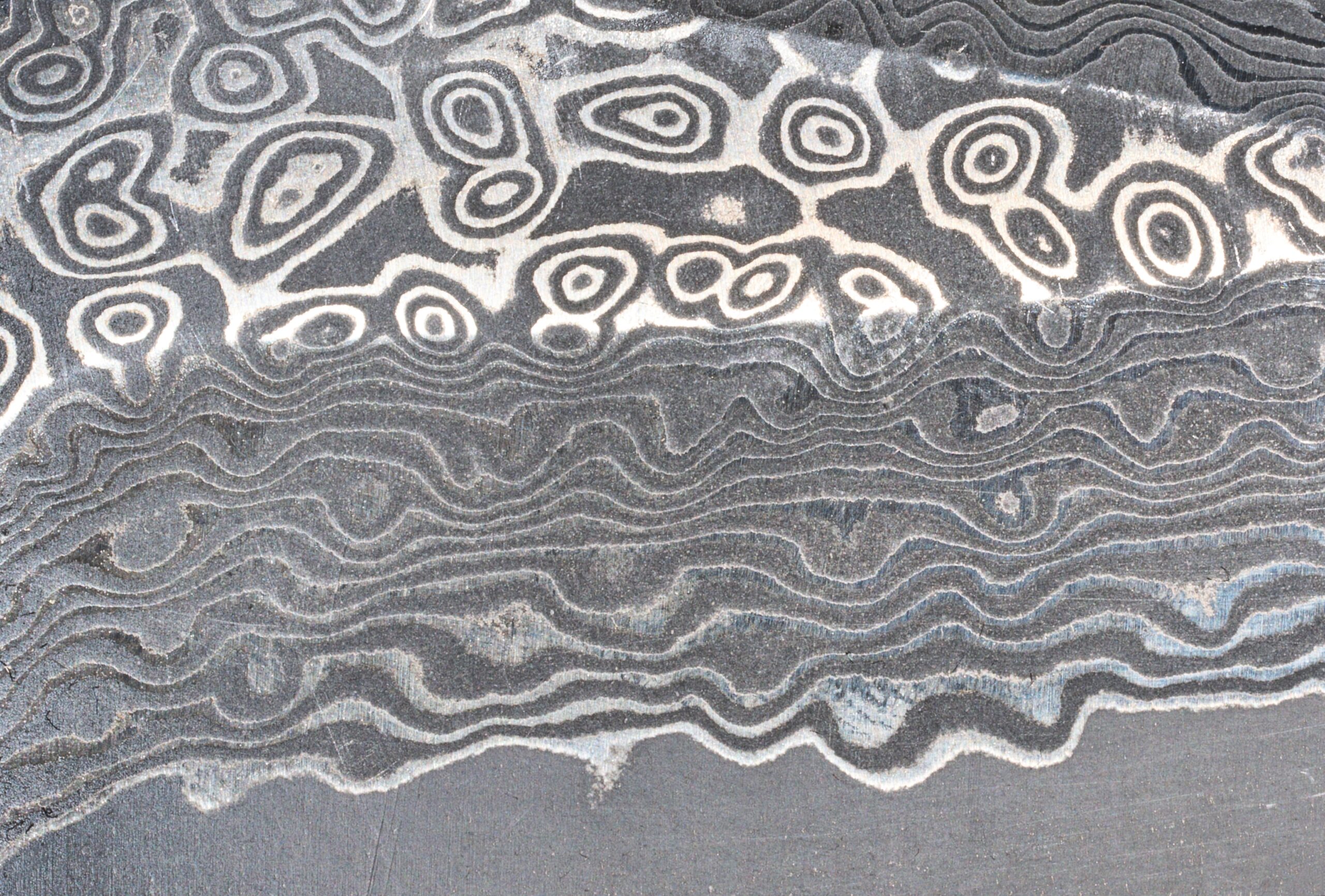
Crusaders first encountered these remarkable weapons in the Middle East around the 11th century. The blades were lighter and sharper than European swords, and they stayed sharp during battle.
Ancient Wootz vs. Modern Pattern-Welding
Ancient artisans made Damascus steel from a high-carbon Indian metal called wootz. Blacksmiths melted iron, plant matter, and charcoal together in sealed clay crucibles. As the metal cooled slowly, carbon formed tiny microscopic bands of hard carbide crystals. When forged into blades, these internal structures created natural wavy patterns.
Sadly, metalworkers lost the original wootz recipe around the 1700s.
Modern blacksmiths reproduce that famous swirling look using a technique called pattern-welding. Instead of using a single block of steel, they combine two distinct types of metal. Blacksmiths usually stack high-carbon steel with a nickel-rich alloy. High carbon gives the blade a razor-sharp edge, while nickel makes the metal tough and flexible.
Advertisement
Fusing, Folding, and Acid Chemistry
To bond the metals together, the smith heats the stack in a roaring forge until it glows white-hot. Pounding the block with a heavy hammer fuses the separate metal layers into a single solid bar. The smith cuts the hot block, folds it over, and hammers it flat again. Repeating this folding process creates dozens or even hundreds of ultra-thin, alternating layers. Smiths can also twist or gouge the hot bar to alter the natural grain direction.
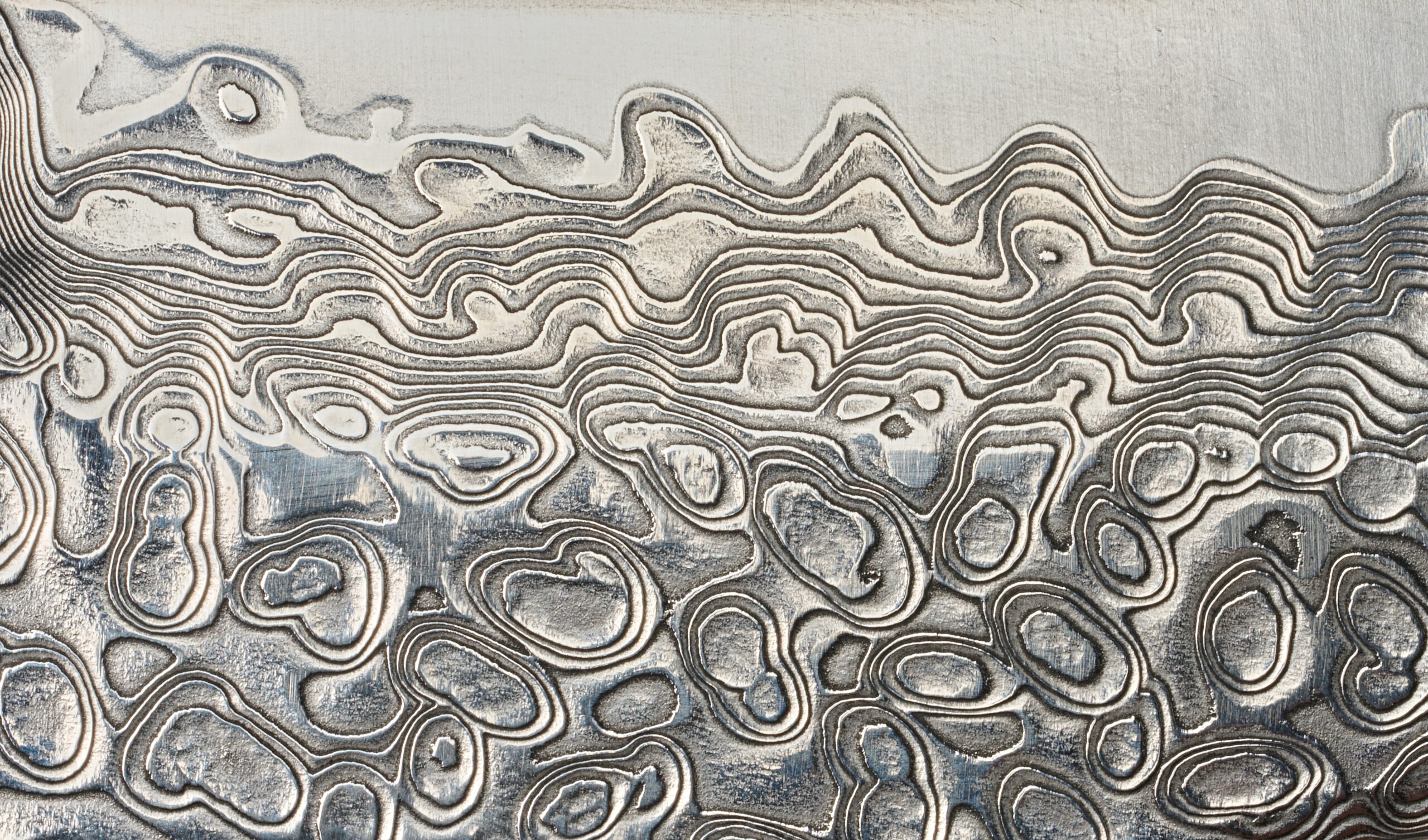
Even after grinding and polishing the blade smooth, the steel still looks plain and silver. You cannot see the hidden wave patterns until the final stage: an acid bath.
The maker dips the polished blade into ferric chloride acid. The acid darkens the high-carbon steel to a deep gray, but the nickel-rich steel resists the reaction and stays silver. This sharp contrast brings out the detailed, flowing lines hidden inside.
Where Science Meets Art
Damascus steel shows what happens when ancient traditions combine with practical chemistry. Today’s knife makers use these folding techniques to turn raw industrial metals into durable, beautiful tools. It is a perfect example of how human hands can reshape simple elements into lasting works of art.
 Read Exclusive Stories
 Bookmark & Save Articles For Later