Every time a heavy freight train rolls down the tracks, it generates substantial mechanical forces and vibrations due to its weight and momentum. Usually, all of that energy gets lost into the ground.
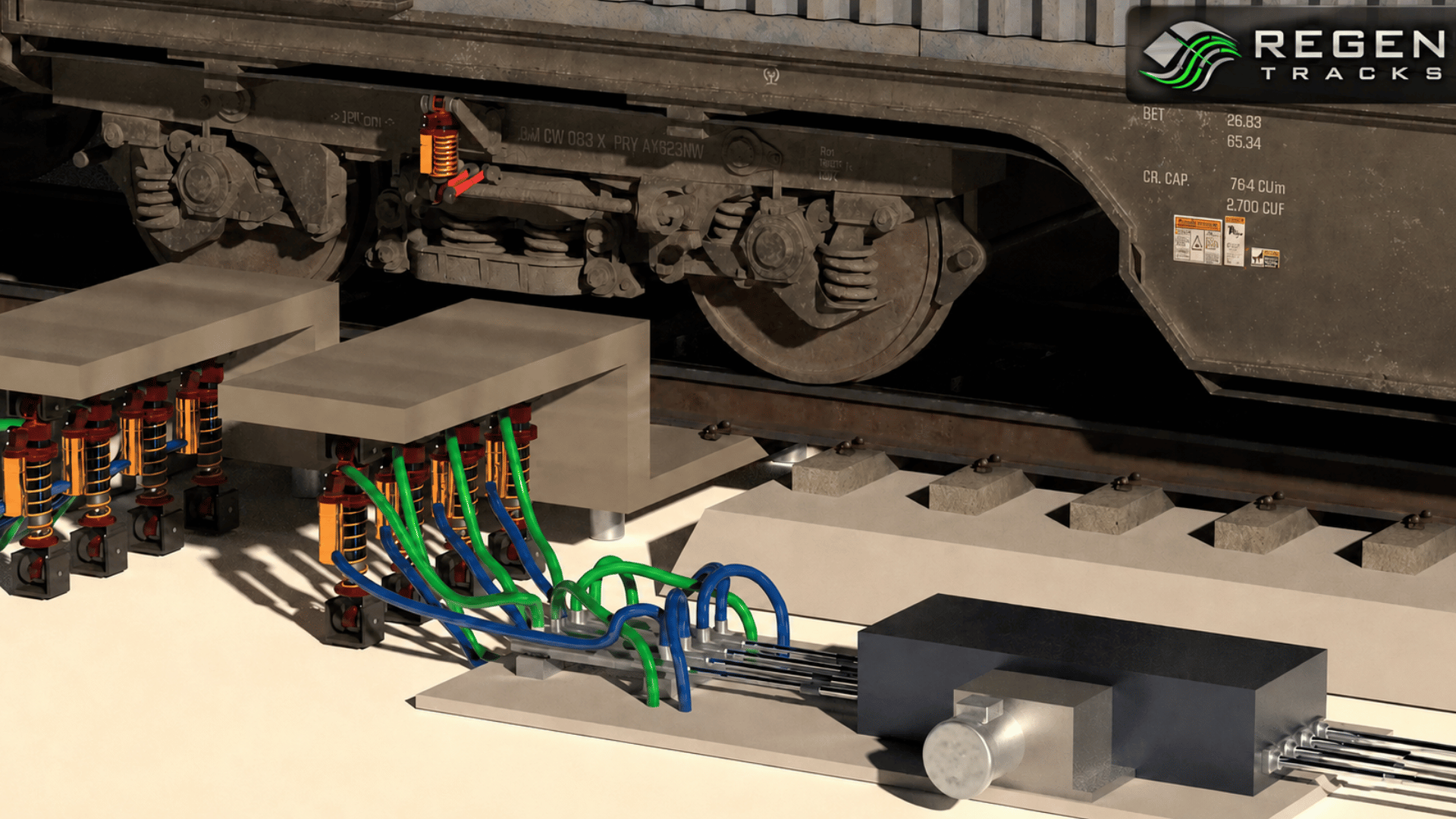
Regen Tracks announced a new electro-hydraulic platform designed to capture the kinetic energy from a moving train and turn it into usable electricity.
Finding Energy on the Tracks
This setup works differently than the classic regenerative braking, which primarily captures energy when a train slows down.
Regen Tracks designed their platform to gather energy continuously from the recurring dynamic load forces and vibrations of trains just moving along the tracks.
The company already has a working prototype that it claims proves the concept.
Advertisement
“We’re capturing kinetic energy generated by the movement of trains, railcars, and vehicles and converting it into useful electrical output through an electro-hydraulic system engineered for a wide range of applications,” said a spokesperson for Regen Tracks.
Powering the Next Wave of Computing
There’s a power problem though. As artificial intelligence infrastructure expands rapidly around the world, the demand for reliable, large-scale electricity keeps growing. Modern AI data centers need huge amounts of power to support advanced GPU processing, high-density computing, cooling systems, and constant cloud operations.
Regen Tracks realized its rail-based technology could help by creating localized energy right where it’s needed. Freight trains travel across thousands of miles of active tracks every day, moving heavy loads through major industrial regions. On top of transporting goods, the rail corridors could generate extra power.
By converting the mechanical energy from the trains, rail systems could supply supplemental electricity near logistics hubs, industrial zones, and energy-intensive facilities. The power could also be used for localized energy storage, running rail infrastructure, or supporting the larger grid.
Right now, Regen Tracks is focused on refining their prototype and validating the engineering. The company plans to start working with rail infrastructure partners, transportation stakeholders, and the media as they prepare for broader deployment. Additionally, it is exploring how this energy-conversion technology might work for other transportation systems.
 Read Exclusive Stories
 Bookmark & Save Articles For Later