If you take a boat to Bartolomé Island in the Galápagos, you will not find lush jungles or soft resort beaches. You just step out onto a harsh, dry surface that looks like it is still cooling off.
This is one of the youngest islands in the entire archipelago. Walking across it feels a lot like walking on the moon. You are surrounded by red, orange, and black volcanic rock. The whole place is a perfect snapshot of what the Earth looks like right after it forms.
Built By Liquid Rock
The island is basically a giant pile of cooled lava. An underwater volcano erupted, pushing magma upward until it finally broke the ocean’s surface.
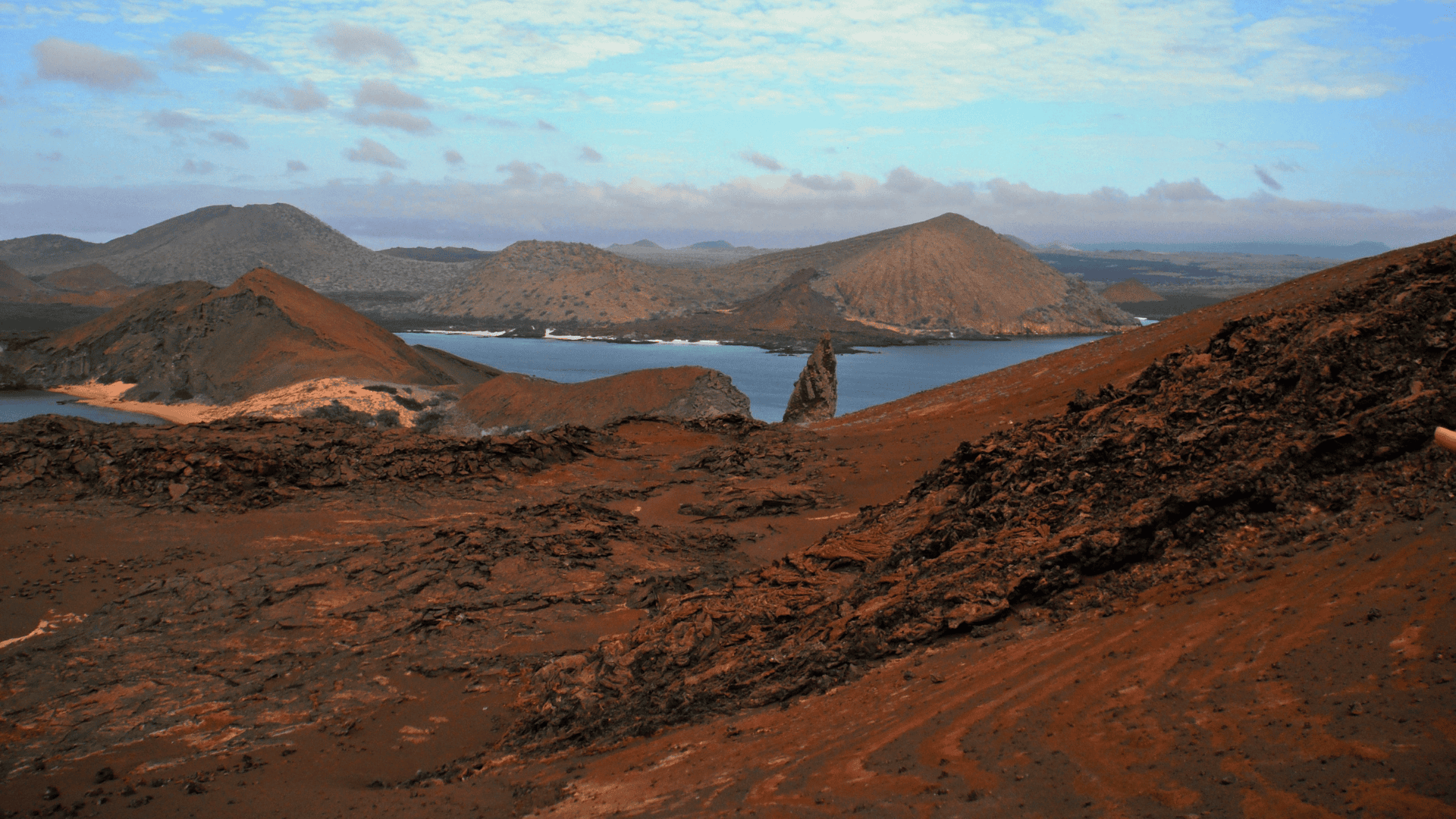
As you walk around the island, you see small, hollow mounds everywhere. Geologists call them spatter cones. They formed when thick blobs of liquid rock bubbled up and splashed onto the ground, freezing in place before they could flatten out. Because the island is so young, there has not been enough time for the weather to break all this rock down into dirt. There is hardly any topsoil at all. You are just looking at raw, exposed geology.
A Famous Pointy Rock
Advertisement
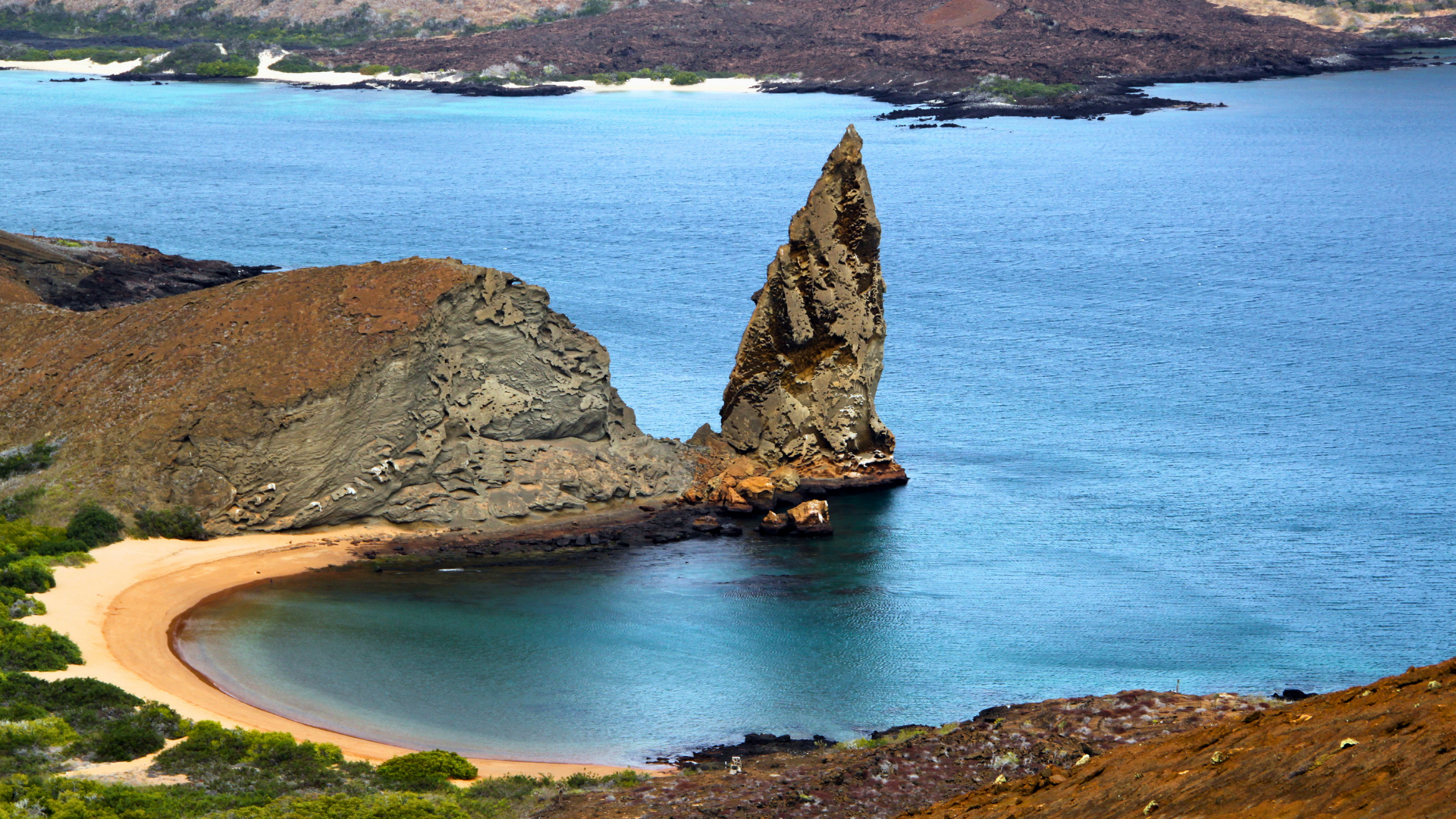
If you look at travel photos of the Galápagos, you have probably seen Pinnacle Rock. It is a massive, sharp spear of stone sticking right out of the bay.
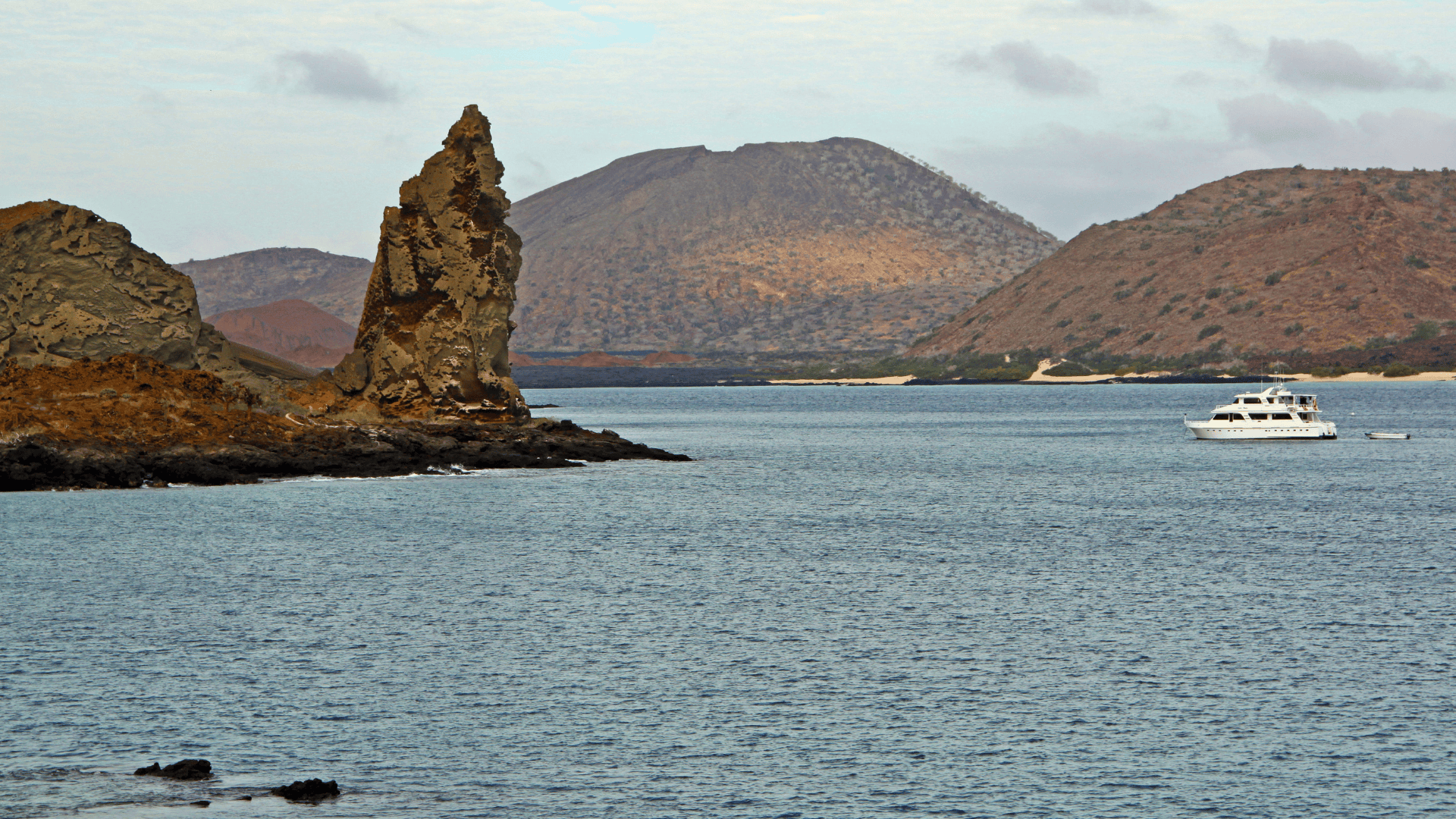
This rock formed during a violent eruption. When superheated magma hit the cold ocean water, it immediately exploded. The blast blew chunks of ash and rock straight up into the air, which then cemented together to form a tall cone. But that is only half the story. During World War II, the U.S. military actually used this area. Pilots used the rock as a target for bombing practice. That is why the shape is so uneven and jagged right now.
Starting From Scratch
Even though the ground is basically a barren wasteland, animals still find a way to use it.
You can spot a few tough pioneer plants pushing through the dry cracks in the rock. But most of the life stays near the water. The bay around Pinnacle Rock is home to Galápagos penguins. It is always a little strange to see penguins swimming right next to the equator. Marine iguanas drag themselves out of the cold water to warm up their bodies on the hot black lava.
The whole island shows you exactly what a landscape looks like right before a thick ecosystem finally takes over.
 Read Exclusive Stories
 Bookmark & Save Articles For Later