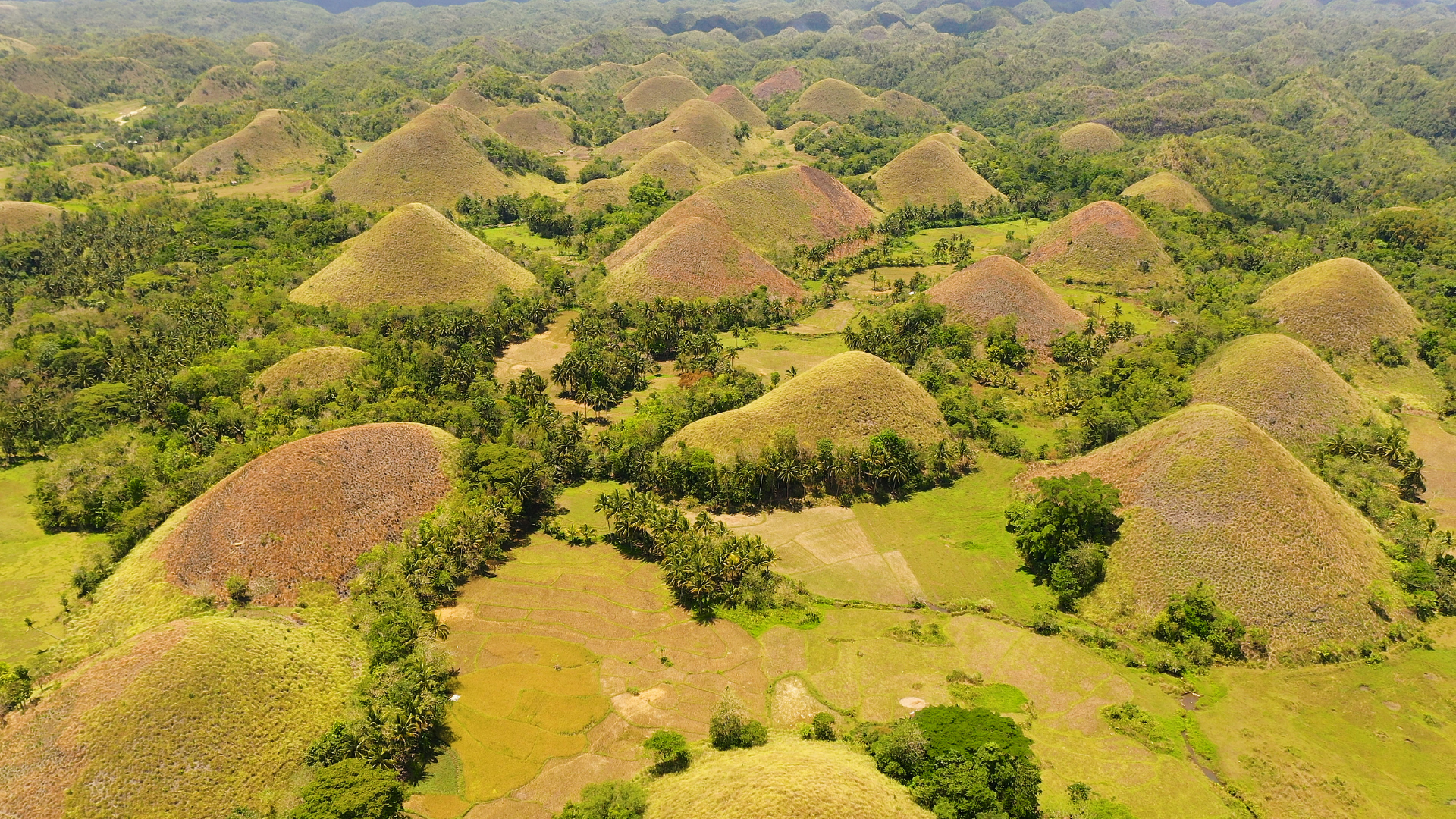
If you travel to the island of Bohol in the Philippines, you will find a strange landscape known as the Chocolate Hills. Spread out across the island are more than 1,200 perfectly shaped, matching mounds of dirt and rock.
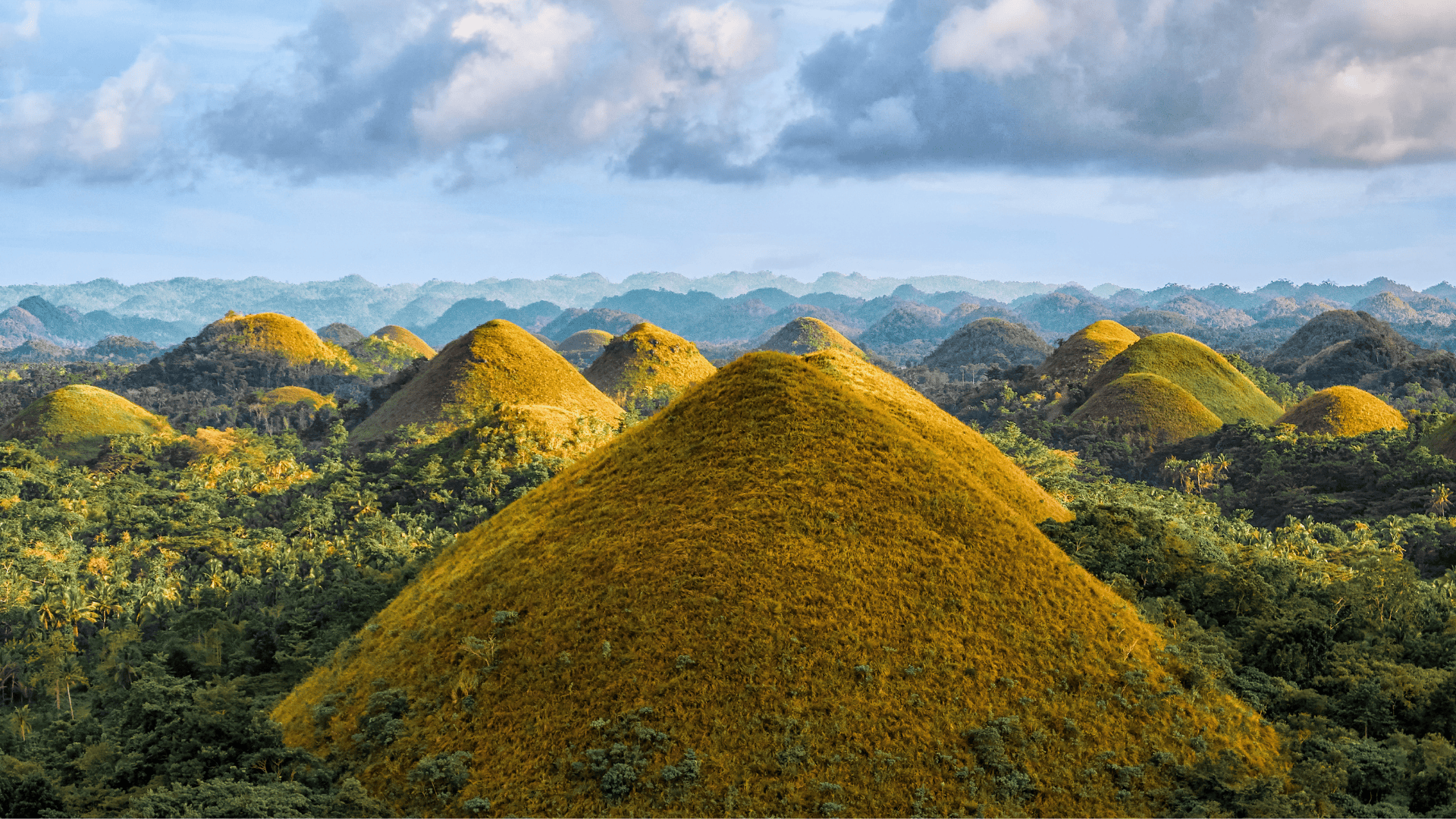
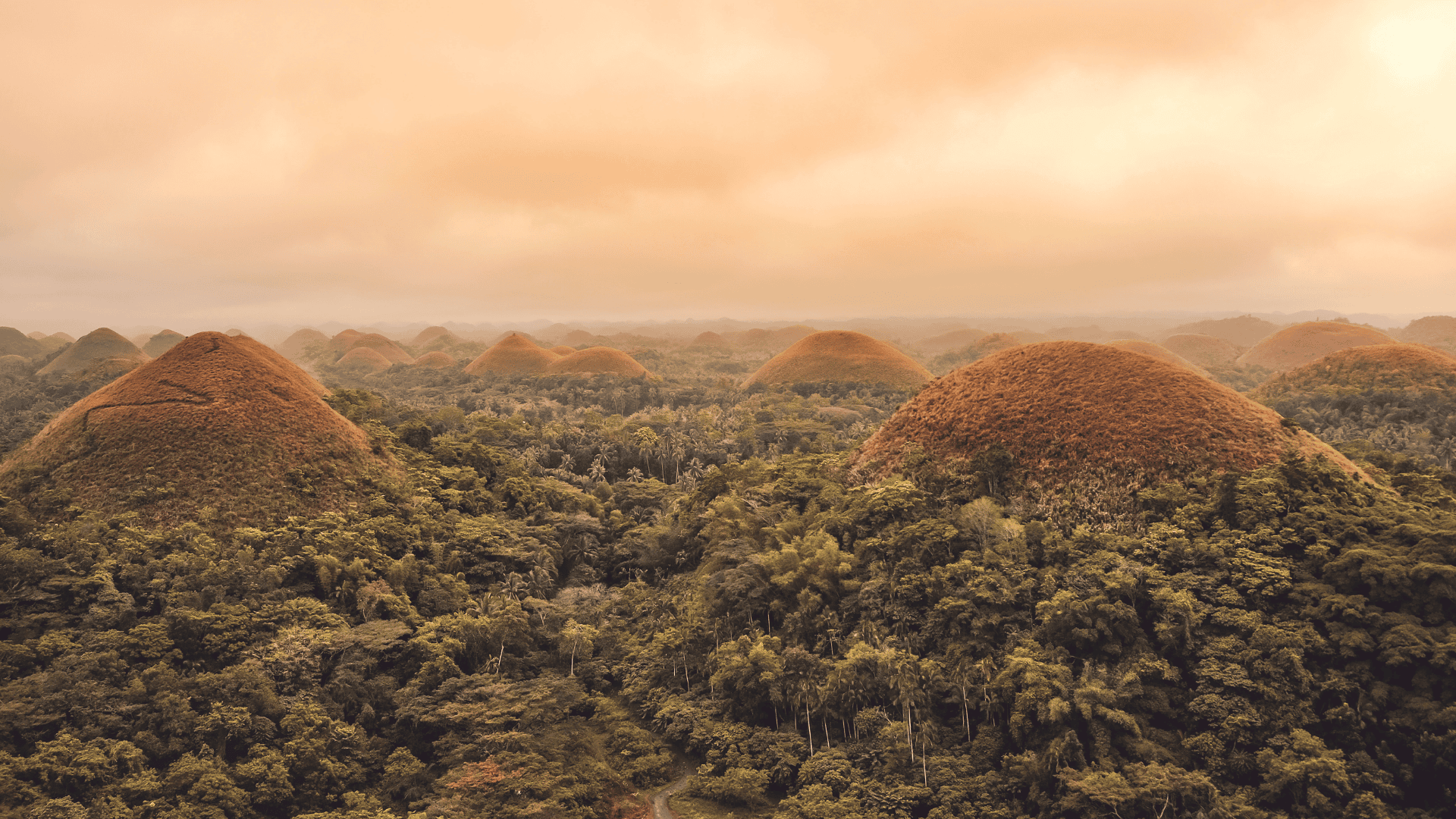
They all look like they were made in the exact same mold. Almost all of them stand between 100 and 160 feet tall, and they form an endless, repeating pattern across the horizon. It looks like a massive art project, but it is actually just the result of ancient oceans and heavy rain.
An Ancient Ocean Floor
To understand how these identical hills formed, you have to look at what they are made of. Millions of years ago, this entire area was completely underwater. It was a shallow sea filled with coral reefs and marine life.
Over a long period of time, the shells and skeletons of those sea creatures piled up on the ocean floor. They eventually compressed and turned into a thick, solid layer of limestone rock. Later on, tectonic plates shifted. The ocean floor was uplifted, raising that massive sheet of limestone above the water and exposing it to the air.
Carved By Rain
Advertisement
Once the rock was sitting above ground, the weather took over. Limestone is a very porous rock. When heavy tropical rain hits it, the water acts like a weak acid and slowly eats away at the stone.
Over millions of years, rain, rivers, and underground streams washed away the weaker parts of the limestone sheet. The hardest parts of the rock stayed behind, leaving thousands of cone-shaped hills sitting right next to each other. Geologists call this a karst landscape. But what makes the hills in Bohol so strange is just how uniform they are. Usually, limestone erodes into jagged cliffs or messy cave systems, not perfect little cones.
Changing Colors With The Seasons
The hills get their name from how they look during a specific time of year. During the rainy season, the hills are completely covered in thick green grass. They just look like rolling green mounds.
But when the dry season hits, the rain stops completely. The thin layer of soil on the hills cannot hold much moisture, so the grass dries out and turns a deep, roasted brown. Because the soil is too thin to support large trees, the hills stay completely bare. For a few months every year, the landscape looks exactly like giant chocolate drops sitting on the flat ground. It is a massive geological accident that just happens to look perfectly planned.
 Read Exclusive Stories
 Bookmark & Save Articles For Later