Hidden under Virginia’s Shenandoah Valley is one of the largest cave systems in the eastern U.S. Luray Caverns is made up of huge underground rooms filled with tall stone columns, thin curtains of rock, and calm pools of water that never ripple.
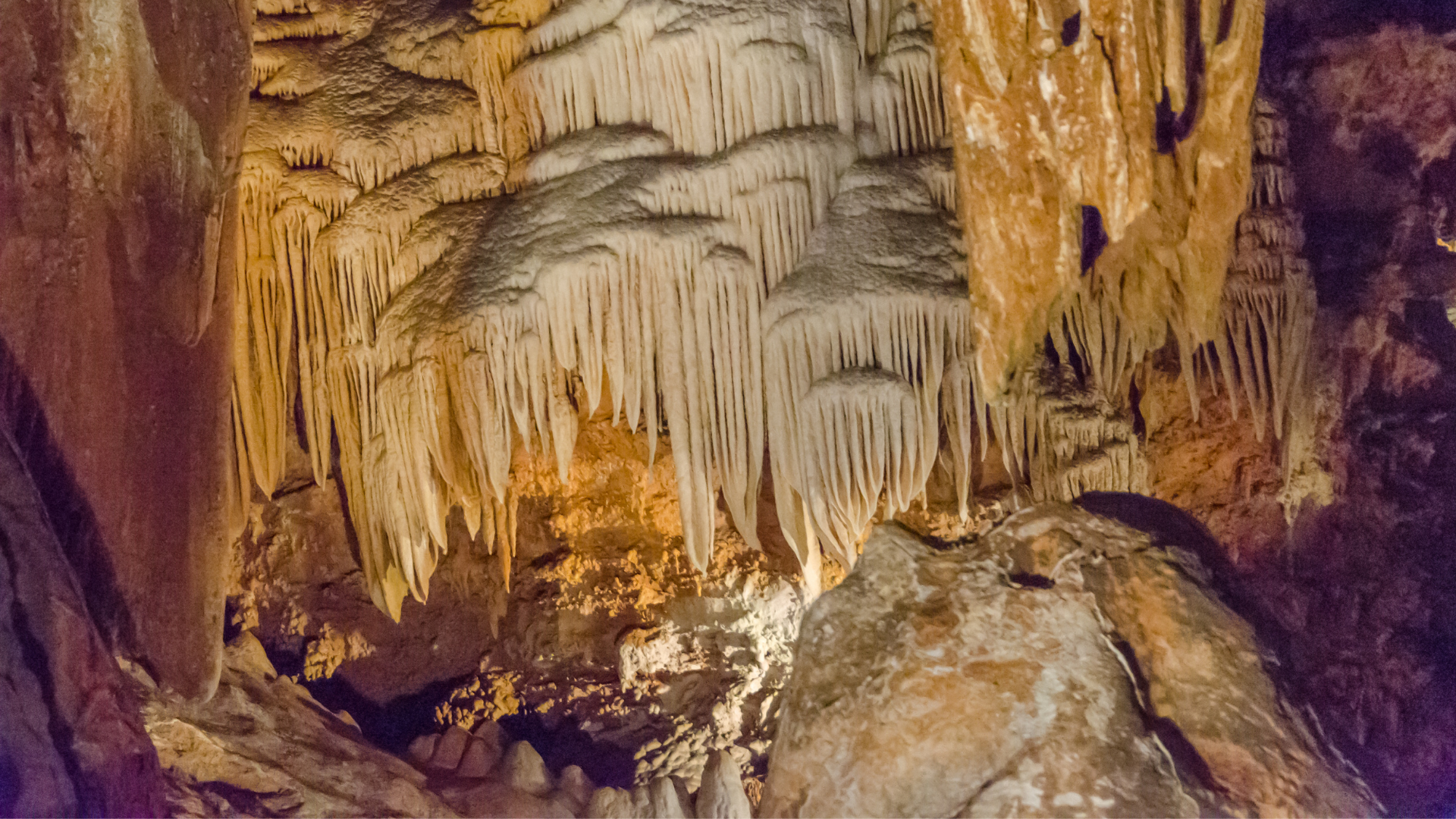
The cavern is huge, but it was actually built by drops of water.
Slowly Built By Acidic Water
To understand how these massive stone shapes formed, you have to look at the rock itself. The cave is made of limestone. Millions of years ago, rainwater soaked through the soil on the surface and picked up carbon dioxide. This turned the water into a very weak acid.
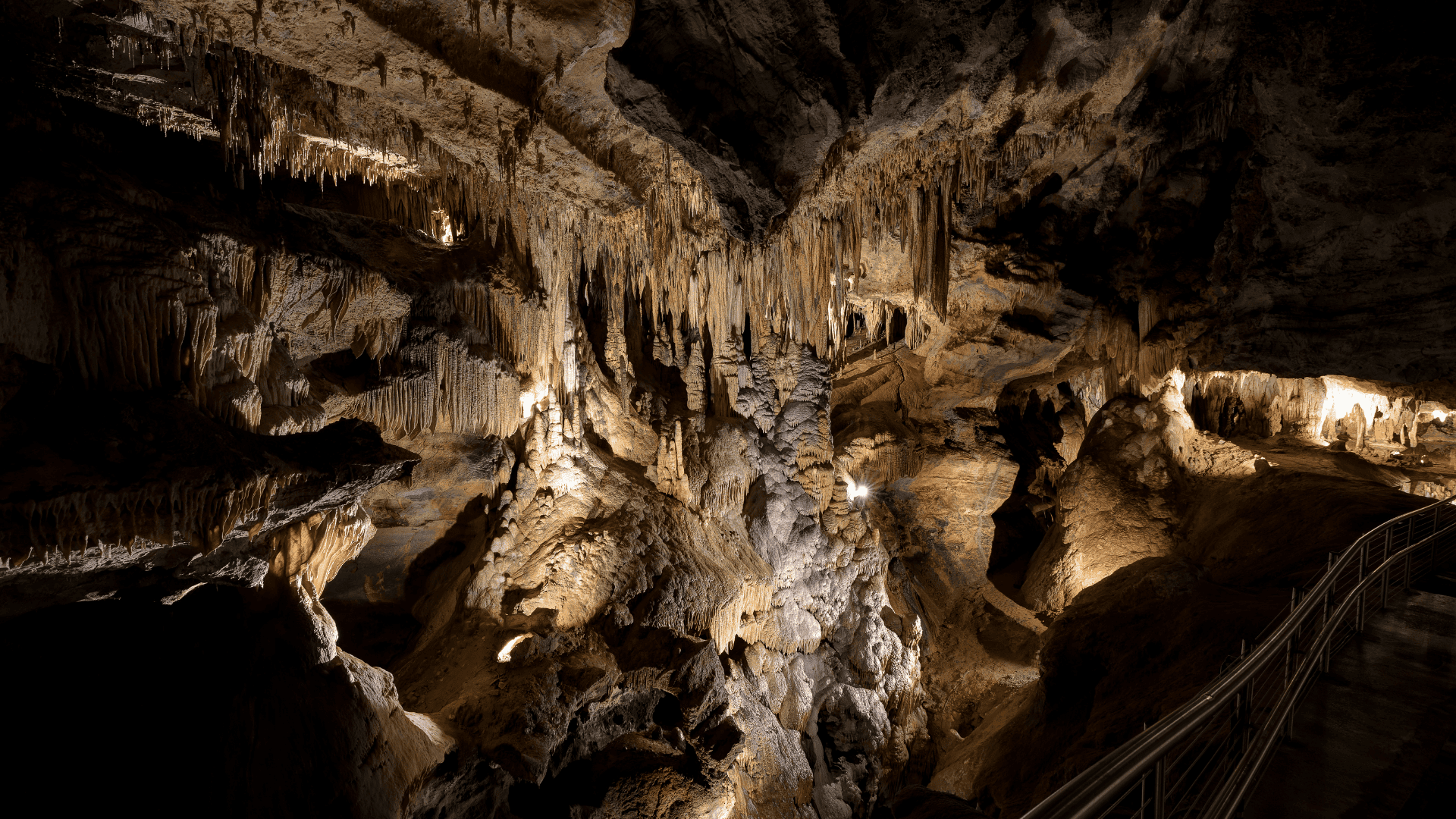
As that slightly acidic water dripped into the earth, it slowly ate away at the solid limestone. Over a long time, it hollowed out giant underground chambers. But the water did not just destroy the rock. It also built it back up. When the water dripped from the ceiling, it left behind tiny mineral deposits. Over millions of years, each drop of water left behind minerals that gradually built up into large stalactites on the ceiling and stalagmites rising from the floor.
The Illusion Of Dream Lake
Advertisement
The most famous spot in the cave is a shallow pool of water called Dream Lake. It looks incredibly deep, but that is actually a visual trick.
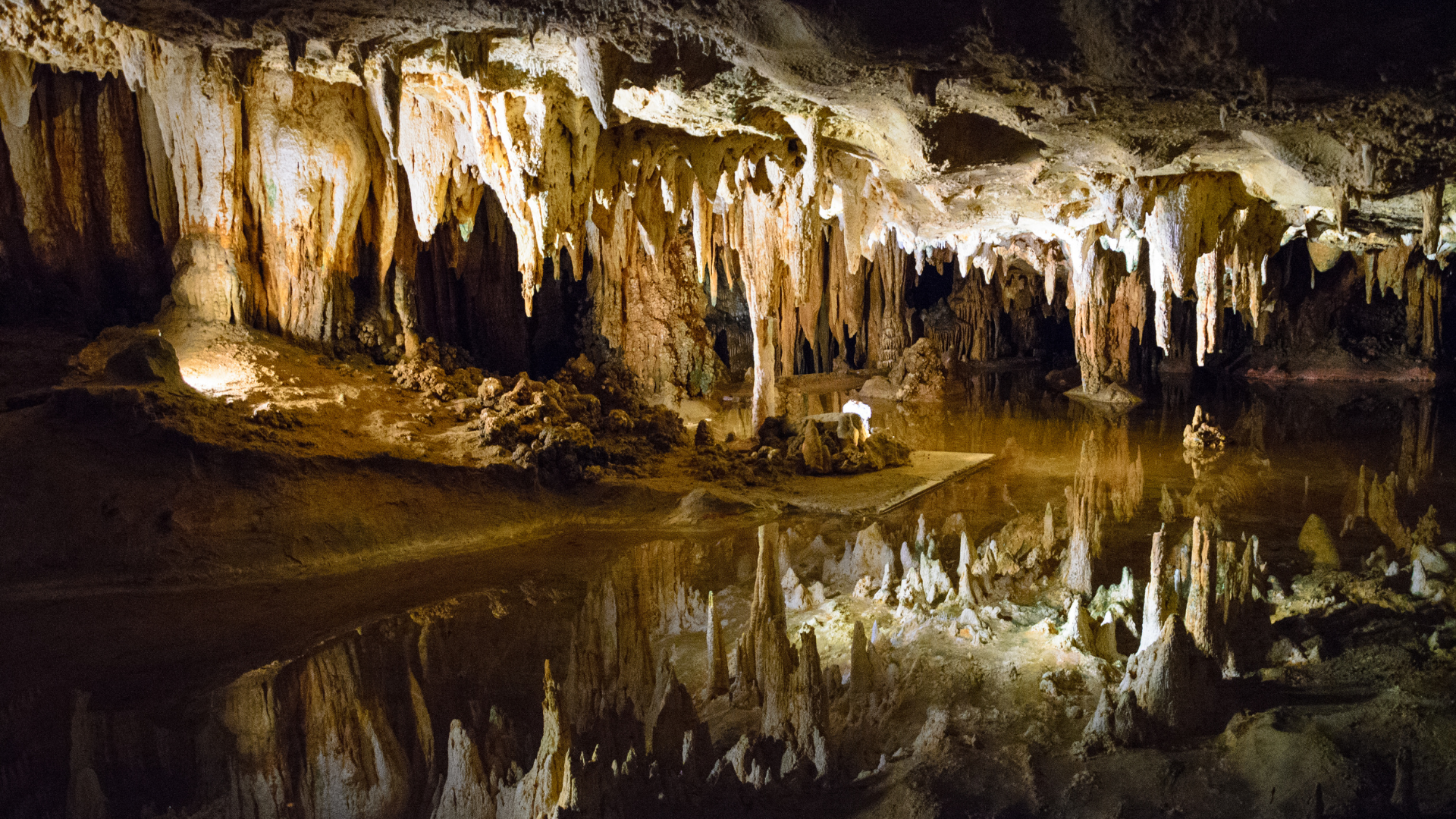
The water in the lake is usually only about 18 to 20 inches deep. But because it sits deep underground, there is no wind to disturb the surface. The water stays completely still and acts like a perfect mirror. When you look at the lake, it perfectly reflects the massive stone stalactites hanging from the ceiling above it. The reflection is so clear that it looks like a deep, underwater forest of rock.
Playing Music On Stone
The cave also holds a very strange piece of human history. In the 1950s, a man named Leland W. Sprinkle realized that tapping on different stalactites in the cave produced different musical notes.
He spent three years gently shaving down specific rocks so they would perfectly match a traditional musical scale. Then, he wired them to a custom keyboard. The Great Stalacpipe Organ still works. When someone plays the keyboard, rubber mallets gently tap the stones across three acres of the cave, turning the entire cavern into a massive, natural musical instrument.
 Read Exclusive Stories
 Bookmark & Save Articles For Later