Fusion energy promises abundant power, and Thea Energy wants to make it a reality. The company announced it had closed an extension to its Series B funding. New support came from Brevan Howard Macro Venture, Aloniq, ALJ Investments, Beyond Earth Ventures, and other global investors.
This builds on a previous $100 million raise led by Thomas Tull’s US Innovative Technology Fund. That money funded scaled-up magnet manufacturing and a second facility in Northern New Jersey.
It also fast-tracked the “Eos” integrated fusion system and the “Helios” power plants. Recently, the U.S. Department of Energy certified the Helios design under its Milestone-Based Fusion Development Program, calling it the most mature stellarator power plant architecture.
Built for Mass Production
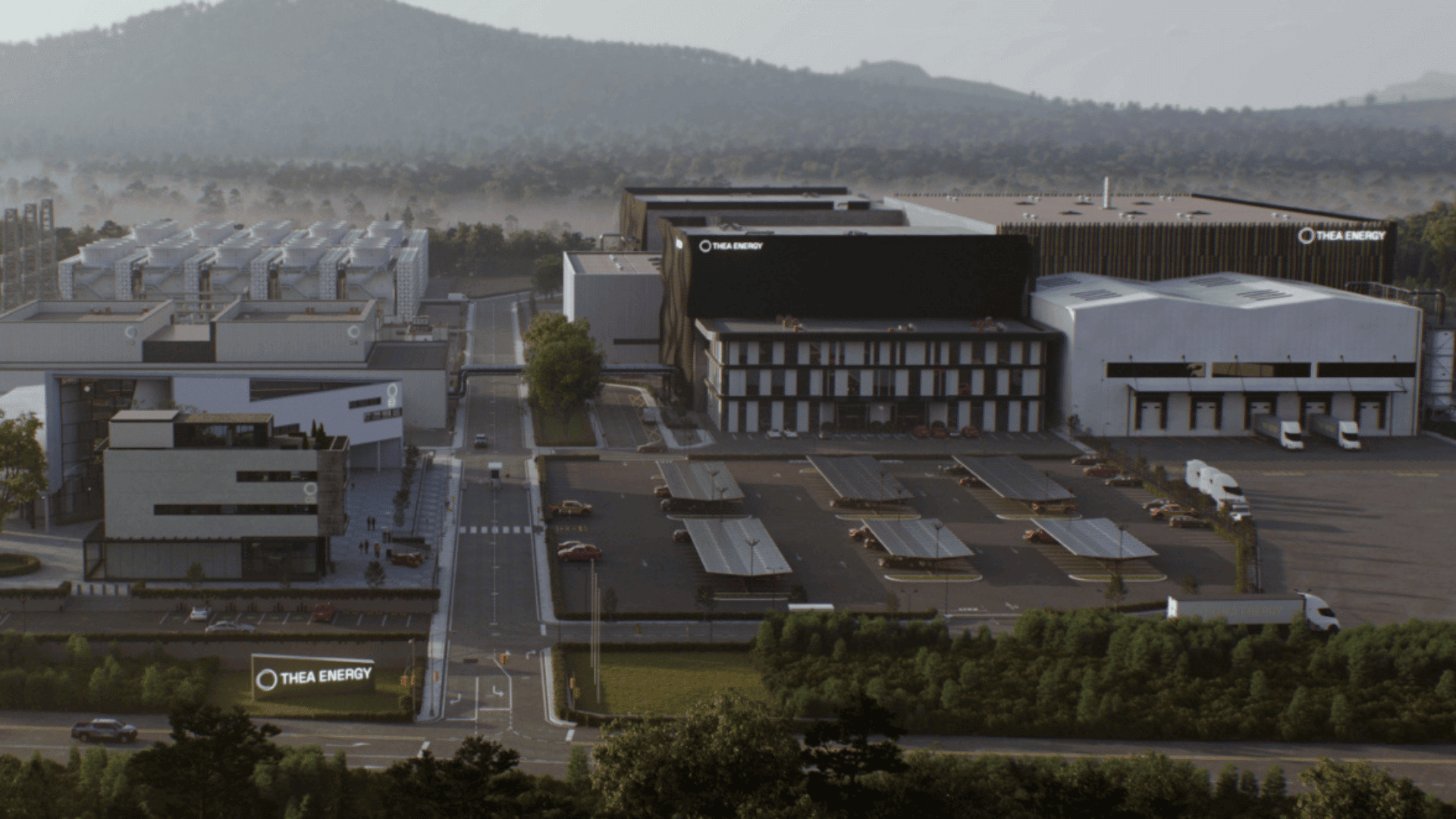
Fusion needs to be cost-effective to actually work in the real world. Thea Energy is focusing on an AI-enabled approach built for simple manufacturing.
Advertisement
“Our new partners bring decades of commercialization expertise, underscoring the viability of Thea Energy’s uniquely modular and AI-enabled approach – one designed for mass manufacturing and continuous re-optimization,” said Brian Berzin, co-founder and chief executive officer of Thea Energy. “With key milestones already cleared ahead of schedule, Thea Energy is confirming its position as a fusion leader.”
Investors agree that a practical design matters.
“What drew us to Thea Energy is its highly robust power plant design, dynamically controlled magnets, and a roadmap aimed at scale. Fusion has the potential to change the world, but its impact hinges on cost-effective power plants that operate under real-world conditions,” added the Brevan Howard Macro Venture investment team. “Thea has developed a fundamentally different architecture, based on software-defined fusion designed for mass manufacturing and long-term durability. As long-time investors in fusion, we are excited to support Thea in its mission to become the global stellarator leader.”
A Fast Timeline
Thea Energy secured a $20 million DOE award to expand domestic magnet production lines. It also teamed up with NVIDIA, Synopsys, Argonne National Laboratory, and Princeton Plasma Physics Laboratory to build a stellarator digital twin.
Tests confirmed its Eos magnets hit the required strengths, and the company is already evaluating sites to build Eos. Meanwhile, the team is talking with utilities, hyperscalers, and power offtakers who want to buy this energy, and expects to double its headcount by the end of the year.
 Read Exclusive Stories
 Bookmark & Save Articles For Later