If you look at photos of Tsingy de Bemaraha National Park on the western side of Madagascar, it does not look like a place you want to walk. Instead of trees, the landscape is packed with thousands of gray stone needles pointing straight up at the sky. The spikes stretch out for miles in every direction.
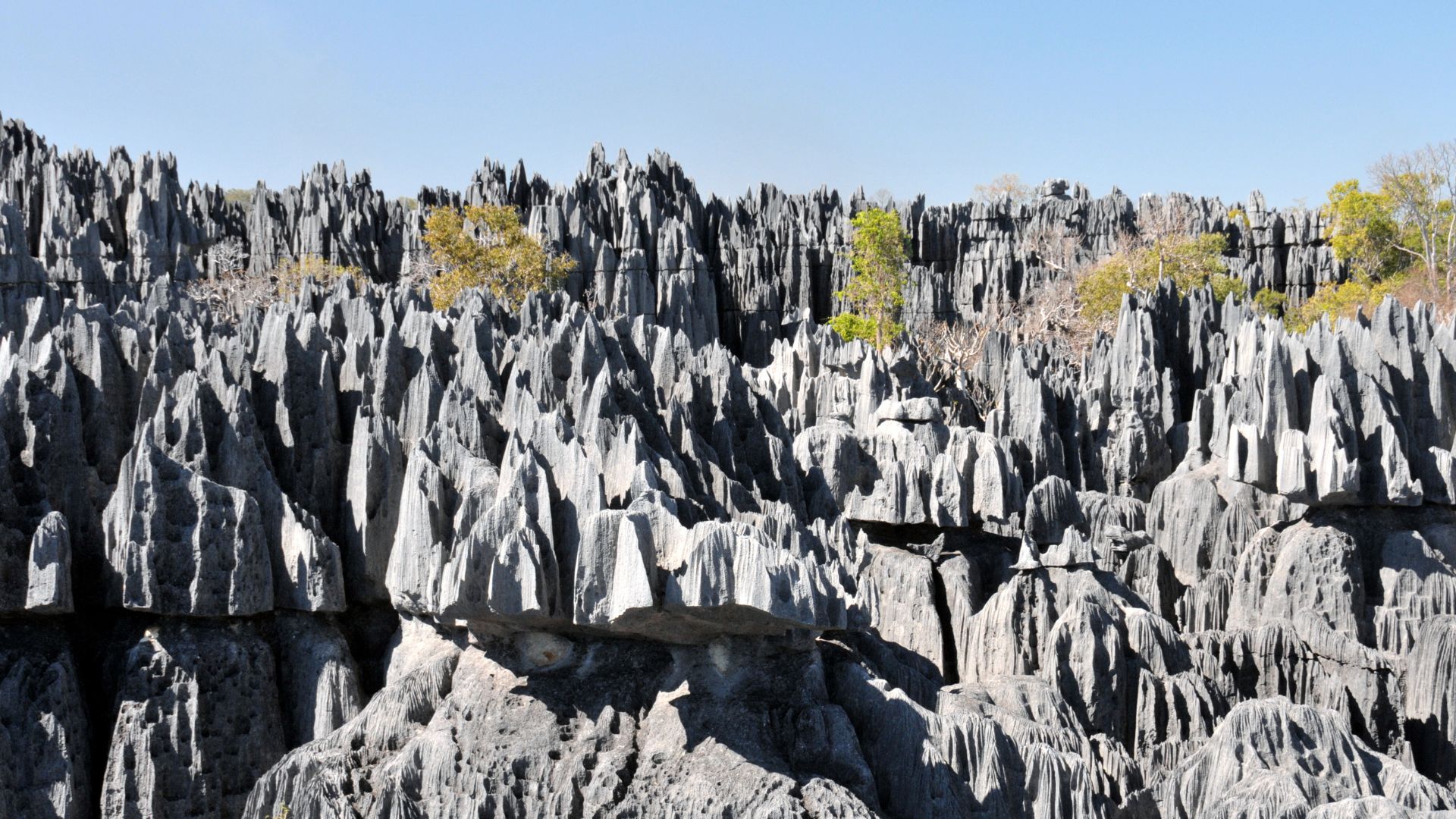
The local Malagasy word “tsingy” literally means “where one cannot walk barefoot.” That is a very accurate name. The rocks here are literally sharp enough to cut right through thick hiking boots. But while it looks dangerous to us, this giant stone forest is a perfect example of what water can do to solid rock.
Carved By Rain And Groundwater
This whole area used to sit deep underwater. Millions of years ago, shells and dead coral piled up on the ocean floor and pressed together into a massive block of solid limestone. Eventually, tectonic plates shifted, pushing that huge limestone bed above sea level.
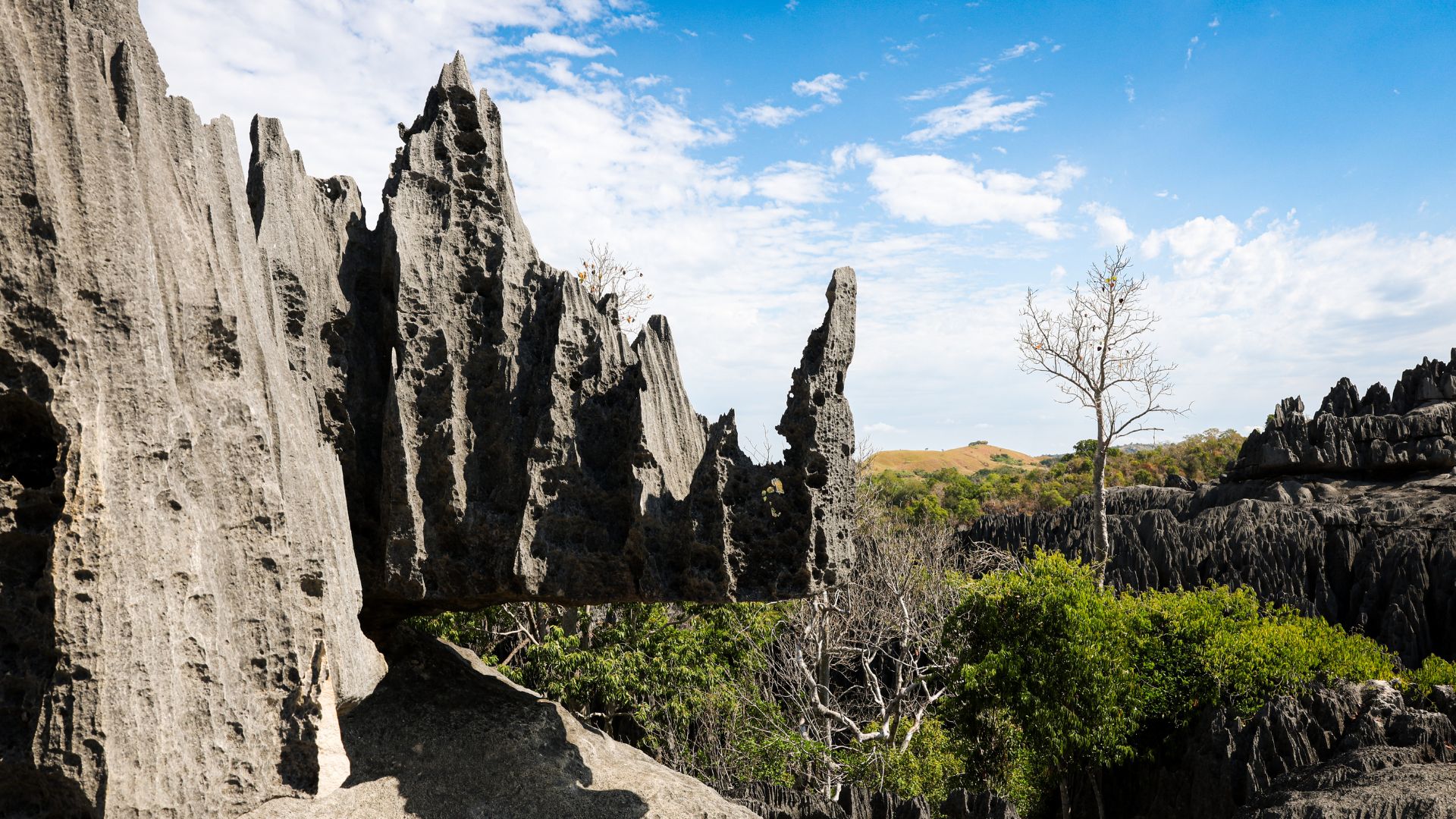
Once the rock was sitting out in the open air, the weather took over. Rainwater in this area is naturally slightly acidic. Over thousands of years, heavy tropical rain beat down on the limestone, washing it away. At the same time, groundwater seeped up from below, dissolving the rock from the bottom up. Geologists call this process karstification.
This combination of rain and groundwater carved deep cracks and hollow caves into the stone. As the softer rock washed away completely, only the hardest parts of the limestone were left standing. Today, those hard leftovers form the towering, razor-sharp spikes you see now. Some of these rock towers reach up to 300 feet tall.
Advertisement
A Safe Place For Lemurs
The extreme landscape makes the park incredibly hard for humans to explore. To get through, you often have to squeeze through narrow rock gaps or cross suspended bridges over deep drops. But it is a perfect home for local wildlife.
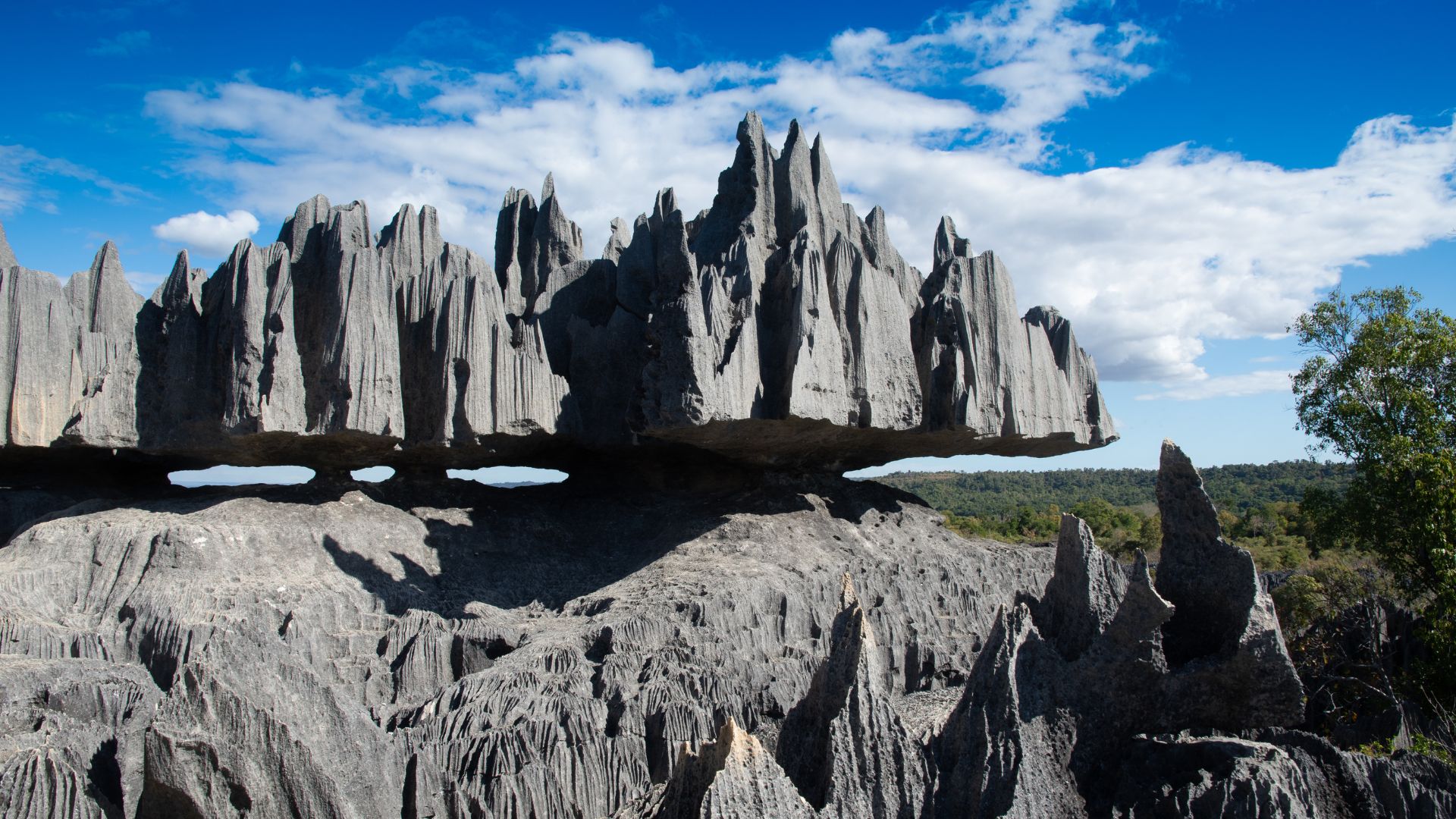
Because large predators and human hunters cannot easily cross the sharp rocks, the stone forest serves as a natural fortress. Animals that can navigate the spikes thrive here. Several species of lemurs, including the white Decken’s sifaka, live right in the middle of the limestone needles. They have tough, thick pads on their hands and feet that let them leap safely from one sharp point to another without getting cut.
Between the deep canyons of rock, small pockets of actual trees and plants grow. These hidden mini-jungles stay shaded from the sun and hold onto moisture, providing food and water for the lemurs, birds, and reptiles that call the rocks home.
So while the landscape looks dead and dangerous from a distance, it actually protects a massive amount of rare life hidden deep inside the stone cracks.
 Read Exclusive Stories
 Bookmark & Save Articles For Later