If you drive up Highway 395 in eastern California, you will see the Sierra Nevada mountains towering over the road. The peaks are sharp, jagged, and covered in snow. Mount Whitney, the tallest mountain in the lower 48 states, sits right there.
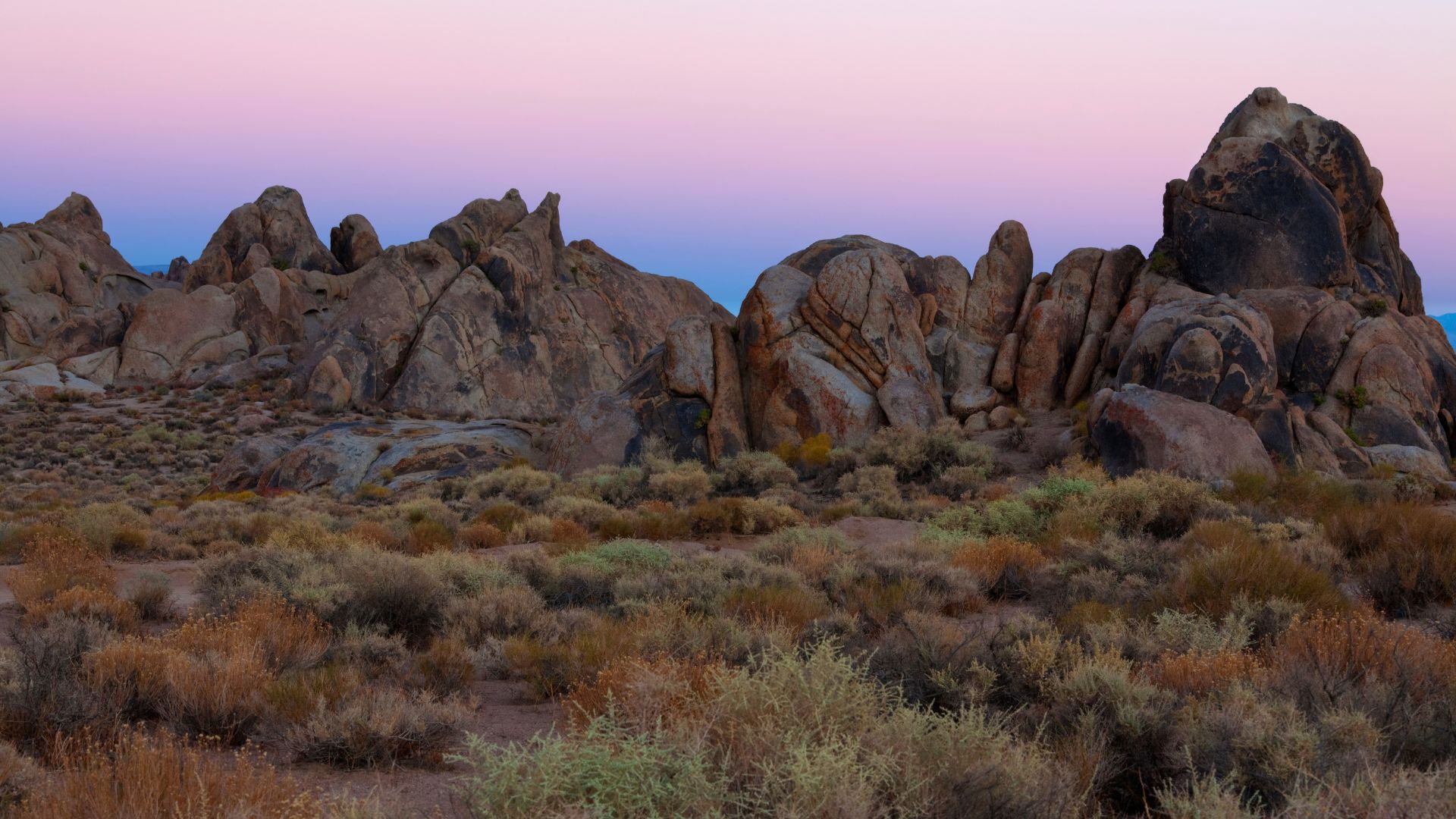
But if you look at the base of those mountains near the town of Lone Pine, the landscape totally changes. You suddenly hit the Alabama Hills. Instead of sharp, gray cliffs, you see thousands of smooth, rounded, orange boulders piled up in the desert.
It looks like someone dropped a totally different planet right in front of the mountains. But here is the crazy part. The round boulders and the jagged mountain peaks are made out of the exact same rock.
Weathering Underground
The rocks in both places are mostly monzogranite. They formed around 100 million years ago when liquid magma cooled deep underground. The sharp peaks of the Sierra Nevada formed the exact same way, out of the exact same material.
So why do they look so different today? It all comes down to how they weathered over time.
For millions of years, the granite in the Alabama Hills stayed buried under a thick layer of soil. While it was trapped down there, water slowly seeped into cracks in the stone. That water acted like a very slow, weak acid. It gently ate away at the sharp corners and edges of the granite blocks.
Geologists call this process spheroidal weathering. It is similar to how an ice cube melts in a glass of water: the sharp corners change first, leaving a smooth, rounded shape. The same gradual process happened to these rocks while they were still underground.
Advertisement
Two Different Climates
Eventually, the soil atop the Alabama Hills washed away. This exposed the smooth, rounded rocks to the open air. Because they are at a lower elevation in the Owens Valley, they sit in a hot, dry desert climate. Wind blows sand against them, acting like sandpaper to keep them smooth.
The rocks high up on the Sierra Nevada had a totally different experience.
They got pushed way up into the sky by earthquakes and fault lines. Up there, the climate is freezing. Water gets into the cracks of the mountain rock and freezes into ice. When water freezes, it expands. It acts like a wedge, violently snapping and breaking the granite apart.
That is why the mountains look like broken glass, while the Alabama Hills look like giant potatoes.
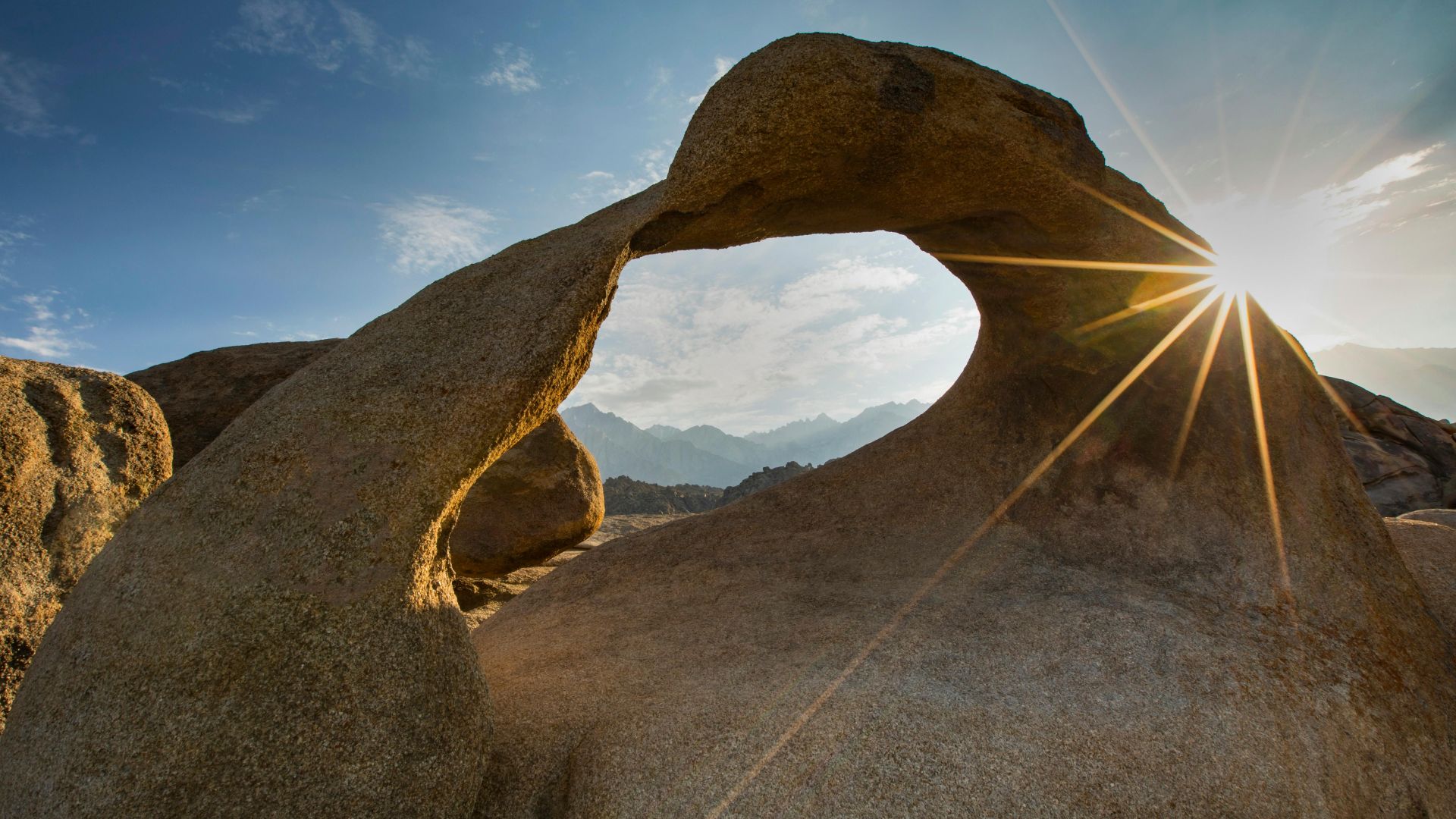
Today, visitors can hike through a maze of these smooth rocks. The contrast is so sharp that Hollywood has filmed hundreds of movies here just to capture the weird scenery. You can stand next to a smooth, twisting rock arch and look straight up at a jagged mountain peak in the same view.
 Read Exclusive Stories
 Bookmark & Save Articles For Later