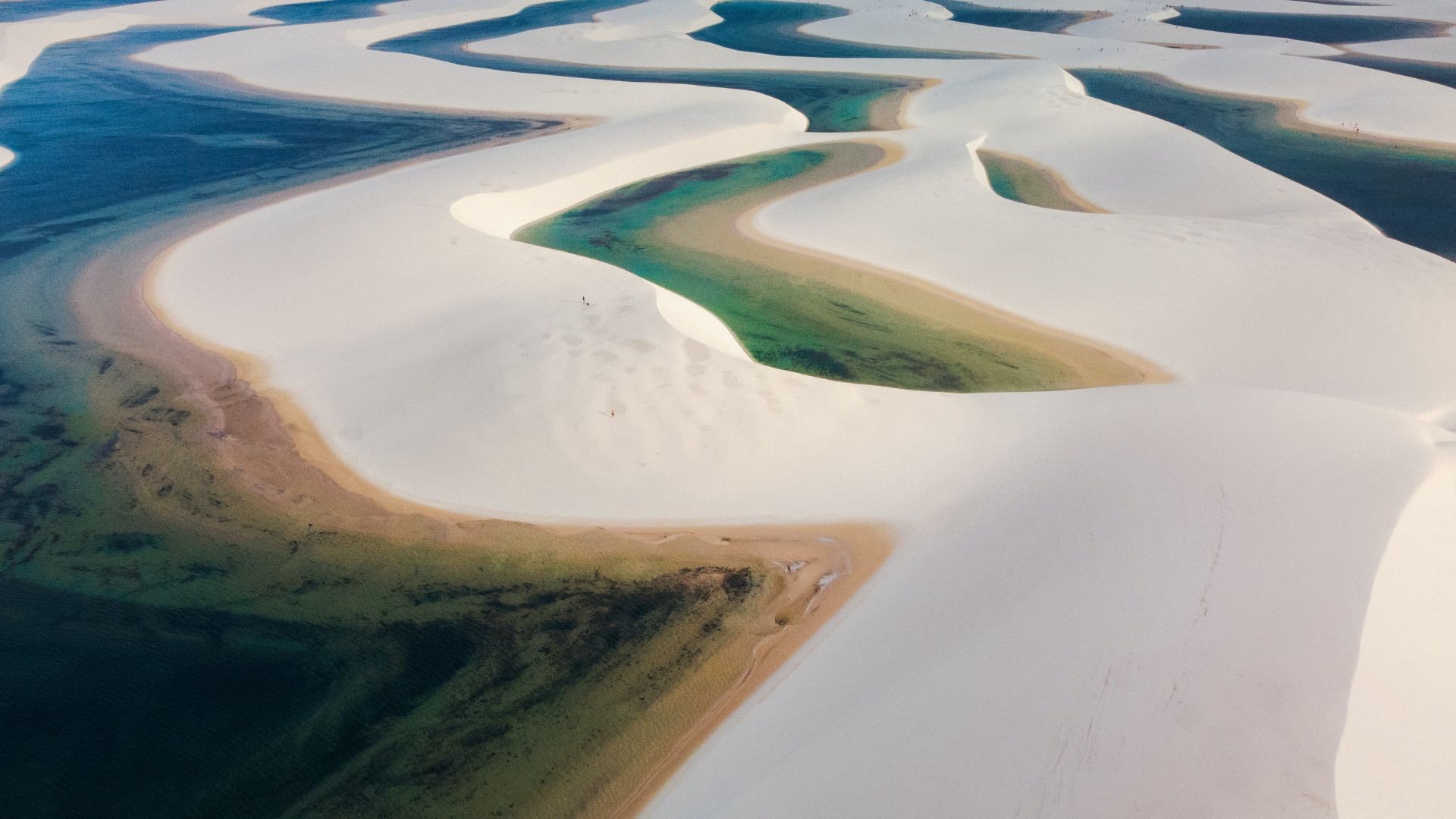
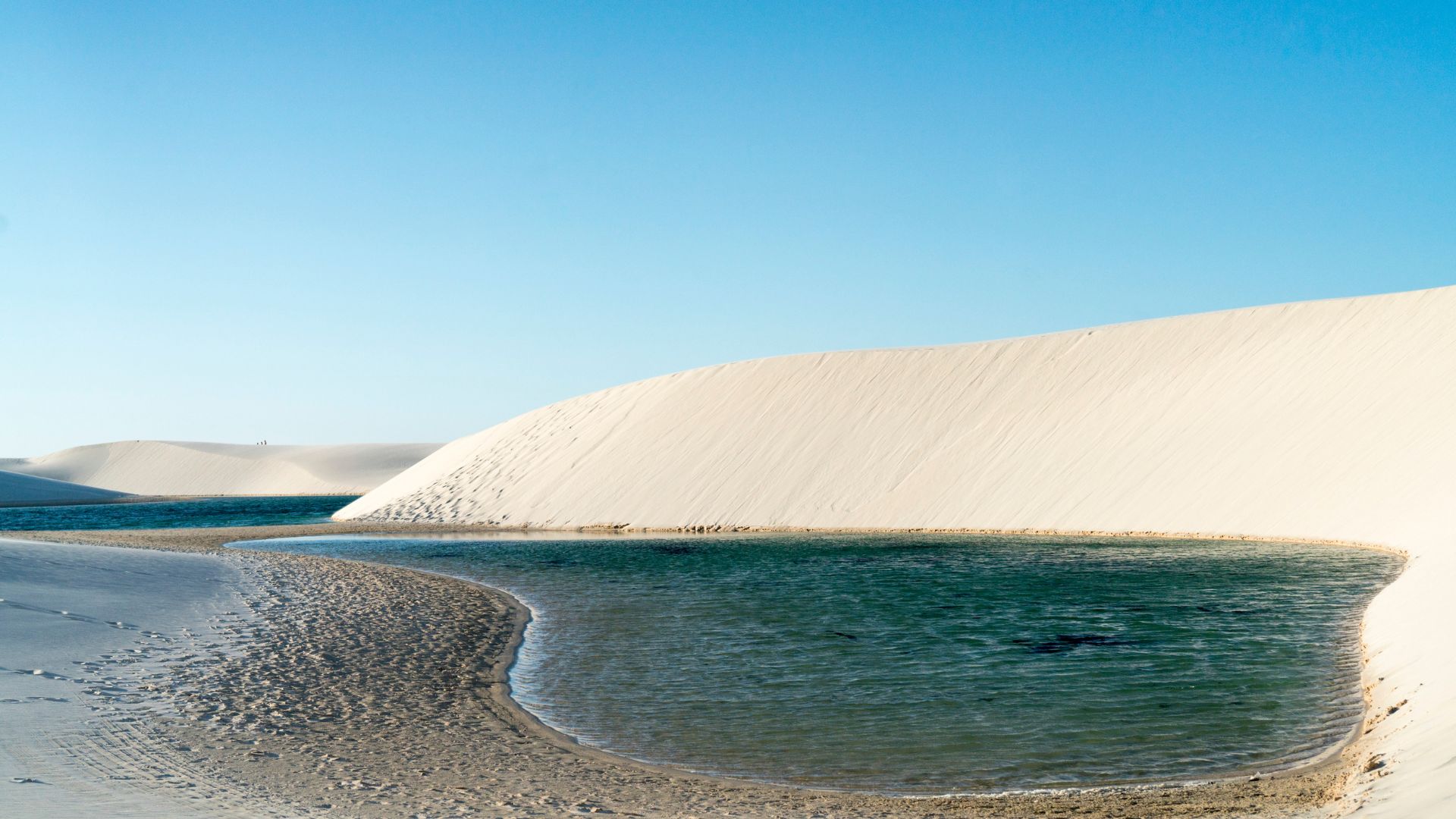
At first glance, a desert landscape unfolds at Lençóis Maranhenses, where massive dunes of sand extend across the Brazilian coast. However, between April and October, the region transforms as thousands of lakes appear amidst the dunes.
This area does not receive the amount of rain expected of a desert. In fact, it lies outside the Amazon River basin and receives four times as much precipitation as a desert does during the rainy season. Between April and October, the region receives around 47 inches of rainfall each year.
Water Trapped Beneath Sand
These lakes fill up during the summer months because of the layer of rock beneath the sand dunes. During the months between January and May, the area sees a deluge of rain that falls onto the land. This water cannot percolate through the solid rock that lies beneath the sand. As a result, the water fills the valleys between the sand dunes.
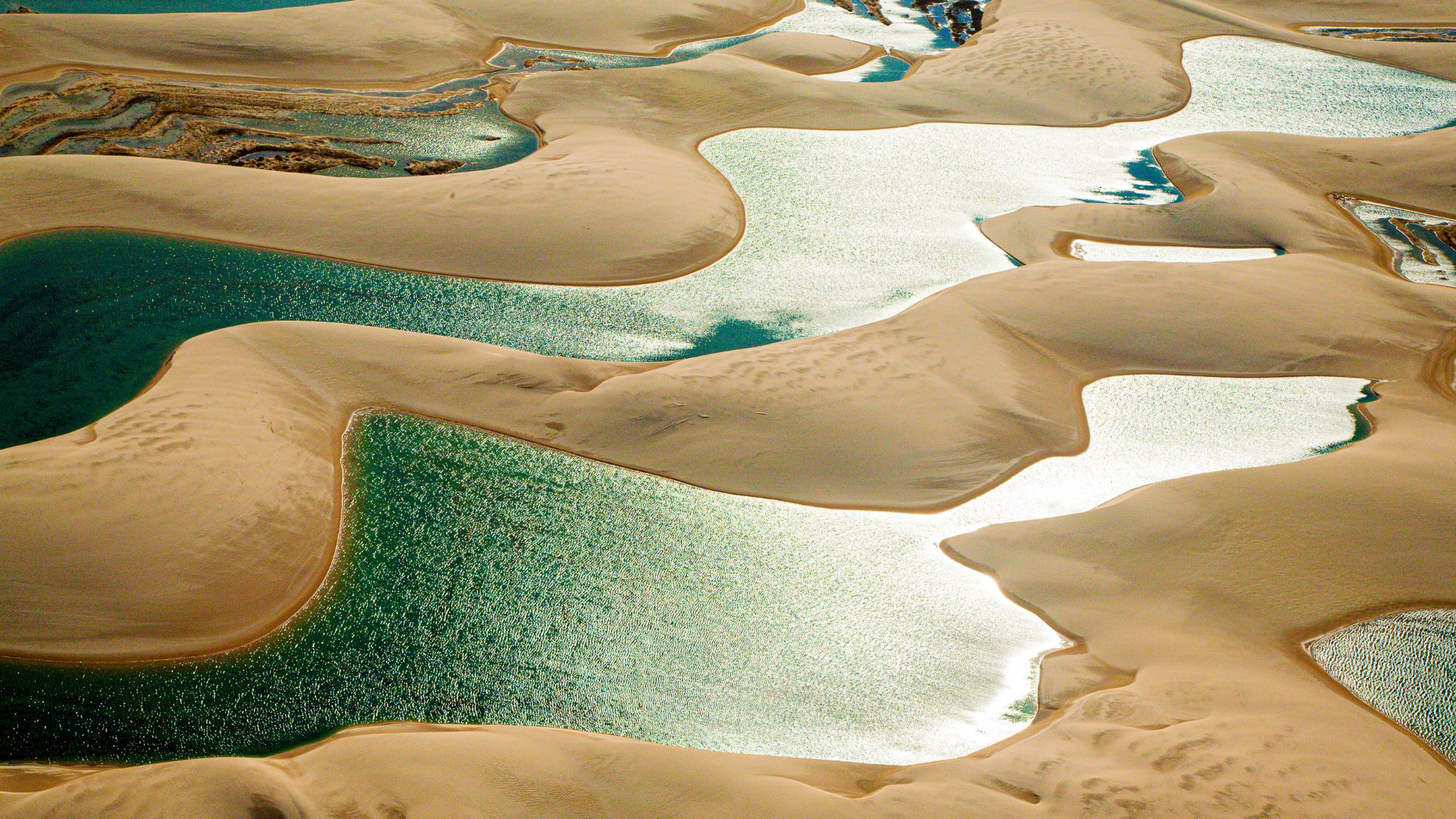
By July, the area is dotted with thousands of freshwater lakes. Each of these lakes is home to fish and other aquatic life. Some of these freshwater lagoons can be over 300 feet in length and ten feet deep. The lakes are warm and safe for people to swim in during the summer.
Advertisement
The sand dunes are also subject to change throughout the year. The sea breezes that blow through the area move the sand every year. As a result, the lakes change with the shifting of the sand dunes.
Life in the Lakes
These lakes dry up between October and January, when the sun is the hottest in Brazil, and the winds are the strongest in the country. The evaporation of the lakes returns the land to a desert. However, the fish that live in these lakes during the summer months have a survival strategy.
The species of fish that live in these lakes include the wolf fish, which burrow into the sand beneath the lakes during the dry season. These fish enter a dormant state and do not die of dehydration. When the rains arrive again and the lakes refill, the wolf fish come back to life. Other fish species are carried into these lakes during the rainy season, when the area’s rivers flood and connect to the lakes. When the rivers dry up in the winter months, these fish die out in the lakes. The eggs that they laid during the summer will develop into young fish once the rains return to the area.
 Read Exclusive Stories
 Bookmark & Save Articles For Later