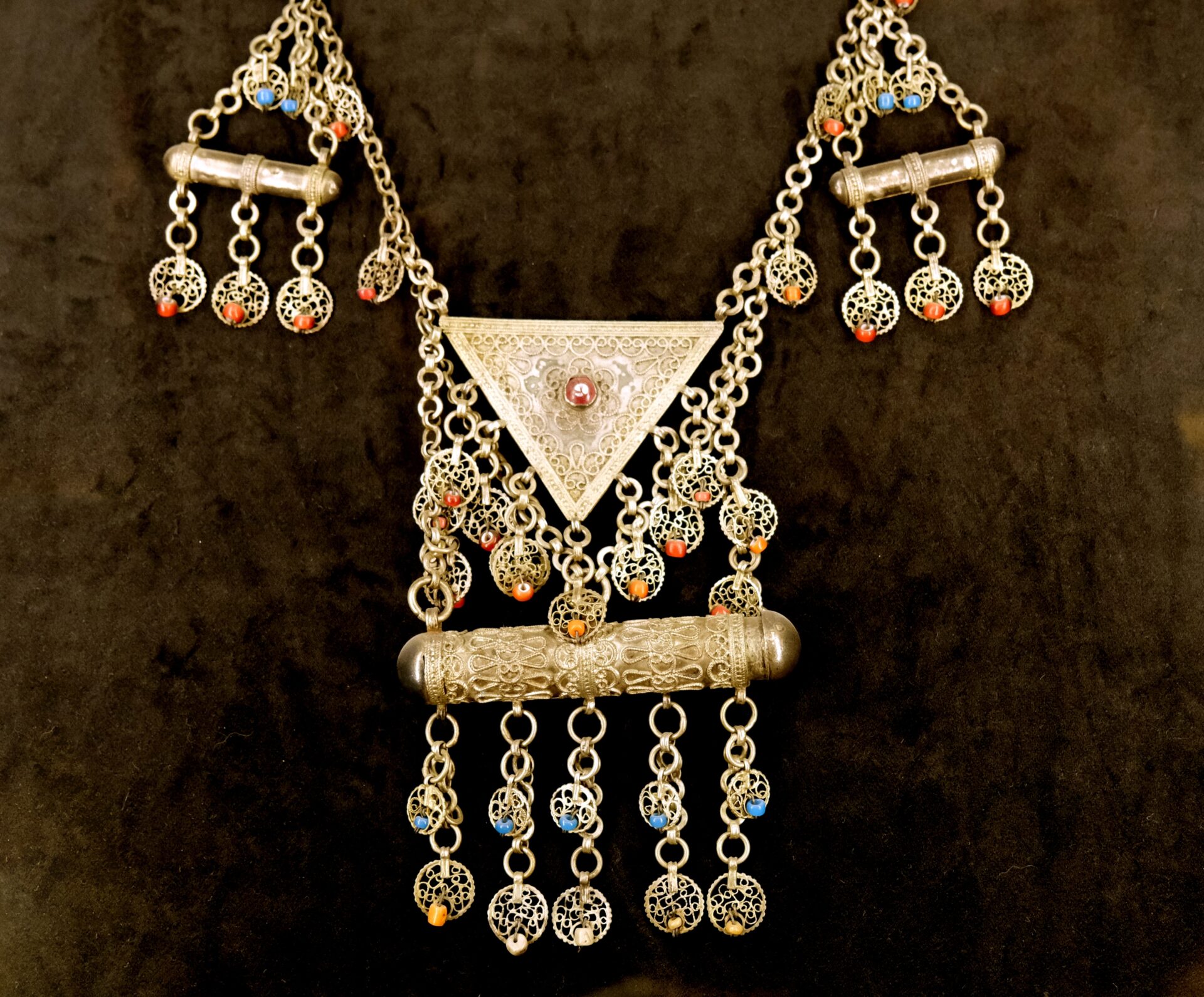
At first glance, filigree jewelry looks like delicate lace made out of metal. Up close, you realize it is built entirely from tiny, twisted threads of silver or gold. Archaeologists have found filigree items in ancient Greek and Etruscan tombs dating back to 3000 BCE, proving that humans have been obsessed with this intricate craft for thousands of years.
While modern jewelry production relies on casting molds and mass-produced machinery, authentic filigree remains a purely hands-on process. It takes patience, steady hands, and careful heat management to turn thin wire into wearable art.
Pulling and Twisting Metal Wire
The word filigree comes from the Latin words filum, meaning thread, and granum, meaning grain or bead. That name describes the process perfectly.
Jewelers start by pulling pure silver or gold through a steel plate filled with small holes, called a drawplate. Each pass stretches the metal thinner and thinner until it matches the thickness of sewing thread. To get the classic filigree pattern, artisans twist two thin strands of wire together and roll them flat. This creates a textured, rope-like edge that catches the light once polished.
Bending the Skeleton and Infill
Before placing the delicate details, the jeweler builds a sturdy outer frame using thicker wire. This frame acts as a skeleton for the piece, shaping the outline of a leaf, heart, or earring.
Advertisement
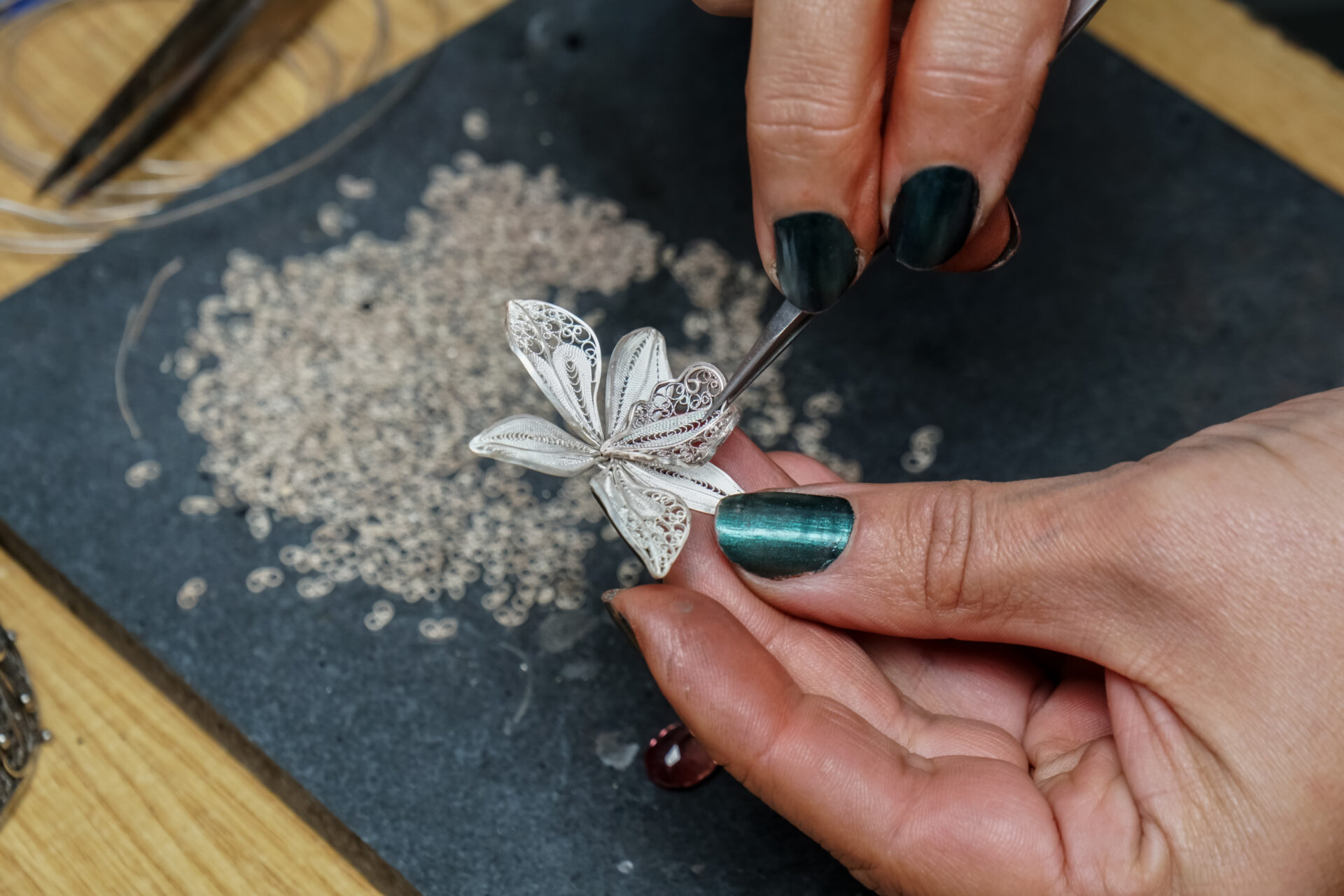
Next comes the tedious part. Using fine-tipped tweezers, the jeweler bends, curves, and rolls the flattened thread wire into tiny scrolls and swirls. They fit each small loop snugly inside the frame like a microscopic jigsaw puzzle. Tension holds the pieces in place temporarily, but one slip of the hand can send dozens of tiny wires flying across the workbench.
Soldering Under High Heat
Fusing hundreds of loose wires into a single solid piece of jewelry is the most challenging step.
The artisan dusts the entire piece with powdered metal solder and flux, then applies heat with a small handheld torch. According to traditional jewelry-making guides from the Gemological Institute of America (GIA), control over heat is everything. The torch must get hot enough to melt the solder powder across every contact point, but not so hot that it melts the ultra-thin filigree wires themselves. A split second of excess heat can destroy hours of work in an instant.
Filigree proves that you don’t always need heavy machinery or high-tech algorithms to create something incredible. By combining basic physical principles with hours of skilled handwork, artisans keep this ancient tradition of creating jewelry alive for modern jewelry lovers.
 Read Exclusive Stories
 Bookmark & Save Articles For Later