When people talk about solar power, the conversation almost always centers on the panels — how efficient they are, how they’re angled toward the sun, how many decades they’re warranted to last. Batteries get a similar spotlight, especially as home storage systems become more common. What almost never comes up is the part of the system working hardest behind the scenes: the layer of electrical protection sitting between the array and everything downstream of it.
This is the part of a solar system most people never see, and for good reason; it’s not designed to be seen. But it’s often the single biggest factor in whether an installation quietly generates power for twenty-five years or ends up needing emergency repairs after its first serious storm.
Why direct current is a harder engineering problem than it looks
Most household electrical systems run on alternating current, which has a convenient property: it crosses zero volts many times per second. That zero crossing gives an electrical arc a natural moment to extinguish whenever a switch interrupts the circuit. Solar arrays generate direct current, which has no such zero crossing. An arc that forms when a DC circuit is interrupted can keep burning across the gap even after the switch has fully opened, unless the switch is specifically engineered for DC service — with wider contact spacing, arc-quenching chambers, and sometimes magnetic components designed to stretch and extinguish the arc.
This distinction sounds like a minor technical footnote, but it has real consequences. A switch that works perfectly well in an AC application can fail dangerously if installed on the DC side of a solar array, even if its printed current rating looks identical. It’s one of the more counterintuitive facts in solar engineering: the rating printed on a component doesn’t tell the whole story of what it can safely do.
The voltage math changes with the weather
Solar panels don’t produce a fixed voltage — they produce more voltage in cold conditions than warm ones. An array that measures a comfortable, safe voltage on a mild afternoon can climb meaningfully higher on a cold, clear morning, when the panels are producing at close to their theoretical maximum and losing very little of that potential to heat. Anyone designing the protection system needs to calculate for that coldest-morning scenario, not the average operating conditions printed on a datasheet — because a protective device that’s undersized for the true maximum voltage isn’t protecting anything.
Reverse current: the failure mode most people never think about
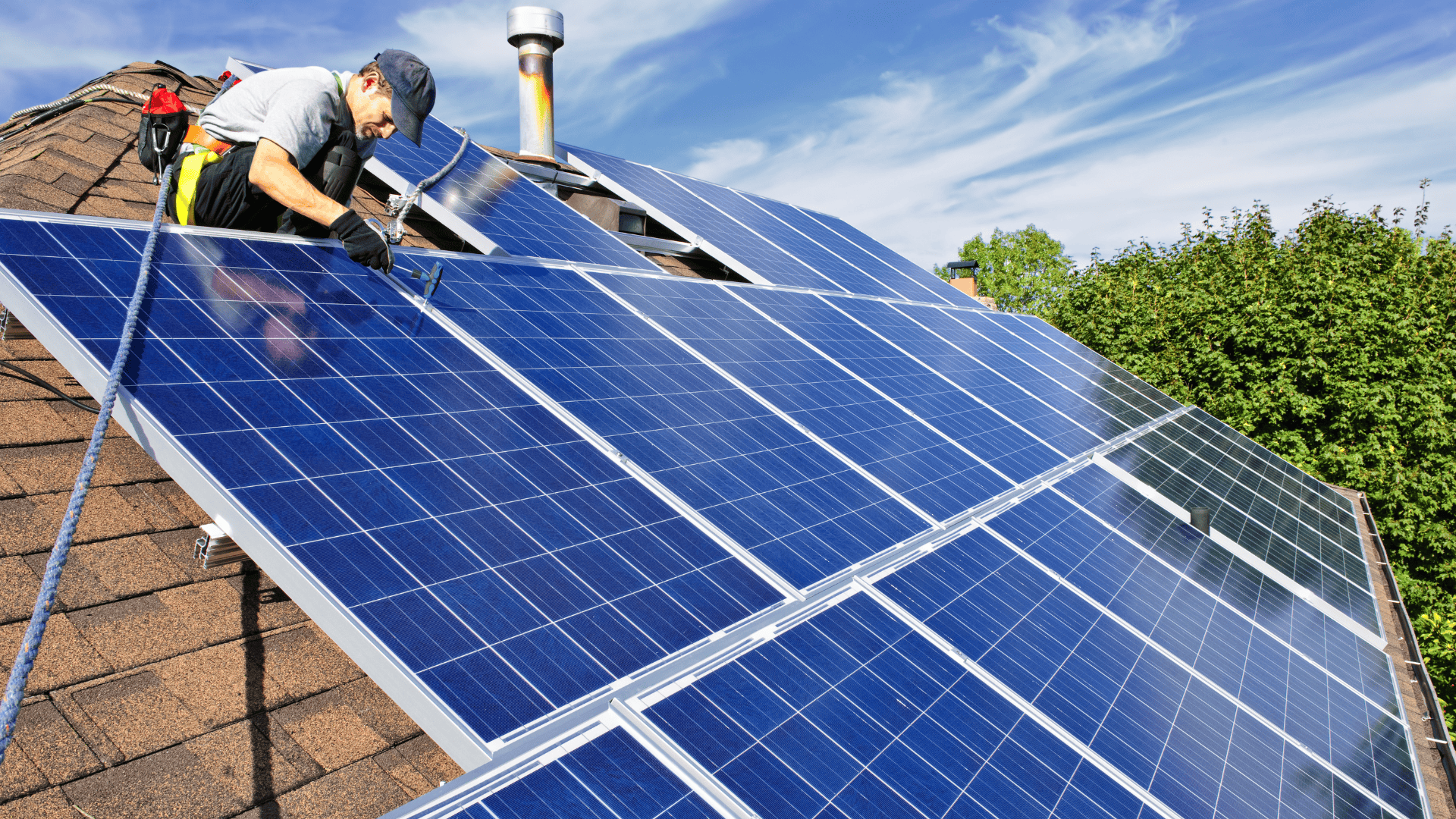
Larger solar arrays are often built from multiple strings of panels wired together in parallel, feeding into a shared connection point before the power moves onward. This arrangement introduces a failure mode that doesn’t exist in a single-string system: if one string develops a fault, the healthy strings can push reverse current back through it, effectively feeding electricity into the very fault that’s causing the problem. String fuses exist specifically to catch this scenario, interrupting the reverse flow before it can damage conductors or components. It’s a subtle piece of engineering that only becomes necessary once an array grows past a certain scale, which is part of why the protection strategy has to be designed for the specific array, not applied as a one-size-fits-all component list.
Advertisement
Surge protection: insurance against something that happens somewhere else
A significant share of the electrical stress facing a solar array doesn’t come from the array itself. Lightning striking anywhere near a property, even without a direct hit, can induce a transient surge along the long conductor runs that connect panels to inverters. A surge protective device positioned correctly — at the array end and again near the inverter — gives that transient energy a controlled path to ground before it reaches sensitive electronics. Skip this step, or install it with long, indirect grounding leads instead of short, direct ones, and the protection exists on paper without doing much in practice.
Why these pieces need to work as a system, not a shopping list
Here’s where a lot of otherwise well-intentioned solar installations go wrong: each protective component gets selected individually — a fuse here, an isolator there, a surge protector added almost as an afterthought — without anyone stepping back to check that they’re rated for the same voltage class, coordinated to interrupt faults in the right sequence, and physically arranged so their connections stay short and effective. OmniSol’s solar DC protection guide walks through this as a coordinated design problem rather than a parts list, which matters because the value of each component depends heavily on how well it works with the others around it.
A perfectly rated fuse means little if the isolator next to it isn’t matched to the same voltage class, and how fuses, isolators, and surge protection work together as a coordinated system is ultimately what determines whether the array’s protection layer functions as intended during an actual fault — not whether each part looks correct in isolation.
The economics of getting this right the first time
The financial logic here is straightforward once you see it laid out: an underrated isolator or an incorrectly specified fuse holder might cost a fraction of what a damaged inverter or battery bank costs to replace. In a fault condition, undersized protection doesn’t just fail to help — it can actively allow damage to spread to equipment that would otherwise have been fine. For a rooftop installation or a remote ground-mounted system where a service call is neither quick nor cheap, the extra planning at the design stage is one of the better investments in the entire project.
Solar technology tends to get discussed in terms of its most visible breakthroughs — higher efficiency cells, better storage chemistry, smarter inverters. But some of the most consequential engineering in a solar system is the part explicitly designed to be invisible: the layer of protection working quietly to make sure everything else keeps working. It rarely makes headlines, but it’s often the difference between a system that operates reliably for decades and one that fails at the first real test.
This is a sponsored post by Izone Media360 Digital Agency. All reviews and opinions expressed in this post are not based on the views and opinions of Tomorrow’s World Today.
 Read Exclusive Stories
 Bookmark & Save Articles For Later