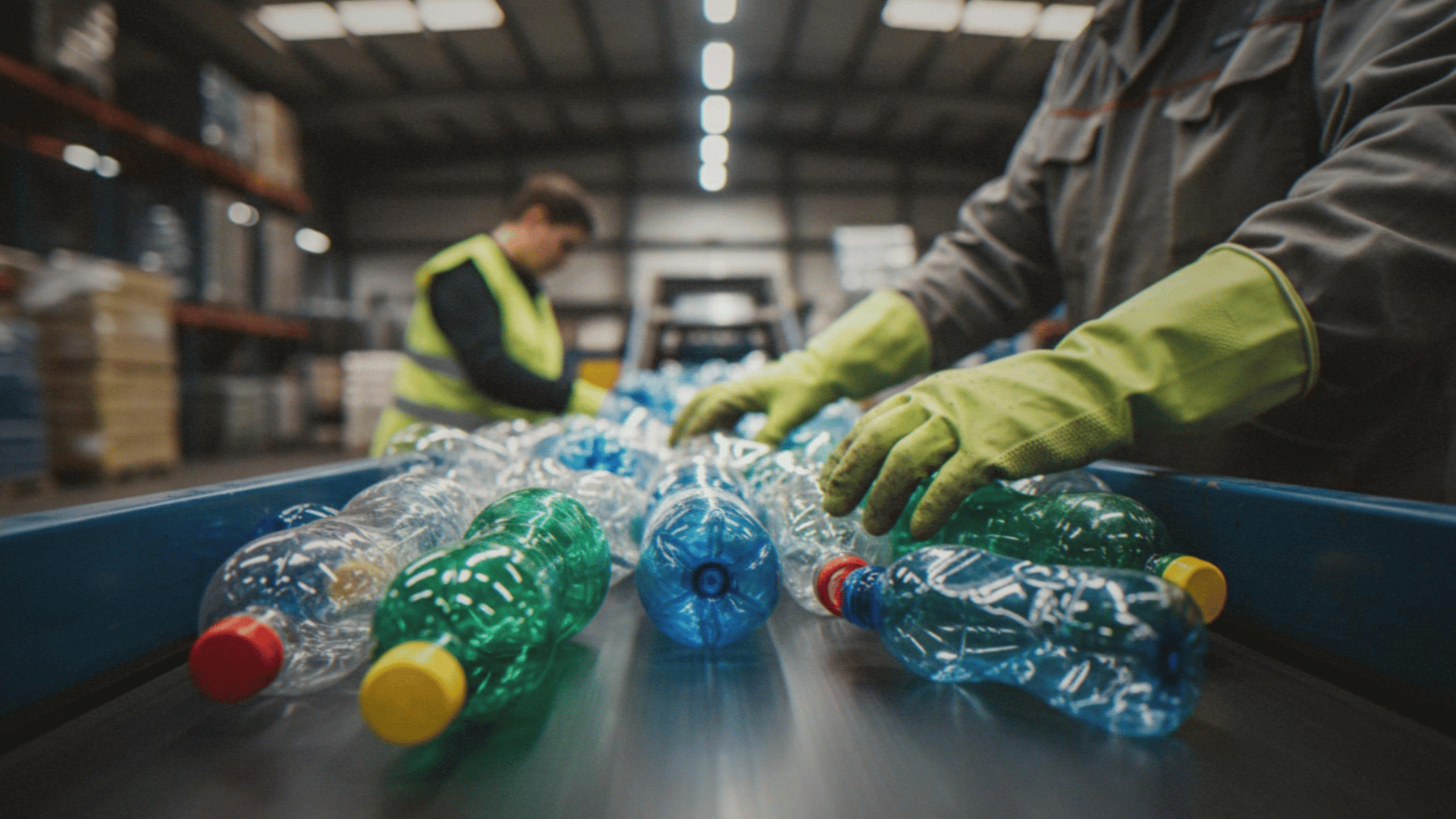
Researchers at Penn State want to find a better solution to plastic waste instead of sending it to landfills. Through a new method, plastic bottles could end up powering electronics.
The team of researchers discovered a way to turn everyday plastics, PETs, into synthetic graphite. Recognized as a critical mineral, graphite plays a big role in lithium-ion batteries.
A Cleaner Way to Build Batteries
Usually, making synthetic graphite requires metal catalysts like iron or cobalt. However, the problem is that those metals leave behind impurities that require chemicals to clean them out.
The Penn State team mixed shredded PET plastic with a tiny amount of graphene oxide, just 2.5% by weight. Then, they heated it using a carefully controlled process. The graphene oxide acted like a template, helping the carbon atoms in the plastic stack perfectly into graphite.
According to the researchers, the new graphite actually has a better, more organized crystal structure than the natural graphite usually used to test batteries.
Advertisement
Lead author and doctoral student Shakshi Sekar explained, “By avoiding metal catalysts, we can produce cleaner graphite while reducing chemical use and waste generation.”
Rethinking Plastic Recycling
Even when PETs are thrown in the recycling bin, a lot of it is still thrown away or turned into lower-quality items. This new method offers a different, much cleaner path.
“We’re not simply finding a use for waste plastic,” Sekar said. “We’re creating a valuable material that could help support the growing demand for batteries and clean energy technologies.”
The researchers still need to test if they can do this on a massive scale and how well these batteries will hold up over time.
“Most people think of a plastic bottle as waste once they’re done using it,” said Shakshi Sekar. “Our work shows that the same material can become a valuable resource for producing graphite, which is essential for modern battery technologies.”
Sekar added, “If waste plastic can become a feedstock for advanced energy materials, it changes how we think about recycling. Instead of viewing plastic as a disposal problem, we can see it as a resource that helps support clean energy technologies.”
 Read Exclusive Stories
 Bookmark & Save Articles For Later