The ITER Organization recently launched operations at its new Magnet Cold Test Facility. Operations also included a major milestone when the facility cooled down a massive 330-ton magnet coil to minus 269 °C (4 Kelvin). This is the exact temperature where the magnet becomes a superconductor, meaning it can carry high currents and create strong magnetic fields.
This new facility allows the team to test these giant magnets at full current before they actually install them in the main fusion machine.
Testing the Magnets Lowers the Risks
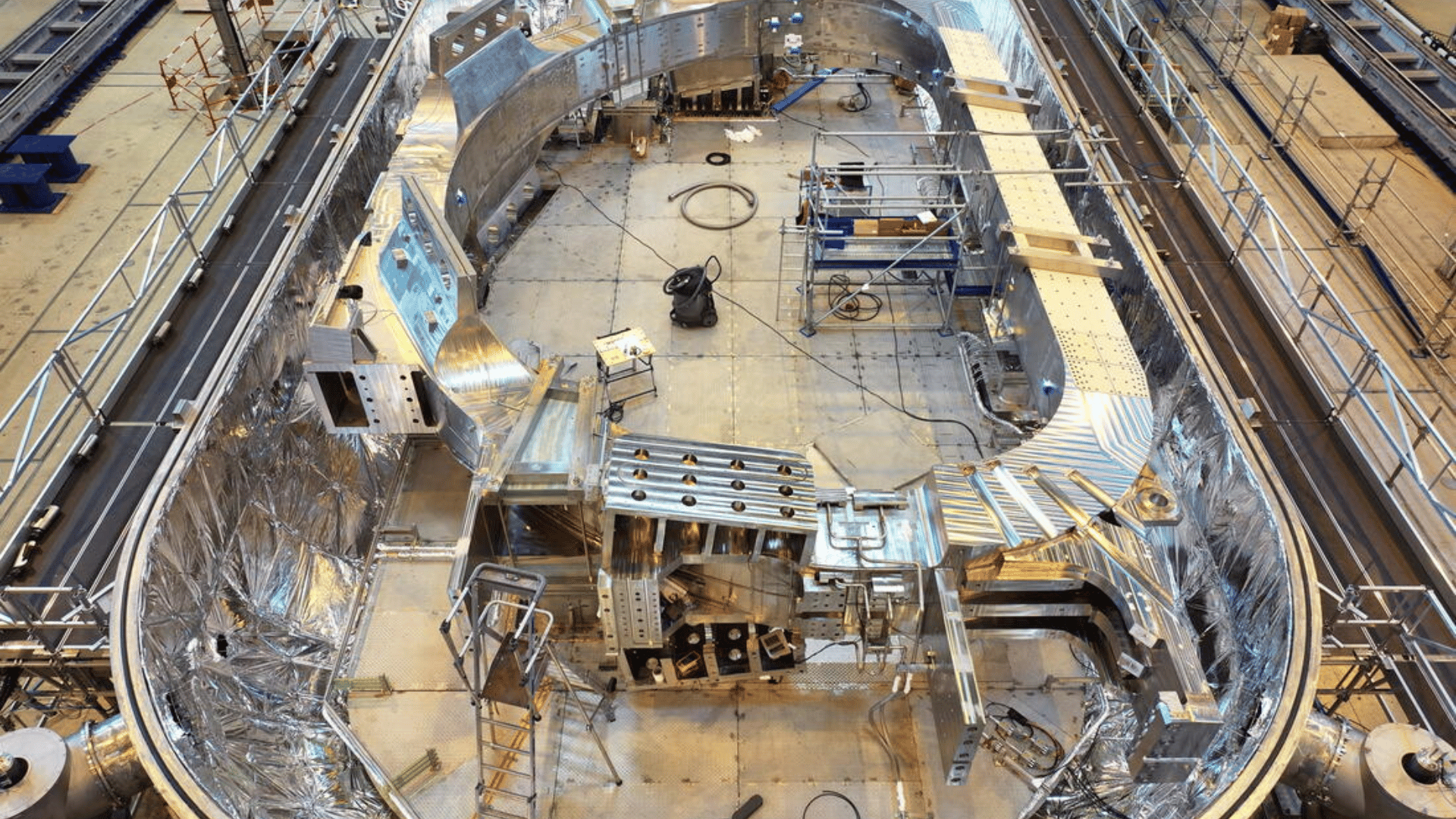
Testing these magnets takes a lot of effort. For example, the first magnet on the bench is a toroidal field coil made from niobium-tin. Other coils from different manufacturers will follow, including a 200-ton poloidal field coil. To test something this big, you need the appropriate infrastructure, including a 11-by-20-meter container called a cryostat, a heavy-duty power supply, and a direct link to a helium refrigeration plant.
Instead of building a brand new structure, ITER set up the test facility in an existing building previously used to manufacture parts. This saved time and resources by using the building’s large size, heavy lifting equipment, and proximity to the cooling plant.
Advertisement
The tests will give engineers crucial data on how the magnets behave, how the electrical interfaces hold up, and how the cooling systems perform. Additionally, it gives the team hands-on experience running the supporting power and vacuum systems. Testing everything now helps fix potential issues before the whole interconnected system starts up later.
“ITER as a first-of-a-kind project requires ingenuity as well as discipline,” said ITER Director-General Pietro Barabaschi. “By repurposing existing infrastructure, using the capabilities of our cryoplant, and mobilizing a multidisciplinary team, we have created a practical way to reduce risk before integrated commissioning.”
Barabaschi added, “This is important for ITER as well as an example of how ITER can support the wider fusion ecosystem by creating knowledge, infrastructure, and operational experience that others can use.”
Opening Up the Facility
It took 12 days to cool the first coil down to its operating temperature. Now that the magnet is officially in its superconducting state, high-current testing will begin soon.
Each magnet coil will spend about four to six months on the test bench. Once ITER finishes its own testing program, it plans to open the facility to private fusion companies and other stakeholders to share knowledge and help the broader fusion community.
 Read Exclusive Stories
 Bookmark & Save Articles For Later