If you talk to any woman over the age of 40, the subject of mammograms is likely to come up. Most will tell you that while they are vital in catching breast cancer early, they are decidedly not the most pleasant procedure. There is a lot of pressure and discomfort involved, and for some women, it is even painful.
Enter Kathryn Keenan, a researcher at NIST who is looking to change that. By using a different method called low-field MRI.
Why Mammograms Can be Tough
Standard mammograms use X-rays to examine the breasts for signs of cancer. However, in order to get the best possible images, the breast has to be compressed. This is uncomfortable for the majority of women, but it can be difficult for women with dense breast tissue. In those instances, the X-ray may miss the cancer or yield a false-positive result.
This has been a personal problem for Keenan. As a woman with dense breasts, she has to sit through these false positives herself, which motivates her to find a better solution.
A Smaller, Cheaper MRI
Advertisement
Standard MRIs are massive machines that are loud and can cost millions of dollars. Because of this, they are not often the first imaging tool used on patients.
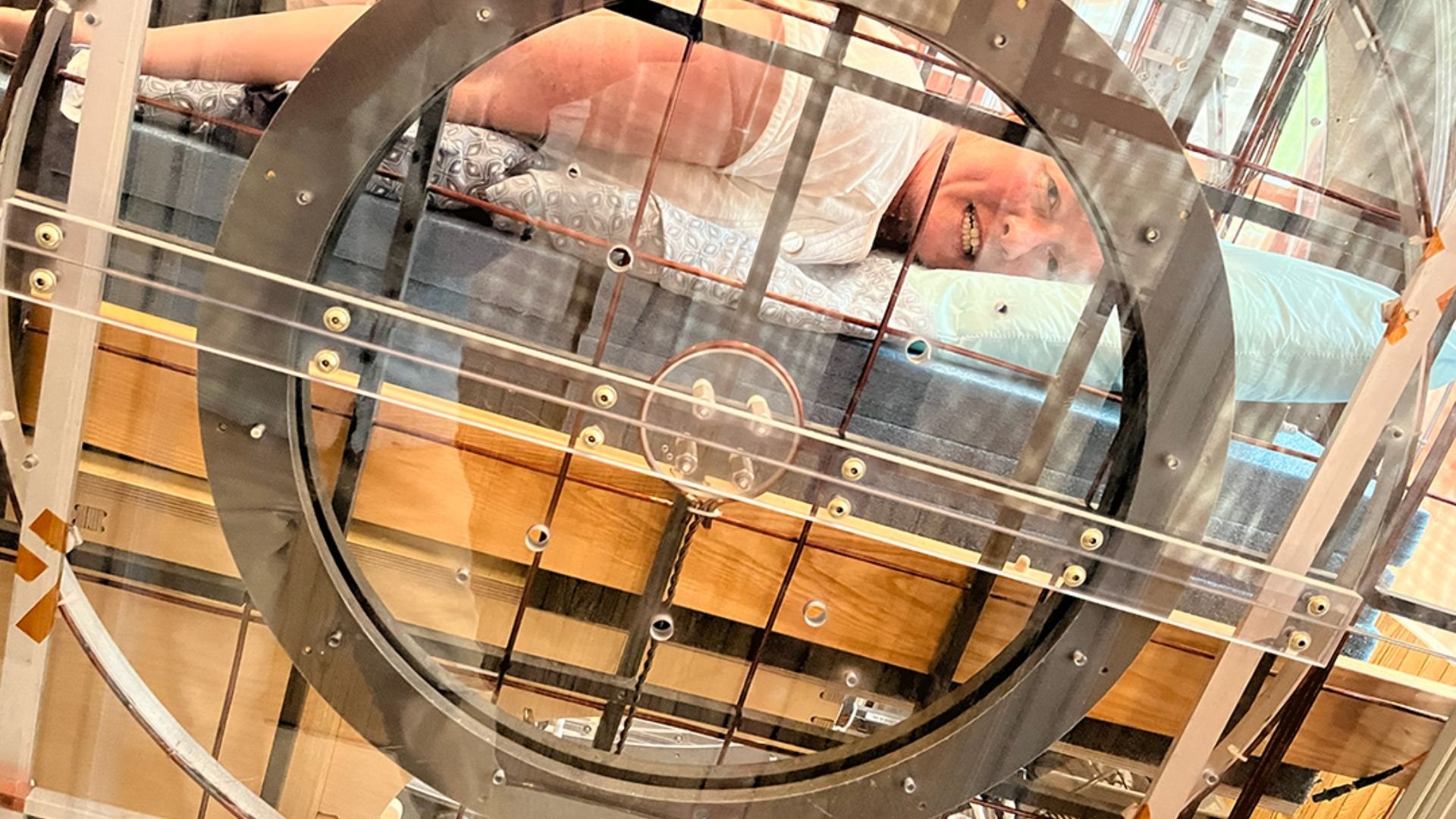
Low-field MRI machines use a weaker magnetic field. These smaller machines cost a fraction of an MRI and do not require the patient to be squeezed into uncomfortable positions.
Keenan and her fellow researchers have built a prototype of such a low-field MRI machine and tested it on a few volunteers. She tried it out herself and says it was completely painless compared to the mammogram she had just a few months prior.
Looking at the Road Ahead
The technology is not yet available to the general public. Currently, the images produced by this low-field MRI are not as strong as traditional MRIs and can only scan one breast at a time. However, the potential for these machines to be widely used is significant. Radiologists who examined the images from the low-field MRI were impressed by their detail. These machines could one day be used in operating rooms to ensure that all of the cancerous tissue of a tumor has been removed prior to the patient waking up from anesthesia.
While it is a project that will take some time to develop, the goal is to create a future in which staying healthy does not come at the cost of discomfort and pain.
 Read Exclusive Stories
 Bookmark & Save Articles For Later