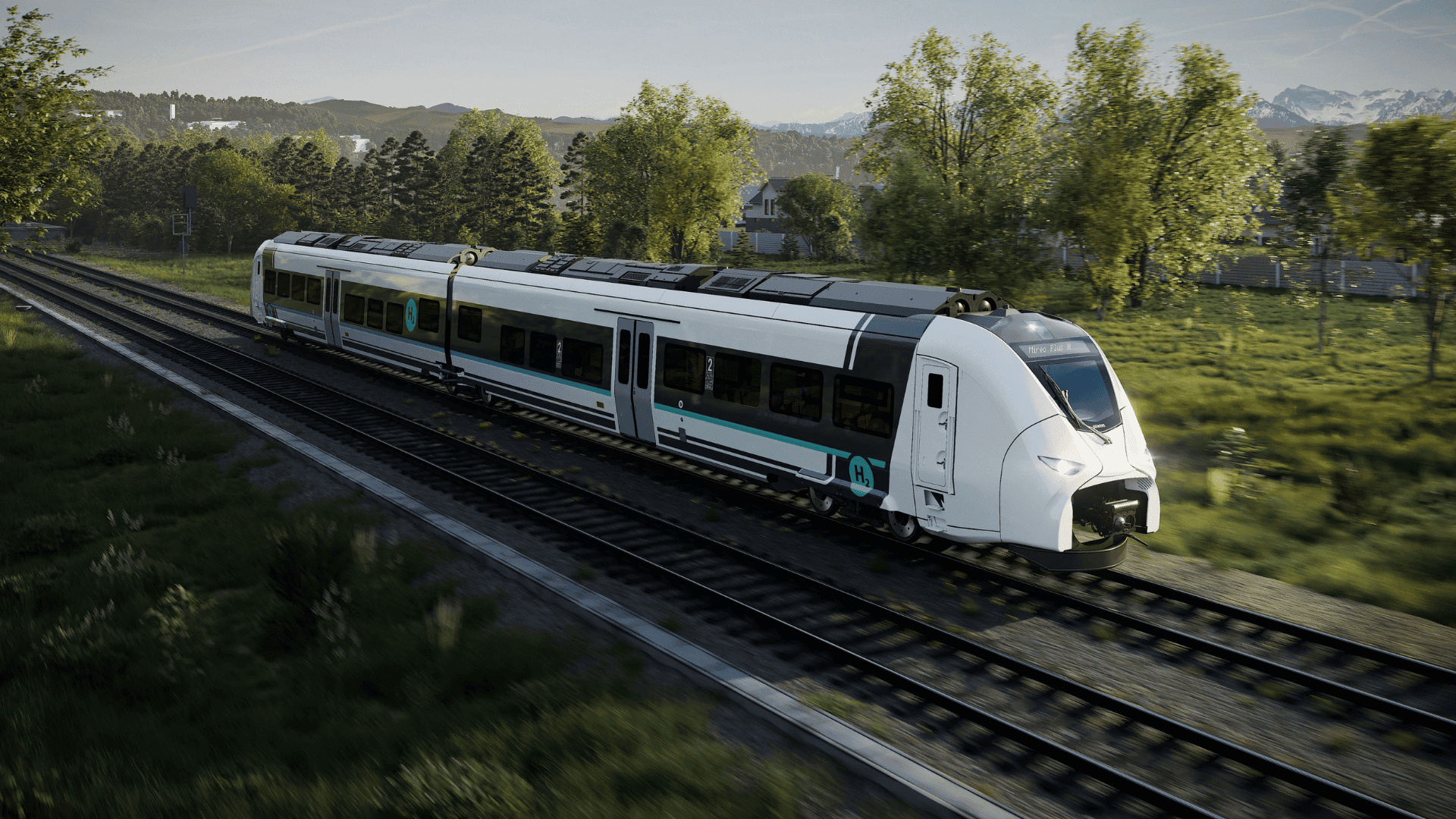
Siemens Mobility just signed a new deal with Romania’s Railway Reform Authority to bring 12 hydrogen-powered trains to the country.
This is the first hydrogen train contract in Romania and one of the first projects of its kind in Eastern Europe. These trains will start carrying passengers in 2029. and will eventually replace old diesel engines to reduce noise and pollution. The deal also includes 15 years of maintenance, which will be handled right in a depot in Bucharest.
“We are proud to deliver the first fleet of hydrogen trains for Romania. With the Mireo Plus H, we combine a proven regional train platform with state‑of‑the‑art hydrogen technology, enabling zero‑emission rail operations on non‑electrified lines,” Andre Rodenbeck, CEO Rolling Stock at Siemens Mobility, said. “Hydrogen will play a key role in achieving climate‑neutral mobility in Europe, and this project clearly demonstrates how innovation can be translated into reliable and economically attractive rail solutions.”
Hydrogen-Powered Train Fleet
Advertisement
The trains run on a hydrogen fuel cell system combined with battery storage that can be charged in two ways. They use the fuel cell system, or they capture energy from braking, meaning the trains create zero local emissions when running.
Siemens designed the trains to be lightweight and simple. That keeps maintenance costs low and energy use down, cutting energy use by up to 25 percent.
Each trainset has 131 fixed seats and 5 folding seats. The top speed is 120 km/h. Trains can also be linked together when more space is needed. For safety, the new models include modern train control systems. Passengers will also get clear travel info through interior and exterior screens and automated announcements.
By updating regional rail travel, Romania is taking a big step toward its long-term sustainability goals. And that’s why it matters for the future of travel.
 Read Exclusive Stories
 Bookmark & Save Articles For Later