Though bee cognition has been studied for years, many scientists have speculated that previous experiments involving bees and numbers simply demonstrate the ability to differentiate between visual cues, rather than an understanding of numbers. A new study accounted for how bees see the world to disprove this, and the bees still showed the ability to count.
Can Bees Actually Count?
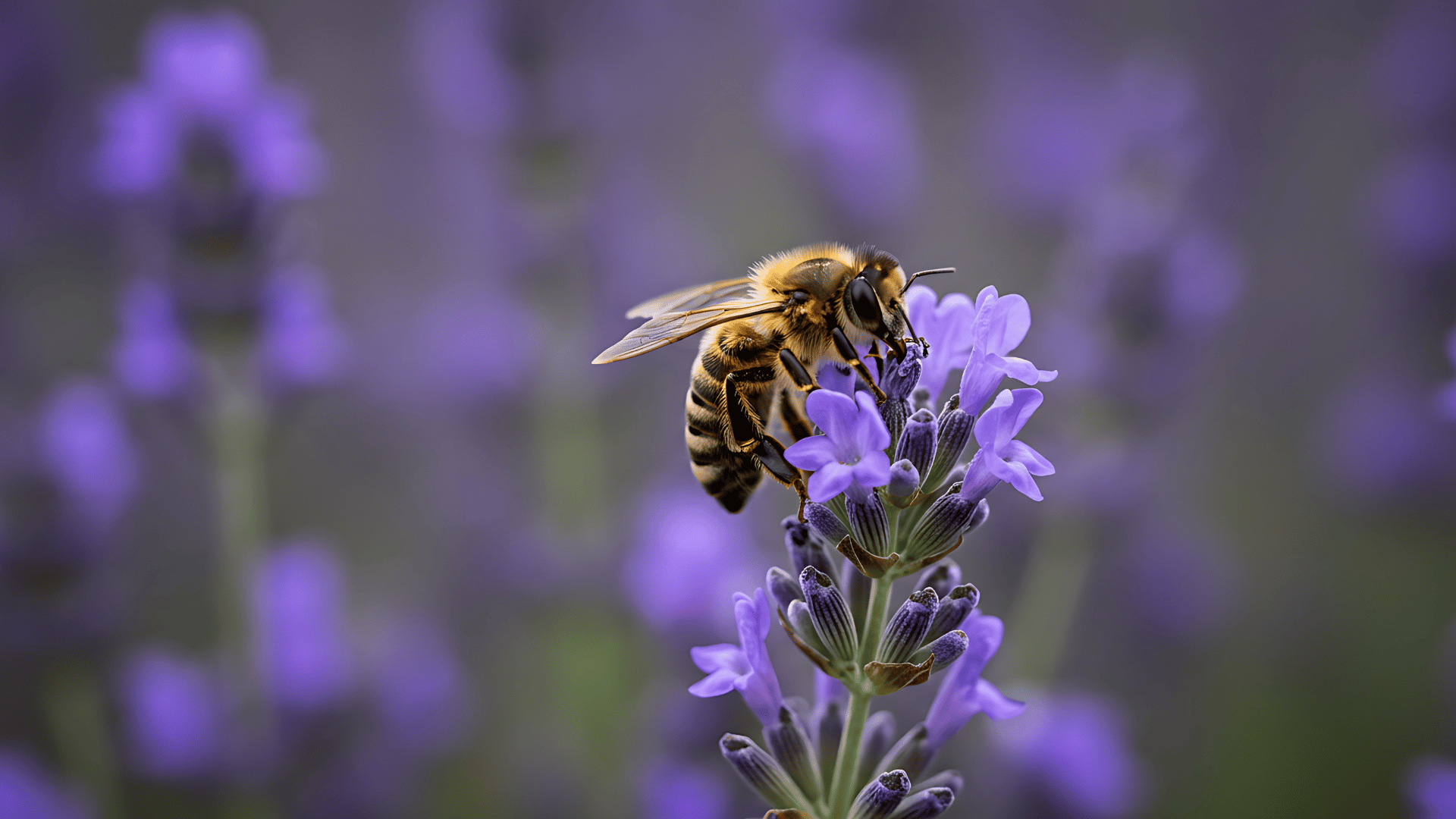
“There has been a debate about whether bees are really ‘counting’ or just reacting to visual patterns. Our results show that this criticism doesn’t hold when you consider the biology of the animal,” says neuroscientist Mirko Zanon of the University of Trento in Italy.
“When we analyze the stimuli in a way that reflects how bees actually see the world, what remains is actual sensitivity to number.”
Previous experiments assessing bees involved showing them cards with patterns on them. One 2019 experiment, for example, associated invented symbols with numerical values. The bees were trained to recognize the symbols, shown cards with a number of shapes on them, and tasked with finding the symbol that best represented the number.
During this experiment, the bees achieved an accuracy rate of 75-80 percent during the training phase and 60 to 65 percent during the actual tests. This is a higher rate of accuracy than could be attributed to chance, leading researchers to believe that the bees could recognize numerical quantities.
Critics of the study, however, suggested that the bees may simply be pattern-matching, rather than counting.
Advertisement
“We must put the animal’s perspective first when assessing their cognition, or we may under- or overestimate their abilities,” says zoologist Scarlett Howard of Monash University in Australia.
“We see and experience the world quite differently from animals, so we must be careful of centering human perspectives and senses when studying animal intelligence.”
Researchers then reanalyzed the visual patterns used in previous experiments to reflect how bees perceive them. They used a mathematical model based on previous estimates of the honeybee’s spatial acuity.
Critics suggested that bees from previous studies may have simply chosen the options that looked visually “busier”, but having more objects doesn’t necessarily equate to more perceivable detail from a bee’s perspective. This suggests that bees are responding to the actual number of shapes, rather than the overall appearance of what they’re viewing.
“It can be challenging to put ourselves in the mind of a bee to imagine how they see the world, but trying to see the world through an animal’s eyes is an essential part of our work,” Howard says.
“The bees always surprise us with how they move through the world, interpret our questions, and make decisions.”
The research has been published in the Proceedings of the Royal Society B: Biological Sciences.
 Read Exclusive Stories
 Bookmark & Save Articles For Later