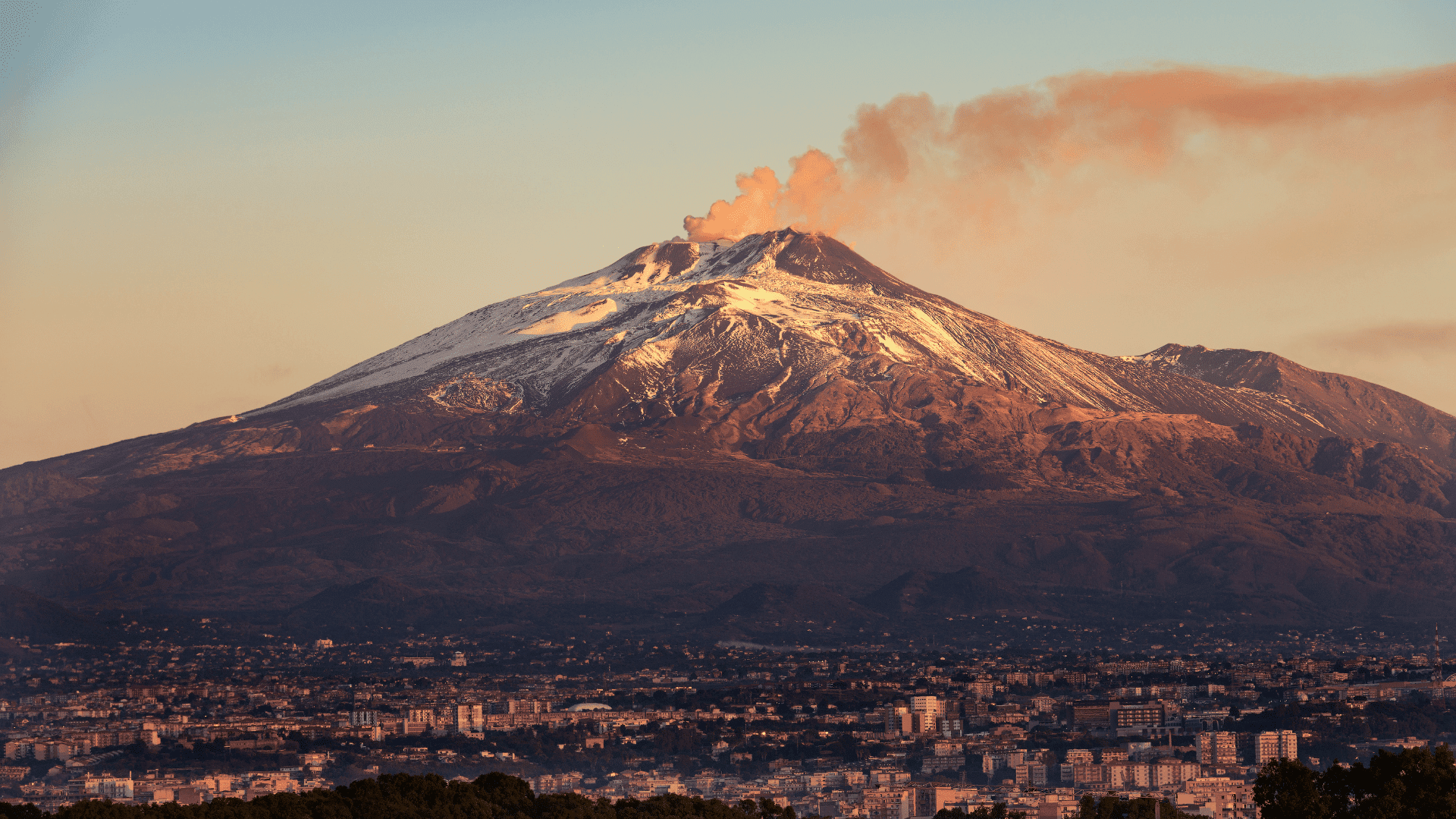
New research shows that Mount Etna may have formed in a unique way, similar to how some seamounts, called petit-spot volcanoes, grow on the ocean floor, making it unlike any other volcano on Earth. However, unlike seamounts, which are just a few hundred feet tall, Mount Etna towers 11,165 feet above sea level. The findings were reported in the journal JGR Solid Earth,
A New Type of Volcanism
“This actually represents a new type of volcanism,” Sarah Lambart, a petrologist at the University of Utah who was not involved in the new research, told Live Science.
Prior to this study, researchers categorized volcanoes into three types: mid-ocean ridge volcanoes, intraplate volcanoes, and subduction zone volcanoes. Mid-ocean ridge volcanoes form where the oceanic plate pulls apart, and magma formed below rises to form a new crust.
Intraplate volcanoes involve “hotspots” in the mantle that cause a concentrated zone of eruptions. Finally, subduction zone volcanoes form on the continental crust inland from a subduction zone, as an oceanic plate pushes under the continent and causes rocks to melt on the surface.
According to the new research, Mount Etna formed differently. Though it resides near the African plate sliding under the Eurasian plate, it’s right on top of where the plates meet, rather than inland like subduction zone volcanoes.
Advertisement
Mount Etna’s lava appears similar to that of a hotspot volcano, despite there being no evidence of a hotspot beneath it. In its early evolution, Mount Etna erupted small amounts of silica-rich lava and later started spewing lava rich in alkali metals, like potassium and sodium.
Why It’s Unique
According to Sébastien Pilet, a lecturer in Earth sciences at the University of Lausanne in Switzerland, this is unusual as silica-rich lava typically comes from magma reservoirs with a lot of melt, so they erupt in large volumes, while alkali-rich lava comes from less-melted rocks in the mantle and thus tends to erupt in small amounts.
Due to the slowdown of seismic waves in this region, researchers believe that Etna’s lava rose from a low-velocity zone, a melted layer at the top of the mantle. Etna is unique due to its location, where the subducting plate isn’t driving under the Eurasian plate evenly, leading the rock to fold and deform.
“The folds are allowing the magma to rise up,” Pilet said.
Pilet added that the initial magma had to travel from the low-velocity zone through the African Plate, and it reacted with the crust along the way to form large amounts of silica-rich lava. This is intriguing to researchers because the lithosphere, which includes the crust and upper mantle, has been understudied.
“The lithosphere might actually have a very important role in contributing one way or another to the magmatic activity we are seeing everywhere, not only Mount Etna,” Pilet said.
 Read Exclusive Stories
 Bookmark & Save Articles For Later