Power and space are keys to building data centers. However, finding the perfect amount of each is incredibly difficult. As the demand for AI grows, tech companies are running out of land, water, and electricity in cities. Aikido Technologies thinks the solution is out in the middle of the ocean rather than on the land.
The company recently introduced the AO60DC, a floating platform that combines a massive wind turbine with a high-end data center. Instead of taking up acres of real estate, these units sit in deep water, using the wind to power the servers and the ocean itself to keep them cool.
Taking AI to the Open Sea
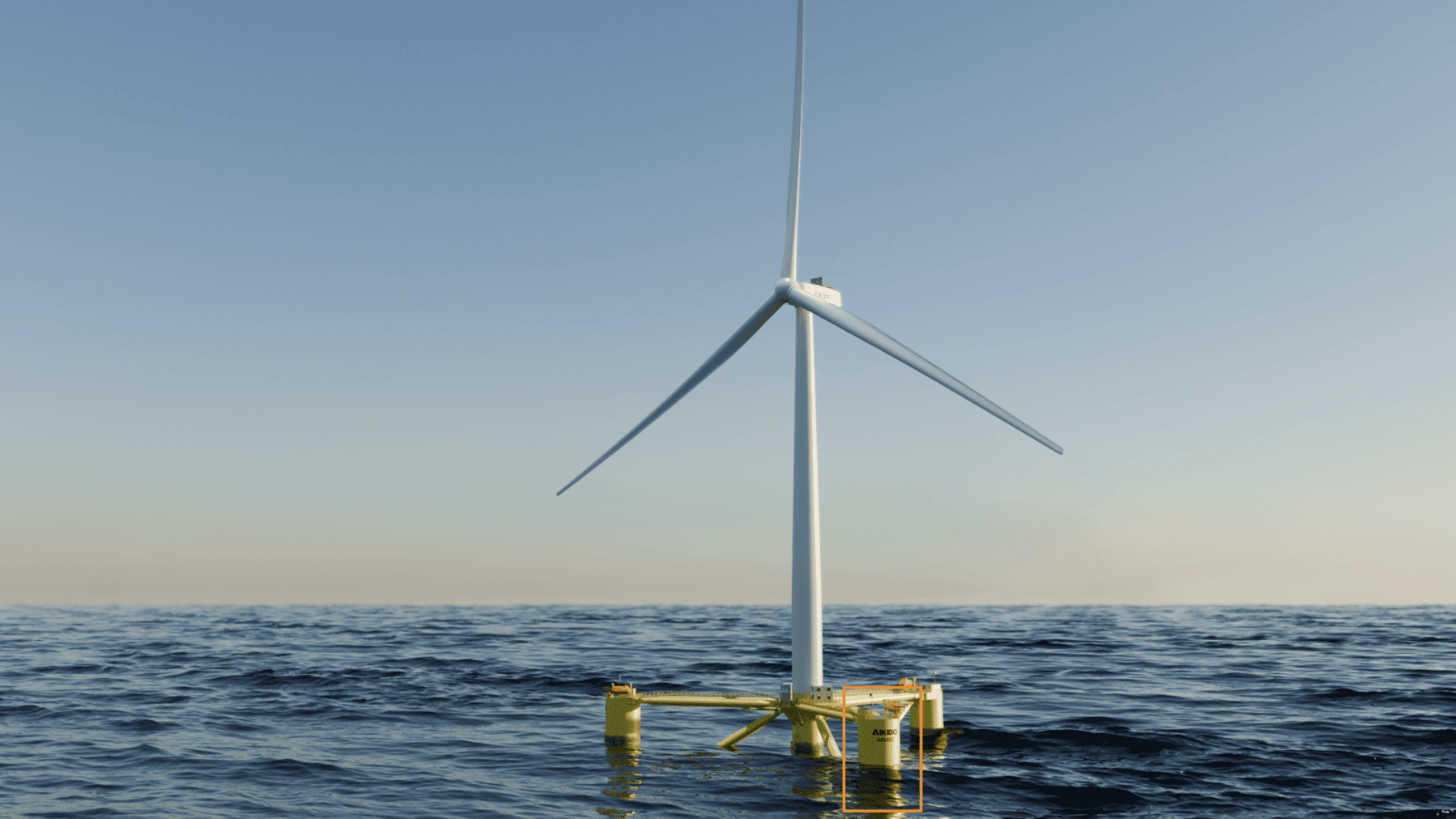
Each platform is designed to hold a wind turbine and a large battery system to keep things running. The idea is to build “AI factories” at sea that can be placed within 200 miles of major coastal cities. This keeps the connection fast while moving infrastructure out of sight.
One of the major benefits is the cooling capabilities. Data centers get incredibly hot, but these floating units use a passive system that transfers heat through the steel hull and into the seawater. This results in a power usage effectiveness (PUE) of below 1.08, which is much more efficient than many traditional buildings on land.
Advertisement
“Before we go off-world, we should go offshore,” said Sam Kanner, CEO of Aikido Technologies. “First movers in the O&G industry exploited deepwater resources over 40 years ago and reaped massive benefits.”
Kanner added, “Aikido is well positioned to integrate proven, offshore components with typical data hall construction techniques to build GW-scale AI factories faster, cleaner, cheaper and more efficiently than conventional techniques.”
Faster and More Powerful Data Centers
Aikido uses a “flat-pack” design, meaning the platforms can be assembled much faster than typical offshore structures. The data halls are built in a factory and then lifted onto the floating base. Because many countries have already designated certain ocean areas for wind farms, the company can skip some of the usual red tape involved in finding a site.
A proof-of-concept unit is being developed in Norway for later this year, and the first full commercial project is aimed at the UK for 2028.
 Read Exclusive Stories
 Bookmark & Save Articles For Later