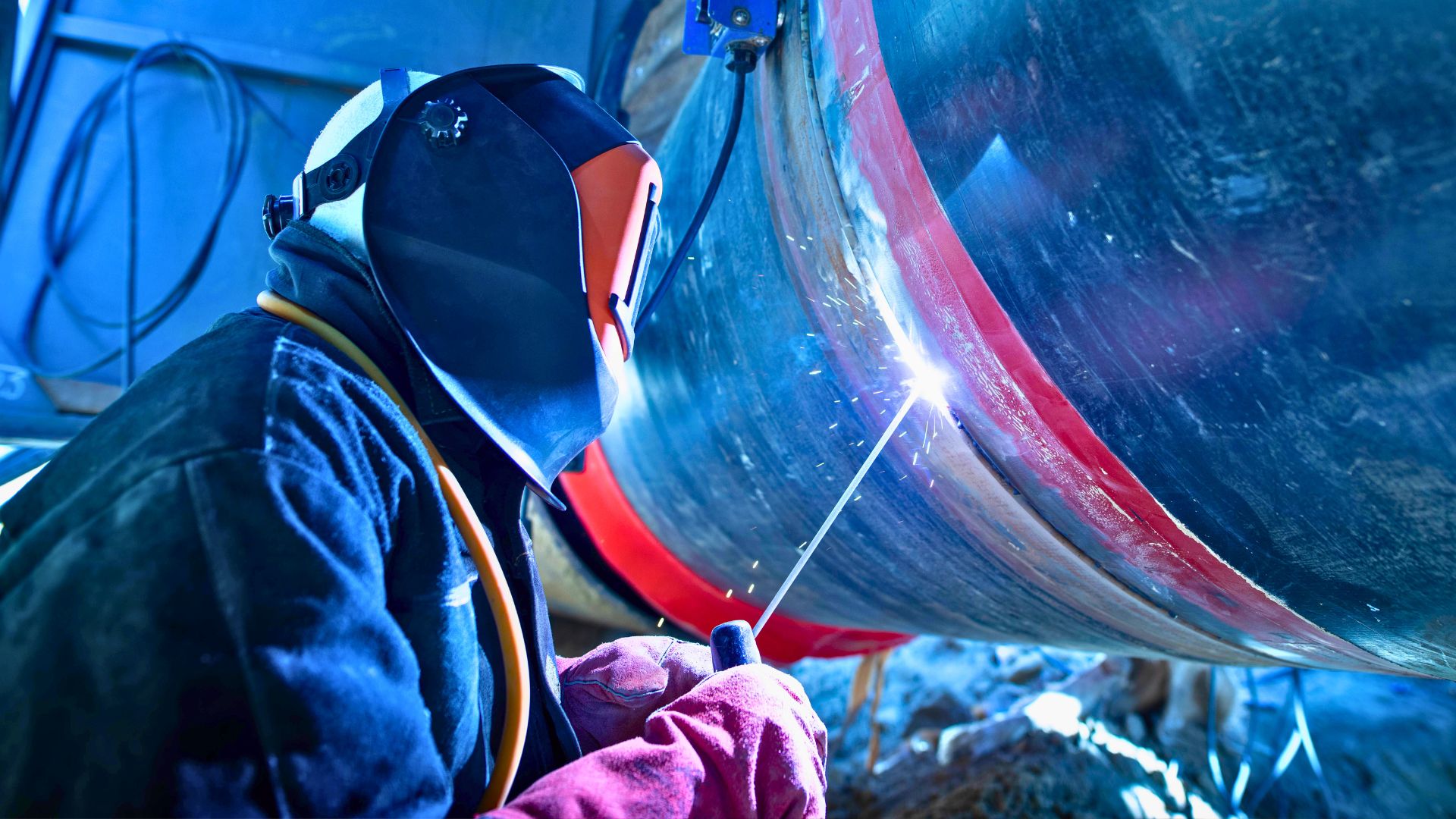
If you walk into a metal shop or watch a bridge being repaired, you’ll probably see a shower of sparks and a bright blue light. Most of the time, that’s stick welding. It is the old-school way of joining metal, and even though we have much fancier tech now, it isn’t going anywhere.
Technically, it’s called Shielded Metal Arc Welding (SMAW) or manual metal arc welding (MMAW). But “stick” is easier to say. It works by using an electric current to create an arc between a metal rod (the electrode) and the piece of metal you’re working on. That arc is incredibly hot—enough to melt the rod and the base metal so they fuse together.
The “stick” is covered in a material called flux. When it heats up, the flux burns, creating a small cloud of gas. This is important because it protects the liquid metal from the air. Without that gas, oxygen would ruin the weld, making it brittle.
A bit of history
People have been playing with electric arcs since the early 1800s. But back then, it wasn’t very practical. It took about 80 years to reach the point where someone patented a torch. By the early 1900s, engineers realized that coating the metal rods strengthened the welds. For a long time, these coated rods were expensive to make, but by the 1970s, manufacturing got cheaper. That’s when stick welding really took off for everyday use.
Advertisement
Why do we still use it?
There are newer methods like TIG or MIG welding that look “cleaner,” but stick welding has a few big perks:
- It’s cheaper: You don’t need big tanks of shielding gas. The gas is built right into the rod.
- It’s portable: You can easily carry a stick welder into the field or up a ladder.
- It’s tough: It works on dirty or rusty metal where other methods would fail.
It should be noted that it certainly isn’t perfect. Stick welding is a bit messy. It leaves behind a layer of crusty “slag” that you have to chip off with a hammer afterward. It also takes a lot of practice to get a smooth bead. If you aren’t careful, you can end up with porosity, which are tiny air bubbles trapped inside the metal. You can’t always see them, but they make the joint weak.
And, like any welding, it’s dangerous. The light is bright enough to burn your retinas, and the fumes aren’t great for your lungs. You need a good mask and a ventilated space.
Even with the mess and the learning curve, stick welding stays popular because it actually works. It’s the reliable, low-tech backbone of the construction and repair world.
 Read Exclusive Stories
 Bookmark & Save Articles For Later