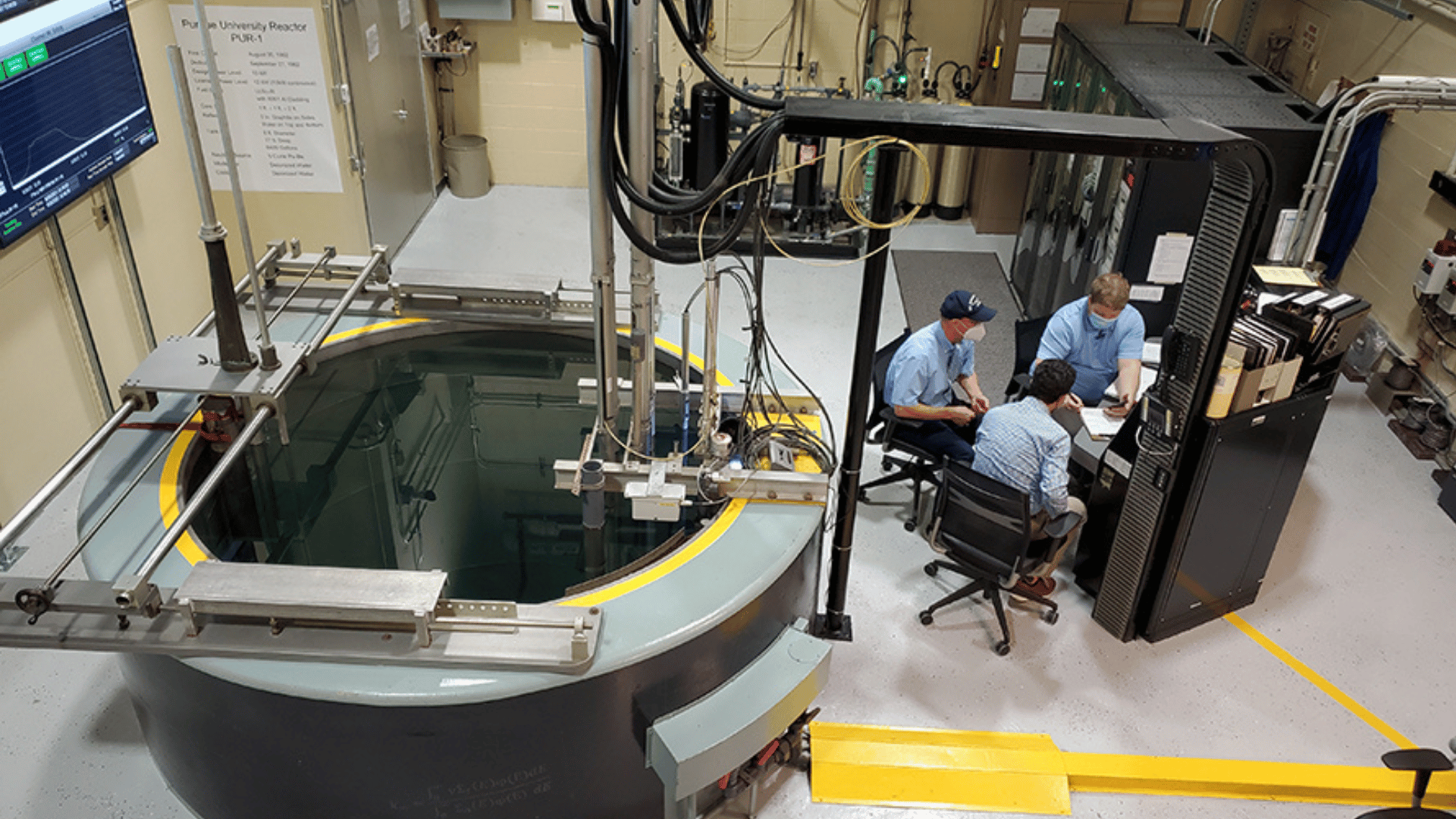
Deep underground at Purdue University sits an all-digital nuclear reactor that only generates enough power to run about 10 microwaves. This small setup, known as PUR-1, is the first of its kind in the U.S and strictly for research.
Instead of the dials and knobs used since the 1960s, PUR-1 runs entirely on digital technology. It’s made up of computer screens, keyboards, and ethernet cables. Other countries already use digital controls, but PUR-1 is the only fully digital reactor licensed by the U.S. Nuclear Regulatory Commission.
“Our switch to digital instrumentation and control signaled to the nuclear industry that this is possible in the U.S.,” said Seungjin Kim, the head of Purdue’s School of Nuclear Engineering and facility director of PUR-1.
A “Twin” For Testing
Going fully digital allows engineers to take real-time measurements and use artificial intelligence to monitor the reactor’s health. They can spot problems early, making the system safer and longer-lasting.
To test this out without affecting the actual reactor, a team led by assistant professor Stylianos Chatzidakis built a “digital twin” in 2023. It’s a computer simulation that takes live data right from PUR-1’s sensors. They tested an AI program on it and predicted power changes with 99% accuracy.
“We are the only university that has a digital twin of a true nuclear reactor that can utilize reactor-generated signals for research,” Kim said. “That makes us unique.”
Advertisement
Remote Control and Security
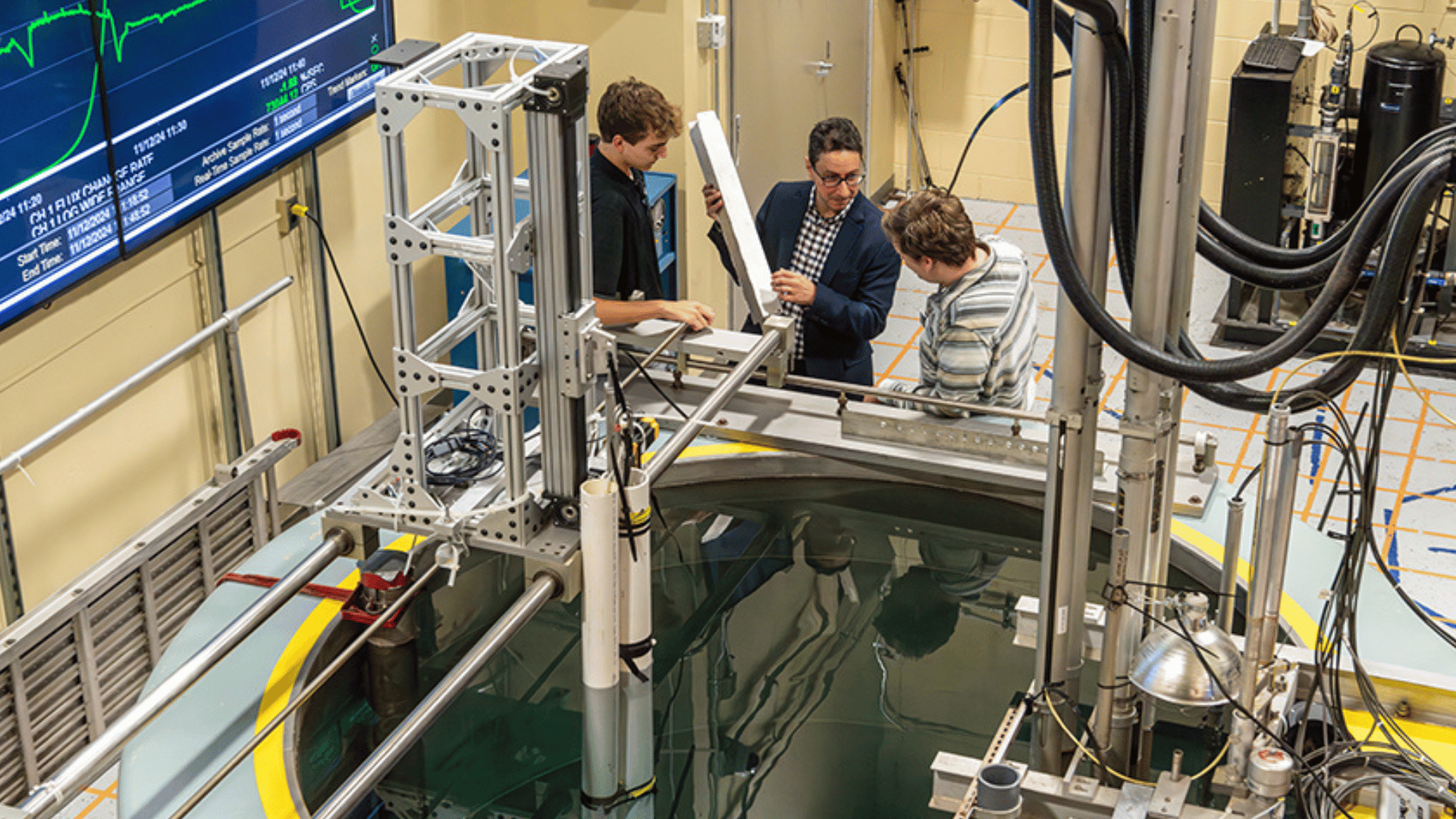
The team started looking at how this setup could help run new, smaller reactors built for rural areas.
“Let’s say that you have a fleet of small modular reactors or microreactors operating in a remote location,” Chatzidakis said. “If staff could be in a control room hundreds or thousands of miles away and monitor multiple reactors at once, we could minimize the operation and maintenance costs. Using PUR-1, we could quantify the potential reduction in costs.”
While the concept sounds great, running a nuclear reactor off-site requires serious security to stop cyberattacks. The Purdue team recently used PUR-1 data to show that AI models can successfully detect abnormal security events.
“The idea is that the nuclear industry could refer to this report as they develop machine learning for cybersecurity,” Chatzidakis said. “Encryption based on quantum principles cannot be broken with any computer. It doesn’t matter if you have a supercomputer or a quantum computer — it’s unbreakable. Soon, they will test if quantum equipment can encrypt signals straight from PUR-1.”
 Read Exclusive Stories
 Bookmark & Save Articles For Later