Factory floors often experience motor failures, leading to production stoppages and a hunt for replacement parts. It’s a slow, expensive, and frustrating process for engineers.
Researchers at MIT believe there is a better way to solve these issues. Instead of waiting for a shipping container, they want to print new parts without leaving the factory floor. They’ve developed a new 3D-printing platform that can make complex electric machines in a single print.
How the 3D Printer Works
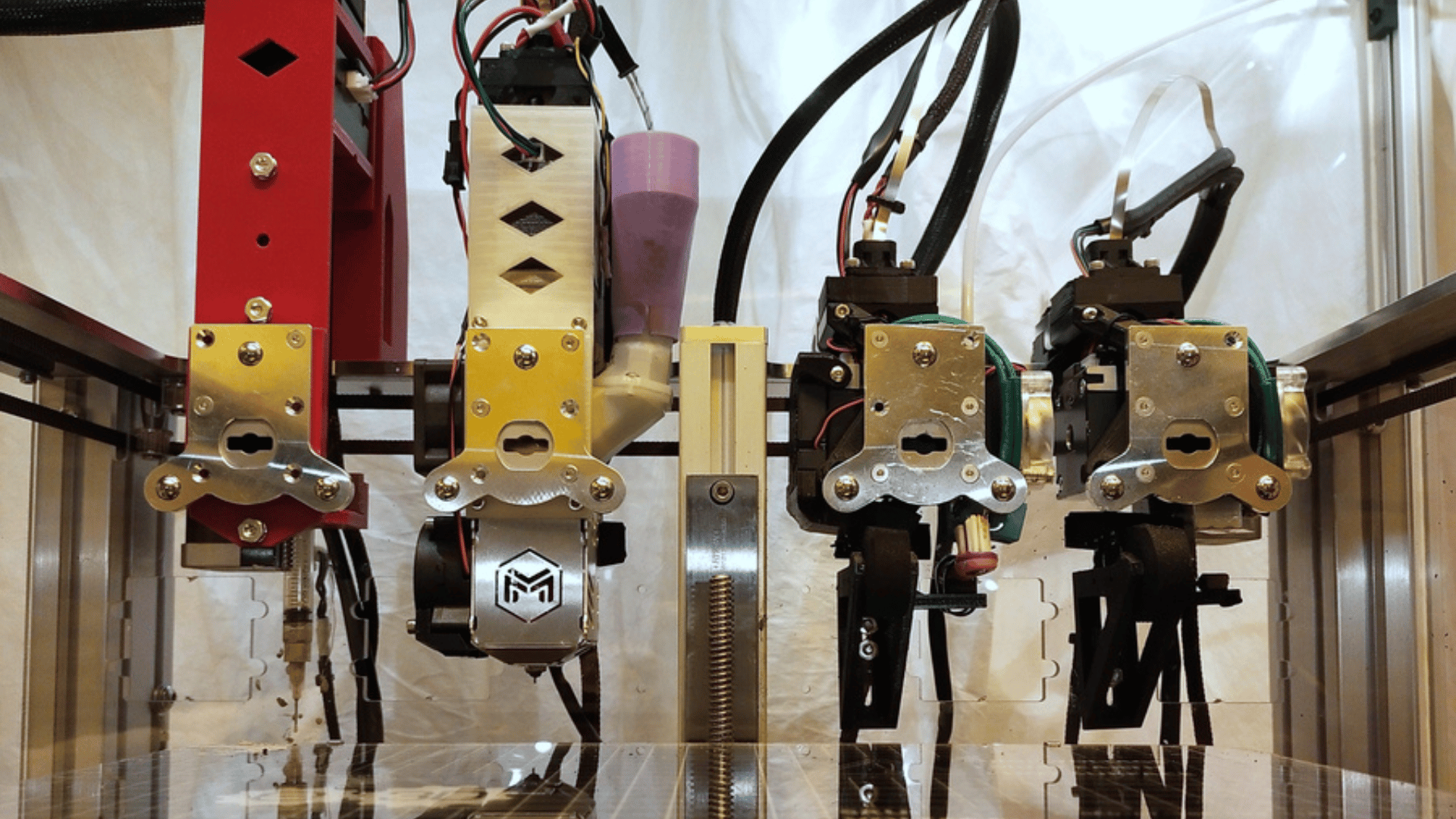
Most 3D printers you see in a hobbyist’s garage use one type of plastic. To make a motor, however, you need materials that conduct electricity and others that create magnetic fields. Obviously, most printers can’t handle that variety.
The MIT team solved this by building a system with four different “extruders,” the parts that squeeze material out of a nozzle. Because different materials come in different forms, like thick inks or solid pellets, the team had to get creative.
“There were significant engineering challenges,” said Luis Fernando Velásquez-García, a principal research scientist at MIT. “We had to figure out how to marry together many different expressions of the same printing method, extrusion, seamlessly into one platform.”
By using robotic arms and precise sensors, the printer can switch between these materials layer by layer. This ensures everything lines up perfectly, which is vital because even a tiny misalignment can ruin the motor’s performance.
Advertisement
Fast, Cheap, and Powerful
To test the system, the researchers printed a “linear motor,” the same kind used in baggage conveyors or robotic arms. According to researchers, it only took about three hours to print, and the raw materials cost only about 50 cents.
Even better, the printed motor performed as well as, or better than, similar motors made through traditional, more complicated methods.
“This is a great feat, but it is just the beginning,” Velásquez-García said. “We have an opportunity to fundamentally change the way things are made by making hardware onsite in one step, rather than relying on a global supply chain.
“With this demonstration, we’ve shown that this is feasible,” Velásquez-García added.
The team hopes this is just the start of something great.
“Even though we are excited by this engine and its performance, we are equally inspired because this is just an example of so many other things to come that could dramatically change how electronics are manufactured,” Velásquez-García said.