Most satellites require a form of GPS to navigate in space, but the system isn’t always reliable the further you go into the cosmos.
NASA wanted to try a new way to navigate for the Starling mission, which launched in 2023. The agency tested the FALCON system, which navigates by observing other objects in space rather than relying on a navigation network.
The Spacecraft Looks Around to Navigate
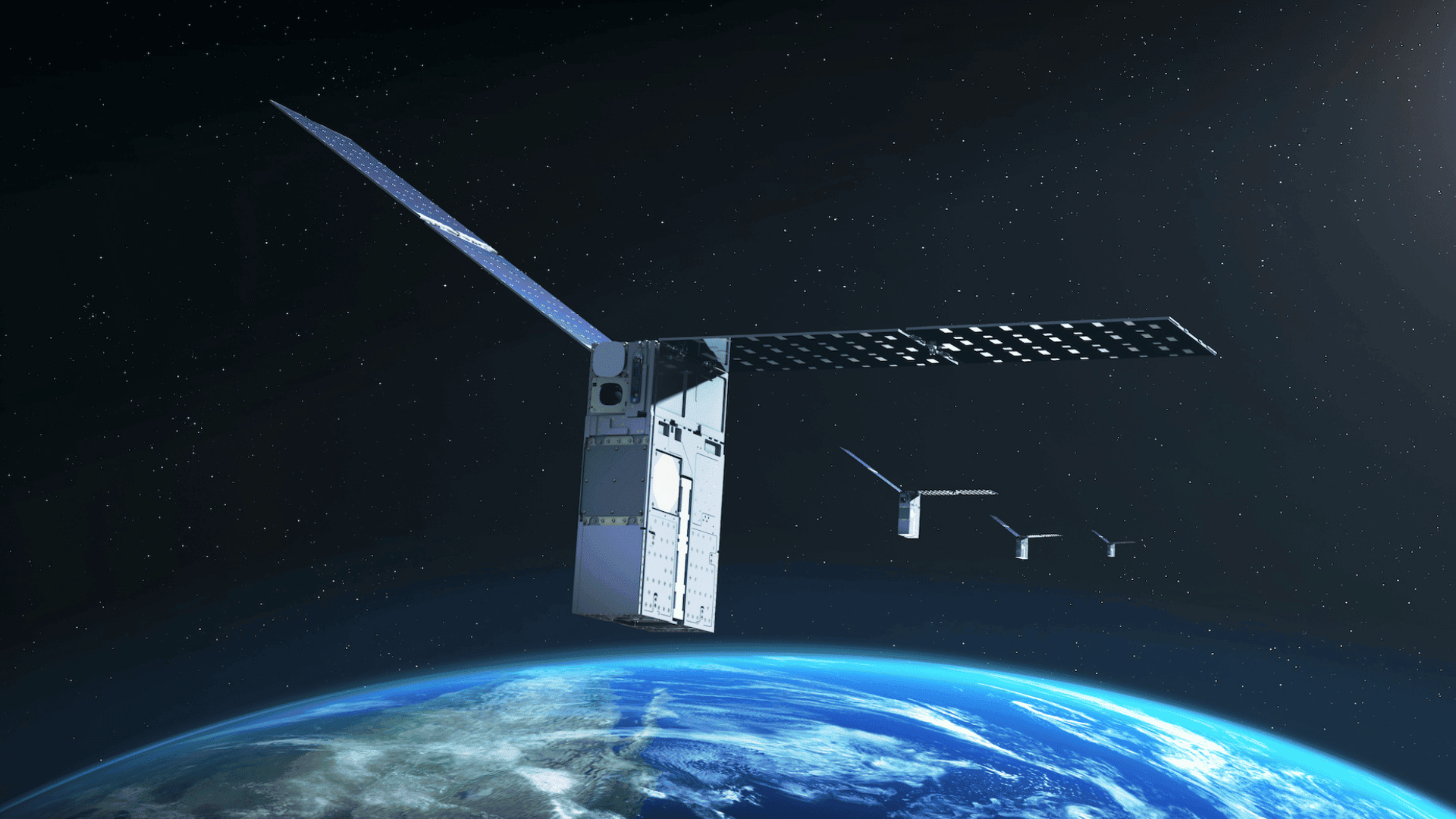
FALCON is a joint flight experiment by NASA and EraDrive, a startup that spun out of Stanford University.
The system uses the star-tracker cameras on the spacecraft to look for bright objects, then checks what it sees against an onboard list of about 20,000 known space objects and their predicted orbits. This public catalog comes from the U.S. Department of Defense.
Advertisement
By matching the satellites and orbital debris it sees with the ones on the list, the spacecraft can determine its exact orbit. Over three days, the software improved the known orbits of more than 200 other space objects, without help from operators on the ground.
“FALCON is yet another success for the Starling demonstration mission. The results from FALCON can have far-reaching implications for on-orbit space-traffic monitoring, collision avoidance, and alternative navigation,” said Roger Hunter, program manager for NASA’s Small Spacecraft and Distributed Systems program at NASA’s Ames Research Center in California’s Silicon Valley. “The number of ‘firsts’ from Starling just keeps growing.”
Moving Beyond GPS
For future missions, this system has significant potential, according to NASA. Networks of GPS-free satellites will be necessary to support human exploration on the Moon and Mars. It also helps science missions line up their measurements and keeps satellites from colliding by improving space traffic management.
NASA gave EraDrive a platform to test its Era-Core software in the real world, showing how the software can teach satellites to navigate autonomously. Later this year, the four spacecraft in the Starling swarm will use the software to share tracking data and determine their positions together as a group.
 Read Exclusive Stories
 Bookmark & Save Articles For Later