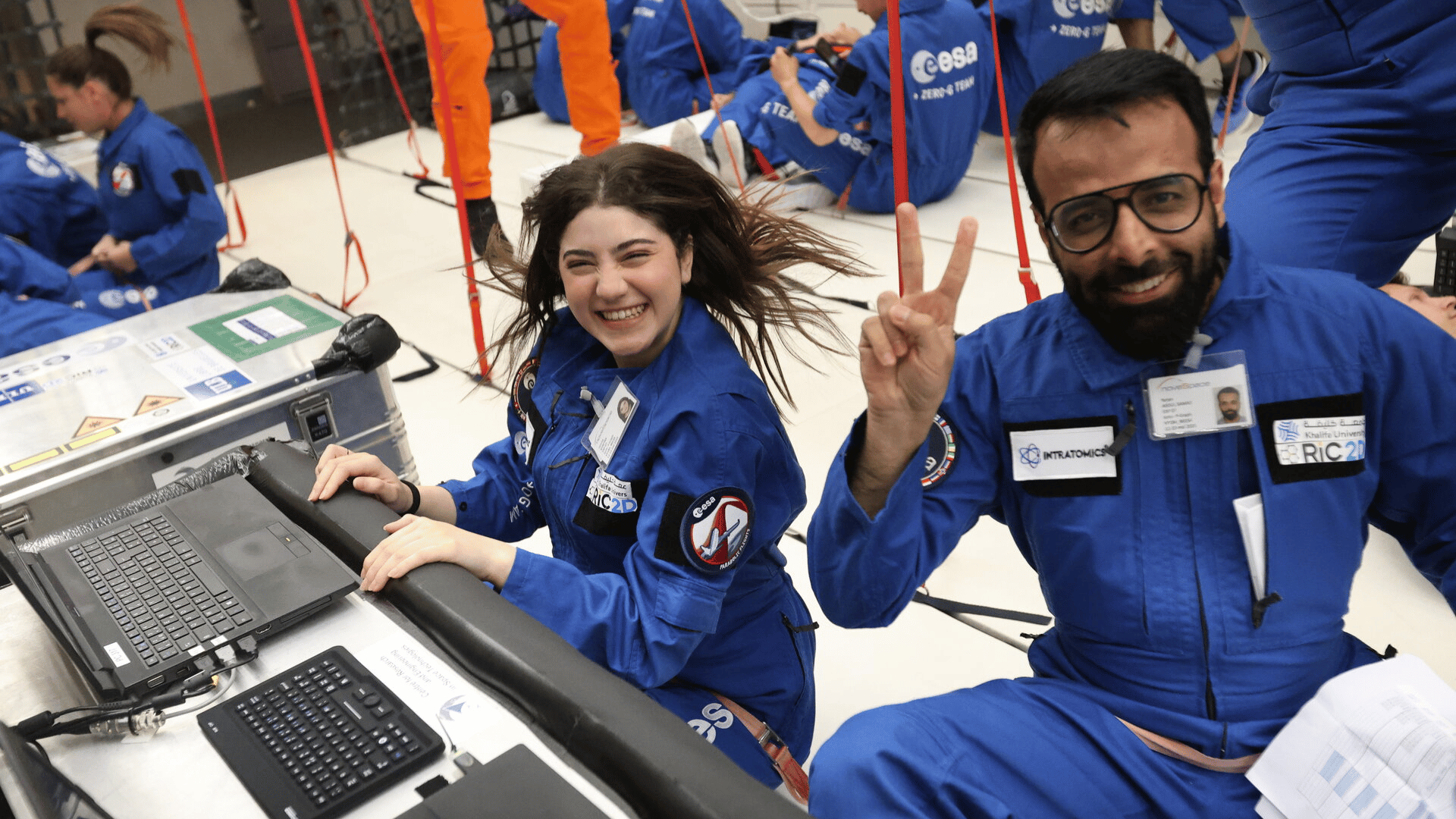
Scientists have found a new way to move things in space that involves hitting a very light material with a laser. During a recent experiment on a parabolic flight, often called a “vomit comet” because of its roller coaster-like dips, researchers watched as small cubes of graphene aerogel shot forward the moment they were touched by light.
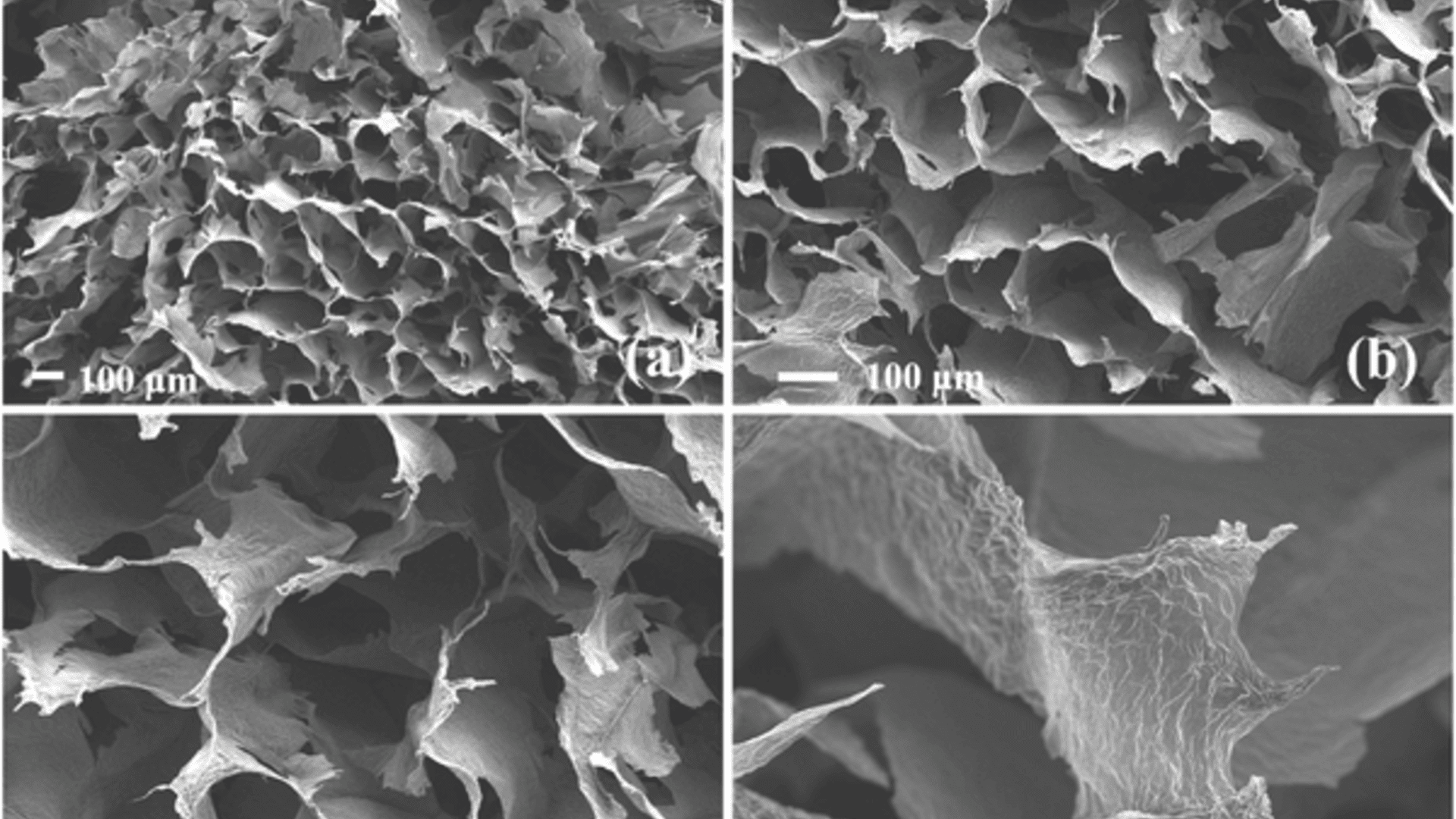
Graphene aerogel is incredibly light and full of tiny holes, but it’s still strong enough to hold its shape. While it doesn’t do much under Earth’s gravity, it behaves much differently in a vacuum without gravity holding it back.
Graphene and Lasers in Zero Gravity
The team, led by researchers from Belgium and the UAE, placed three small cubes of this material into a vacuum chamber. When they turned on the laser during the zero-gravity phases of the flight, the reaction was almost instant. High-speed cameras had to capture the movement because it happened too quickly for the human eye to track.
“The reaction was fast and furious. Before you could even begin to blink, the graphene aerogels experienced large accelerations. It was all over in 30 milliseconds,” explained Marco Braibanti, ESA’s project scientist for the experiment.
Advertisement
The researchers also found they could steer the material. By turning up the laser’s power, they could make the aerogel move faster. “The stronger the laser, the greater the acceleration,” Marco added. “The laser pulse triggers a sharp acceleration peak, after which the aerogels slow down.”
Future Applications in Space
Space missions are expensive because fuel is heavy and takes up a lot of room. If we can move satellites or sails using just light and these ultralight materials, we wouldn’t need as much fuel. This leaves more room for scientific tools or longer missions.
“We are opening the path to a propellant-free propulsion future,” said Ugo Lafont, a materials engineer at ESA. “Ultralight graphene aerogels are the perfect example of an innovative material created in the lab that could save us large amounts of fuel and hardware in space.”
The goal now is to see how this can be used for solar sails or for keeping small satellites in the right position.