The Olympic Winter Games are always a huge logistical challenge, but Milano Cortina 2026 is on an entirely different level. Unlike the centralized “Olympic Park” setups in Beijing or Sochi, the 2026 Games will spread out over approximately 8,494 square miles (22,000 square kilometers) of Northern Italy, from Milan’s city hockey rinks to the remote, windy peaks of the Dolomites.
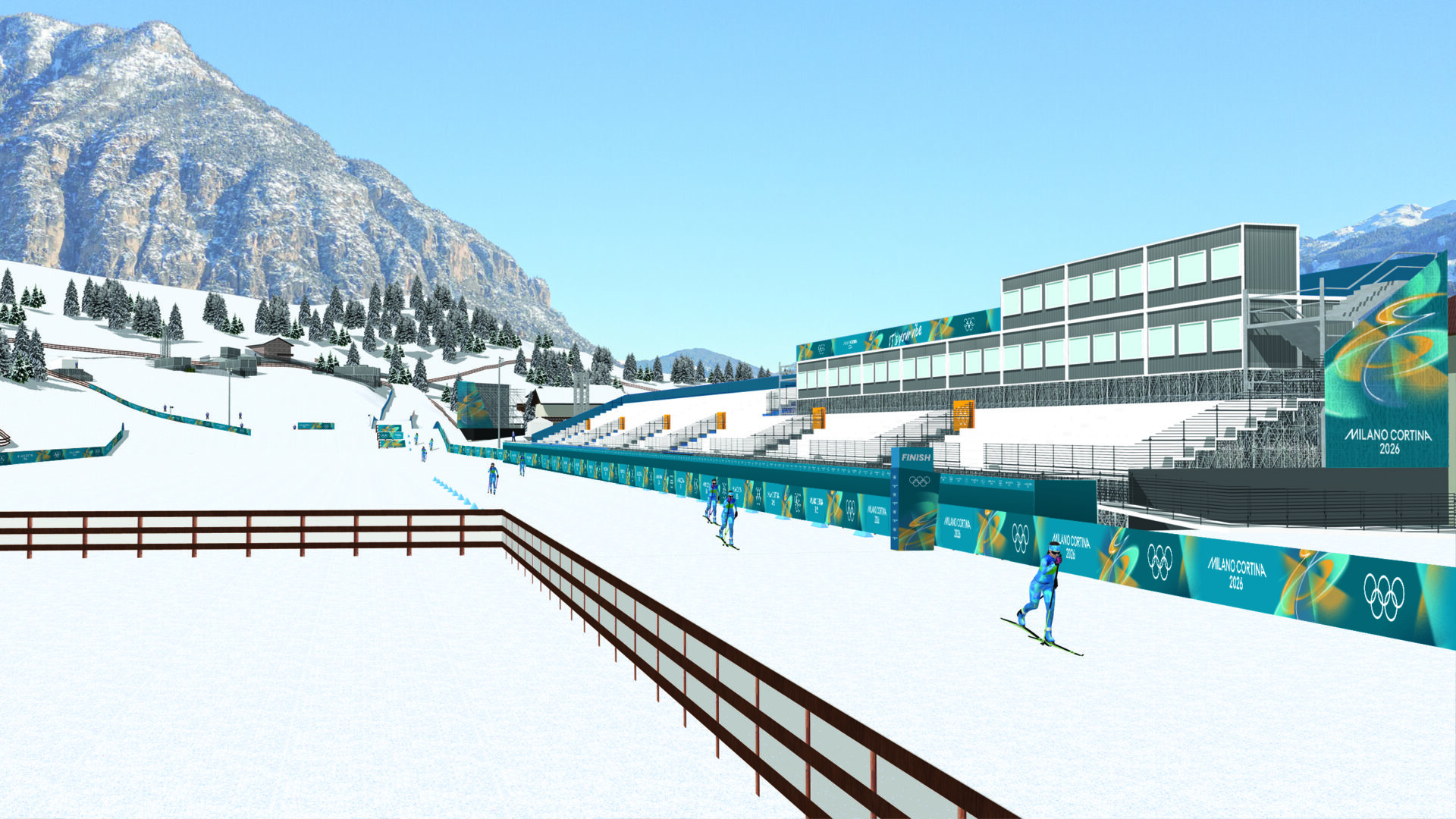
Industry experts are clear: filming these Games is a logistical nightmare. You can’t just run a cable up a mountain, and it’s impossible to drive a broadcast truck from a morning ski race in Bormio to an evening figure skating final in Milan, since the trip takes hours through dangerous mountain roads.
To handle the challenge of these widespread Games, broadcasters are trying new methods. They are turning to cloud computing, skilled drone pilots, and AI that reveals the hidden physics of winter sports for the first time.
The Death of the “Tripod and Cable”
For years, broadcasters used large trucks parked outside venues, with cameras connected by long copper and fiber cables. On the steep, icy Stelvio slope, where the Men’s Downhill will happen, this approach no longer works.
For 2026, Olympic Broadcasting Services (OBS) is moving the main control center for broadcasts into the cloud. With OBS Cloud 3.0 and Alibaba Cloud, the production gallery is now virtual. This lets a technical director sit in a warm studio in Milan or even in another country and switch cameras for a biathlon race 300 kilometers away in Anterselva.
This “Virtual OB Van” method is not just about saving fuel. It is the only way to make sure high-definition, low-latency signals can travel instantly from a cold mountain peak to your living room, avoiding the physical obstacles of the Alps.
The Rise of FPV: Filming at 80 MPH
Advertisement
While the cloud manages the data, showing the athletes’ speed needs a new way of filming. Static cameras with long lenses often make a steep 70-degree drop look much less dramatic.
To show the real speed at the 2026 Games, broadcasters are using First-Person View (FPV) drones. Unlike regular camera drones that hover in place, FPV drones are flown by pilots wearing VR goggles who control the aircraft by hand, chasing skiers at speeds over 80 mph.
It is tough, high-pressure work. Pilots deal with freezing temperatures that drain batteries quickly and strong winds that could crash a $20,000 drone into a rock wall. But the reward is a shot that follows the athlete’s movement, weaving through trees and diving off cliffs to show viewers how fast the competitors are moving.
Seeing the Invisible with AI
The 2026 Games will also use Artificial Intelligence to help viewers understand the reasons behind what they see.
In curling, which is sometimes called “chess on ice”, viewers usually just see a stone sliding across the ice. New AI technology like the CurlingHunter system tracks the stone’s path in real time and adds a digital “Ghost Line” on the ice. This shows the predicted path and curl of the stone, so fans can see the strategy before the rock stops.
Similar technology is coming to the ski slopes. Multi-Camera Replay Systems (MUCAR) will use AI to combine video from many cameras, creating 3D models of athletes in mid-air. This lets directors pause a snowboarder during a jump and rotate the camera all the way around them, checking grabs and spins with very high accuracy.
A Collision of Past and Future
A few weeks ago, researchers in Stelvio National Park, near the Bormio ski venues, found a large site of dinosaur footprints that are 210 million years old. As engineers use LiDAR and drones to map the slopes for the Olympics, they are working with paleontologists who are mapping the tracks of these ancient animals.
This reminds us that while the technology is new, the setting is very old. The 2026 Games will test if our digital systems of cloud, AI, and robotics can finally handle the tough, physical reality of the Alps.