While the ISS has long relied upon a consistent delivery service from Earth to supply the Station with the essential parts needed to sustain its operation, journeys to Mars will take up to a year. The crew needs to manufacture their own parts. To that end, the European Space Agency (ESA) and the aerospace corporation Airbus have officially delivered the first-ever metal parts 3D-printed in space back to Earth for analysis.
The 180kg (about the size of a washing machine) metal printer was installed on the ISS Columbus module to test manufacturing metal components in microgravity. Instead of using plastic as the raw print material, the printer features a Laser-Wire Directed Energy Deposition process, feeding a stainless-steel wire into a melt pool created by a high-power laser, a million times more powerful than a standard laser pointer. The melted metal is held in place by surface tension in the weightless environment of the ISS.
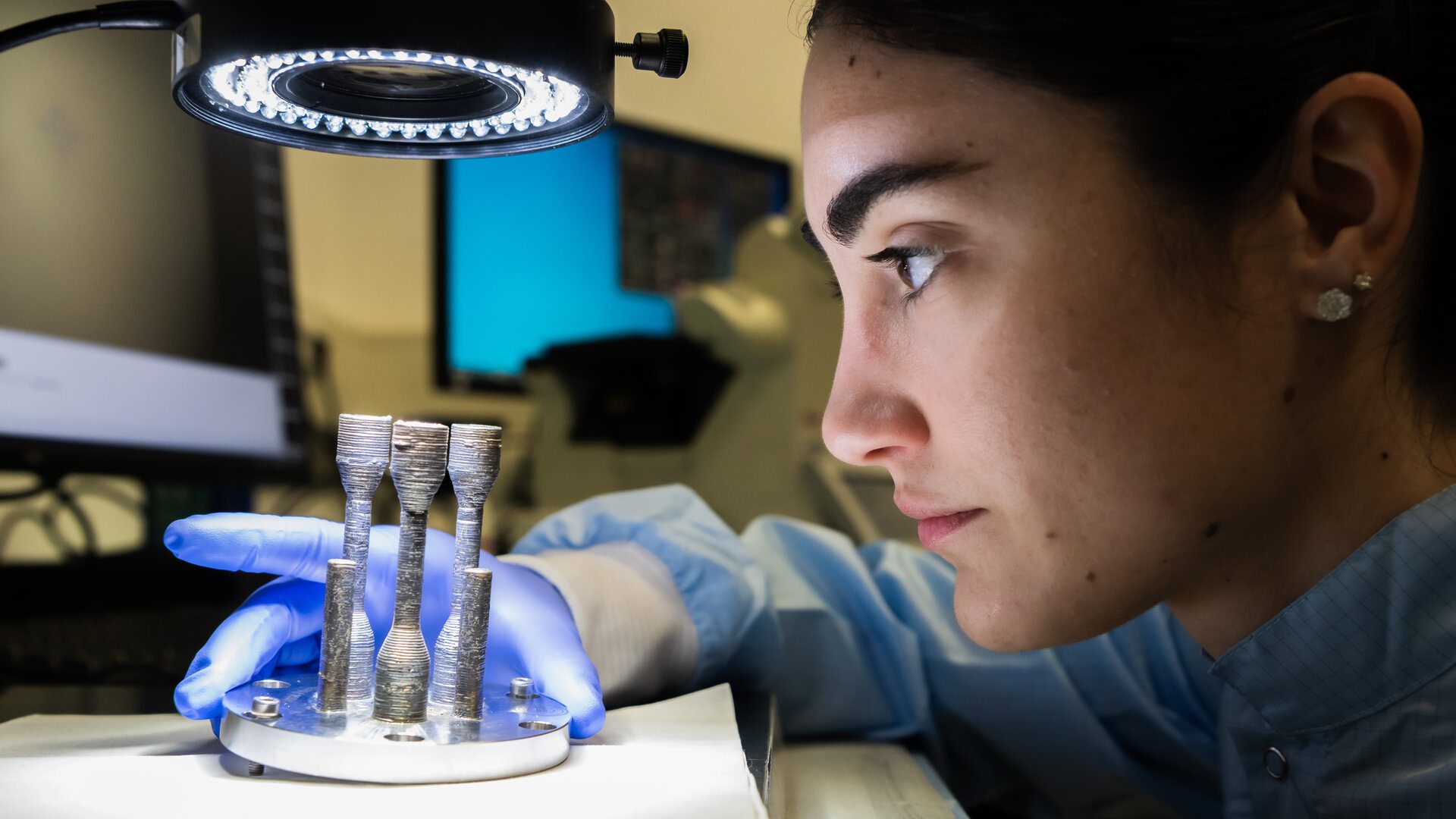
Back on Earth at ESTEC, ESA’s technical heart in the Netherlands, materials engineers are subjecting the samples to CT scans and “destructive testing,” stretching and bending the metal until it snaps, to determine how manufacturing in microgravity affects the metal’s internal structure. Concerning the milestone, Daniel Neuenschwander, Director of Human and Robotic Exploration at ESA, said:
Advertisement
“With the printing of the first metal 3D shape in space, ESA Exploration teams have achieved a significant milestone in establishing in-orbit manufacturing capabilities. This accomplishment, made possible by an international and multidisciplinary team, paves the way for long-distance and long-duration missions where creating spare parts, construction components, and tools on demand will be essential.”
With the first “dog-bone” shaped samples of space-printed metal now under the microscope back on Earth, space exploration has entered a new era of self-sustainability. This development paves the way for the ISS to earn its new moniker—a true “Space Foundry.”