On Monday, April 6th, at approximately 7:07 PM ET, NASA’s Artemis II crew flew past the moon approximately 252,756 miles from Earth, marking the farthest that any human in history has traveled from our planet.
Over the course of the six-hour flyby, the Artemis II crew made observations of an area that has been viewed many times by space-based telescopes and sensors, but rarely ever with the naked human eye.
“We do so in honoring the extraordinary efforts and feats of our predecessors in human space exploration,” said Canadian astronaut and Artemis II mission specialist Jeremy Hansen. “We will continue our journey even further into space before Mother Earth succeeds in pulling us back to everything that we hold dear. But we, most importantly, choose this moment to challenge this generation and the next to make sure this record is not long-lived.”
First Sightings
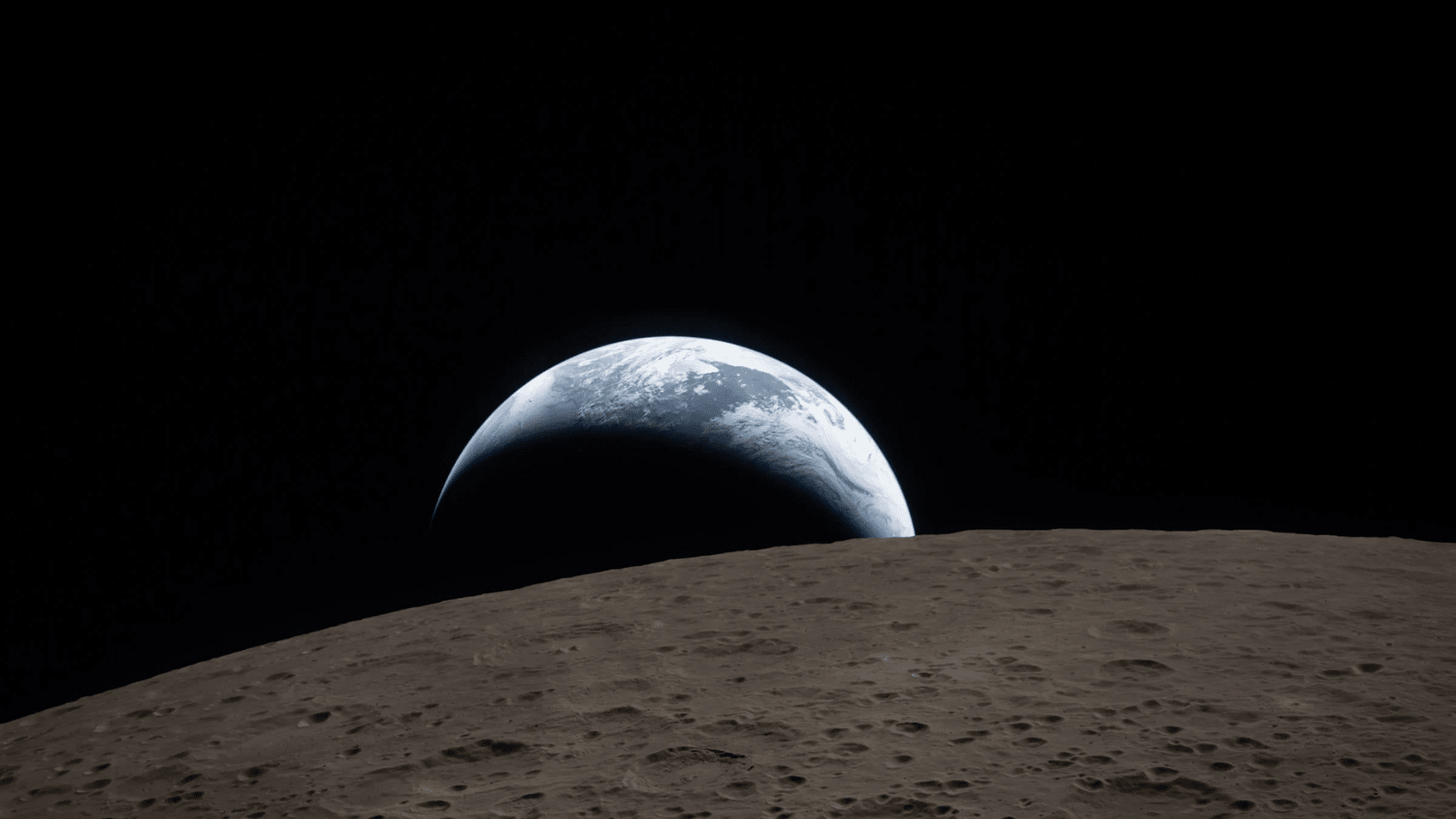
Over the course of their mission, the Artemis II crew spotted some sections on the far side of the moon that had never before been seen with the naked eye. The four astronauts described the far side of the moon in detail as they traveled past, including geometric patterns of blues, greens, and browns among the moon’s normal gray shades.
According to the astronauts, some areas included steep canyon walls and areas that looked as though ponds of choppy water had been frozen by intense winds.
“I just had an overwhelming sense of being moved by looking at the moon,” said NASA astronaut and Artemis II mission specialist Christina Koch. “The moon really is its own unique body in the universe. When we have that perspective and we compare it to our home of the Earth, it just reminds us how much we have in common. Everything we need, the Earth provides, and that, in and of itself, is somewhat of a miracle.”
Touching Moments
Advertisement
Right before the flyby took place, the crew awoke Monday morning to a message from Apollo 8 and 13 astronaut Jim Lovell, recorded shortly before he died last year: “Welcome to my old neighborhood.”
In another touching and now viral moment, the crew proposed naming one of the sunlit “bright” craters after NASA astronaut and Artemis II Cmdr. Reid Wiseman’s late wife, Carroll, who died in 2020 after a five-year battle with cancer. The video depicts Mission Specialist, Jeremy Hansen, speaking on behalf of the crew, who all share a group hug after the announcement.
“Earth Eclipse”
Ooh, now you’re letting go 🌕
As our Artemis II astronauts prepare to leave the lunar sphere of influence and return to Earth’s gravitational pull, they listened to “Tokyo Drifting,” by Denzel Curry and Glass Animals, as their wakeup song. pic.twitter.com/1Xu6LN55nV
— NASA (@NASA) April 7, 2026
The crew lost communication with Mission Control for approximately 40 minutes as they flew behind the moon, as expected. During this eclipse of Earth, they reached the closest point to the moon, which was approximately 4,067 miles. The crew also got to experience their own Earthrise, which is the sight of the Earth rising above the moon’s horizon.
“To all of you down there on Earth and around Earth, we love you, from the moon,” said NASA astronaut and Artemis II pilot Victor Glover. “We will see you on the other side.”
Now, the crew will experience another few days of travel back to Earth before splashing down off the coast of San Diego on Friday, March 10.