Astronomers recently discovered that Mars contains a secret clutch of ruby-like gems in its rocks, and they believe other precious metals could exist across the planet.
Rubies on the Red Planet?
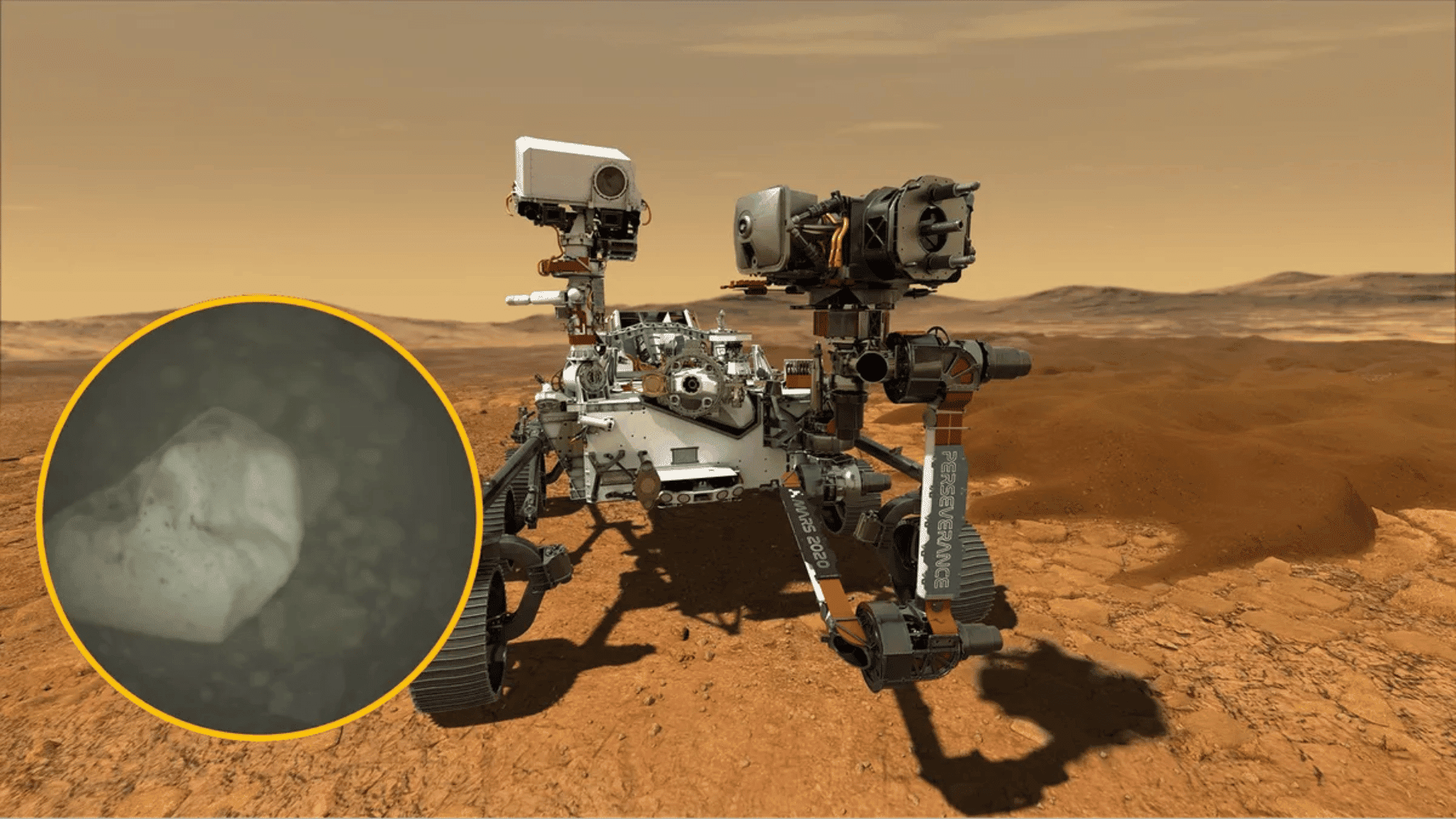
The Perseverance rover climbed the side of a 4 billion-year-old impact crater and began exploring its rim. While investigating the area, the robot found a scattering of pale-colored “float rocks” or displaced rocks that were likely placed in the area by geological activity, impacts, or hydrological processes.
Scientists then used the green laser from Perseverance’s SuperCam, which is designed to excite minerals and cause them to emit light at specific wavelengths. Because different elements and compounds emit different wavelengths of light, this allows researchers to identify the sample’s chemical composition.
The findings showed that three of the float rocks exhibited clear signatures of the mineral corundum, with inclusions of the element chromium. That means these crystals match the chemical description of rubies, though researchers can’t confirm for sure because they’re too small to be seen by Perseverance’s imager.
Advertisement
“The different types of corundum are based on the chemistry,” study co-author Valerie Payré, a planetary geologist at the University of Iowa, told Live Science. “Although corundum is Al2O3, there are minor elements like chromium, titanium, and iron that can be present.”
“These elements will provide the color to the mineral, and the name of it,” Payré added. “We cannot quantify the amount of chromium, and other elements like iron and titanium might be present too. It is thus difficult to conclude whether they are rubies or other types of corundum [like sapphires].”
It’s also likely these elements formed under different conditions than they would on Earth, where corundum is typically created through metamorphic and igneous processes. Because there’s no conclusive evidence for plate tectonics on Mars, researchers speculate that they likely formed from cosmic impacts.
“The impacts provide high temperatures and high pressures, which can produce corundum. Hydrothermal fluids are also generated,” Payré stated.
The observations by Perserverance were presented by an international team of researchers at the 57th Lunar and Planetary Science Conference in Texas. These findings are currently under peer review and will appear in the journal Geophysical Research Letters.