Soon, you might find yourself asking a 4-foot-tall robot for directions in Bremerhaven, Germany. A group of thirteen computer science and business informatics students from Bremerhaven University of Applied Sciences recently spent two semesters figuring out how humanoid robots can help tourists.
The star of the show is Pepper, a robot with big eyes and a knack for reading facial expressions. While Pepper has been around for about a decade, these students gave the tech a fresh update to see if it could handle the hustle and bustle of a busy port.
“I always find it fantastic to work with the university and the students and ultimately see the excellent results and their application in the city,” said Dr. Ralf Meyer, who heads the local department for tourism and science. “Many thanks for the great work.”
The Robot Tour Guide
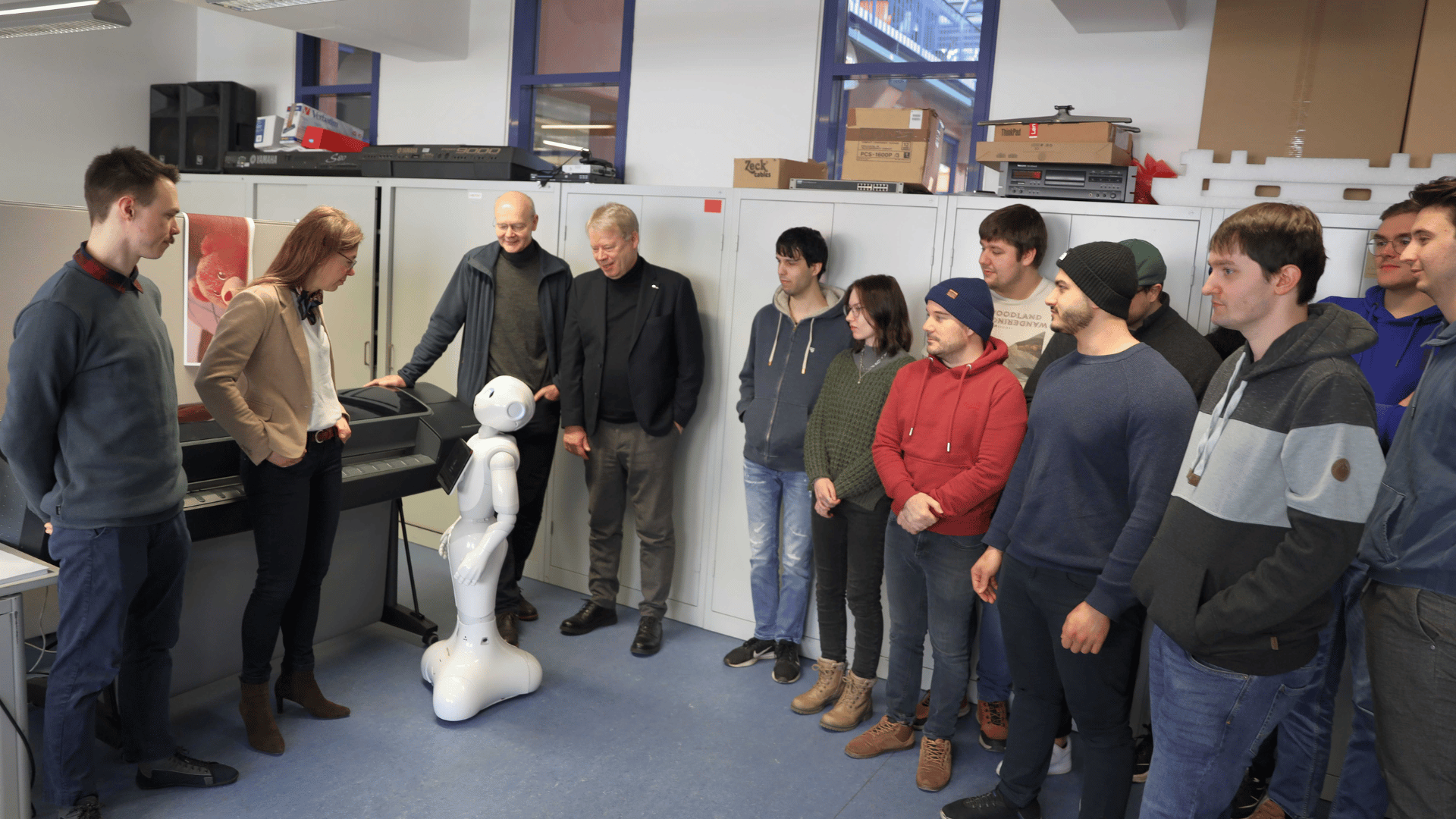
The project, nicknamed “PepperMINT,” focused on making the robot a helpful guide. Instead of standing still, Pepper can move around a mapped area and dodge obstacles. The goal was to see if it could help people check in at the cruise terminal or show them how to get to the city center.
Advertisement
To make Pepper act like a person, the students had to give it a “personality” through a system prompt. “We described Pepper as a tourism expert and specified that he can only answer questions about Bremerhaven, the university, and our Computer Science Day,” Student Qusay Mohammad Alhasan explained. “We also defined the style of his speech output: friendly but firm.
If you try to trip the robot up with a random question, it stays on track. It will tell you: “Sorry, I can only provide information about Bremerhaven.” It can even wave its hands or show QR codes on its chest screen to help you find local attractions.
Learning the Ropes
Working with a ten-year-old robot had its challenges. For example, the team had to figure out how to bridge the gap between the robot’s old operating system and modern AI software. But the effort paid off. “When we were first able to talk to Pepper, it was a special moment for us,” says student Niklas Nakotte.
While Pepper is great for one-on-one help, the students found that it still struggles in loud crowds where everyone is talking at once. It’s not quite ready for a massive trade fair, but it’s perfect for the cruise terminal.
“Pepper could explain to guests how to get to the city center or help them check in on shore,” said Prof. Dr. Thomas Umland, who supervised the group. “Routes through the city center could also be predefined and made available to guests via QR code.”