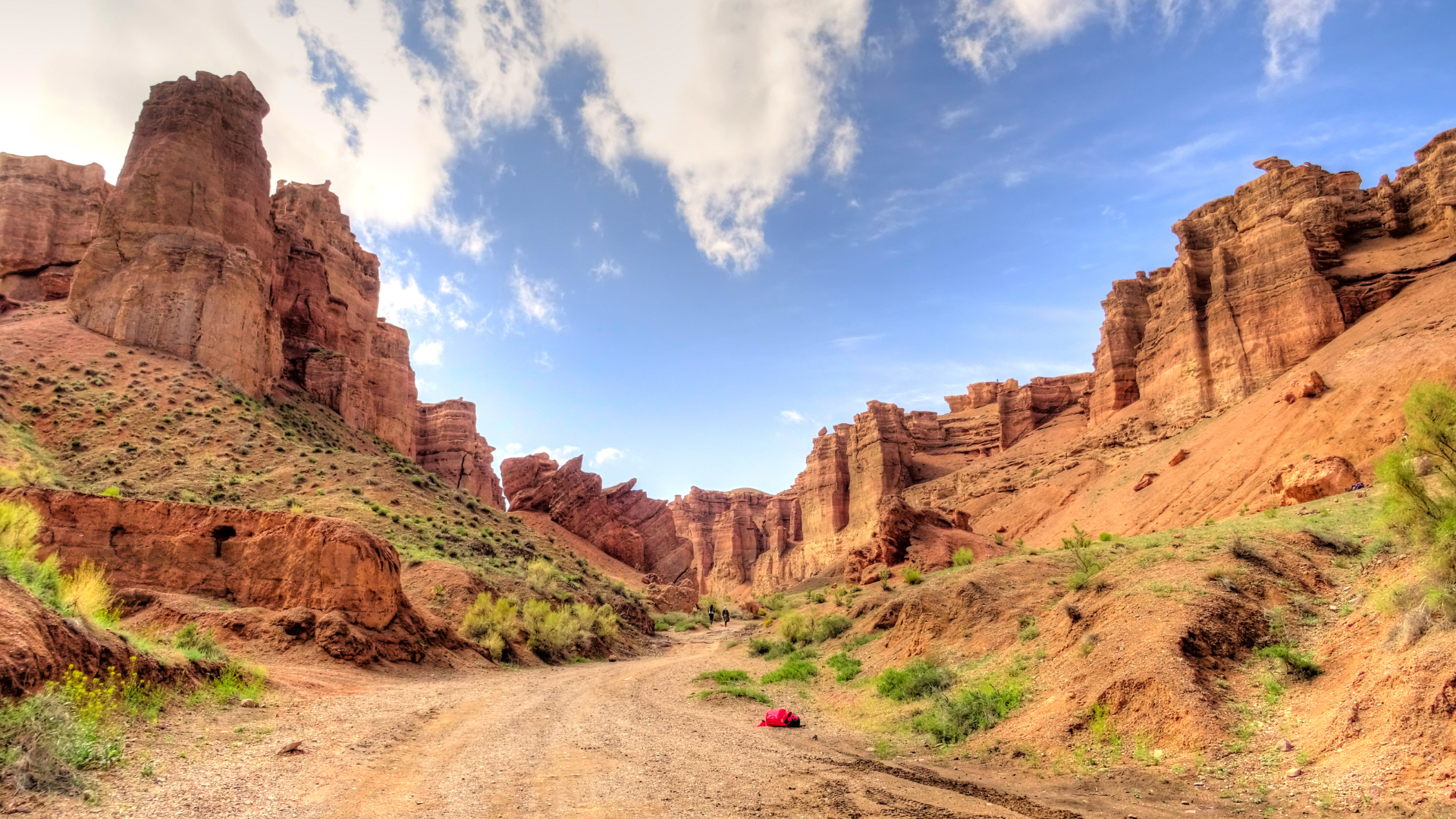
Travel to the southeastern portion of Kazakhstan, and you will encounter a large fissure in the flat grasslands. The Charyn Canyon stretches approximately 56 miles along the swift Charyn River. The canyon is often compared to the Grand Canyon in the United States. Like the Grand Canyon, it exhibits deep gullies and bright red rocks, but at a smaller scale. The red walls plunge directly into the canyon below the Charyn River. The forms displayed on the canyon walls appear to be deliberately created.
A City Made Of Stone
The most notable portion of the canyon is a two-mile side canyon known as the Valley of Castles. As you enter this area following the dirt trail, the stone formations rise perpendicularly on either side. These formations resemble ancient brick towers, massive fortress walls, and broken castle gates.
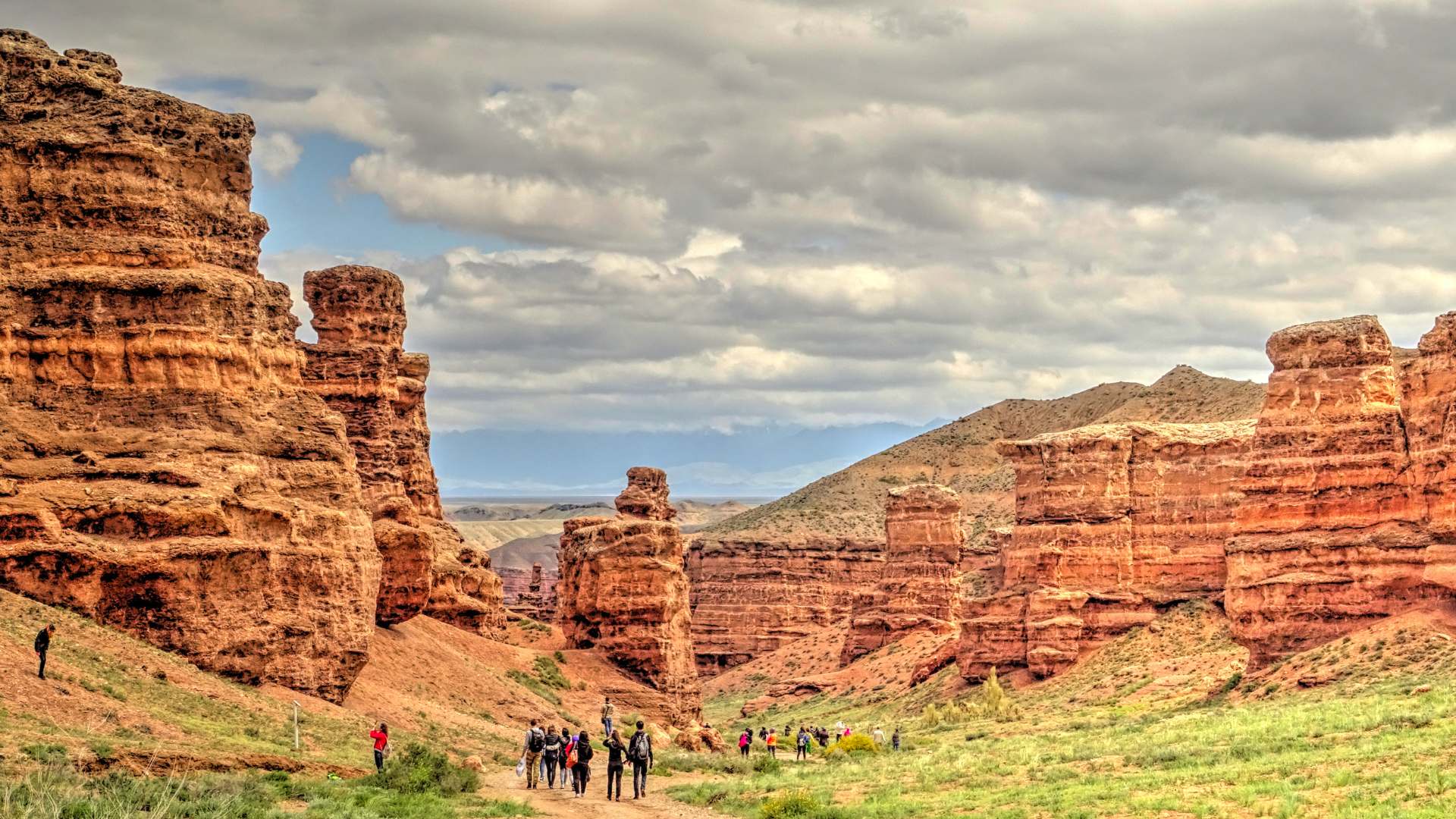
But nobody built them. They are simply compressed dirt. Millions of years ago, this entire area was covered by a large lake. As the climate changed, the water disappeared, leaving behind thick, heavy deposits of gravel, clay, and red sandstone.
Carved By Wind And Water
With the disappearance of the lake, the Charyn River began carving through the soft sediment. Water moving at high speed functions like a saw. Over several thousand years, the river gradually carved a deep channel through the flat land.
Advertisement
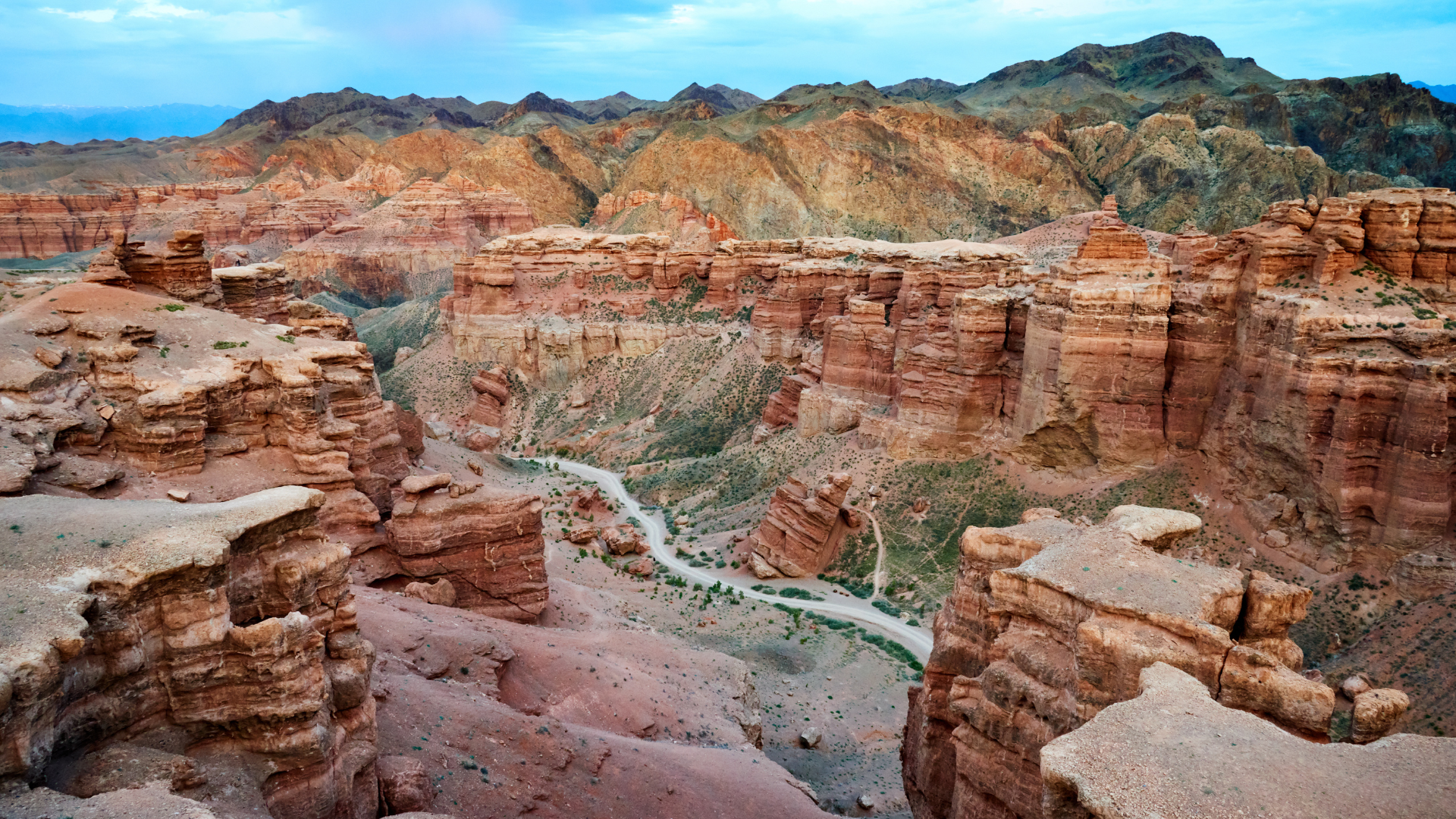
Then came the wind to complete the carving. Strong winds continually blow through the narrow canyon. These winds scour the area, lifting up loose sand and hitting the canyon walls. The sand acts like a sand blaster. The wind continuously abrades the softer layers of clay and rock. The harder rock remains. This process formed these strange towers. Simply put, it is erosion removing the weaker material over a very long period of time.
An Ancient Ice Age Forest
But there is more that is hidden down in the canyon. If you continue along the canyon floor, you will encounter a rare grove of trees. These are a type of Sogdian ash tree that grows in a thick band along the river.
This forest is essentially a living relic from the last Ice Age. Across the globe, most of these trees went extinct millions of years ago due to a warming climate. However, the deep and steep canyon walls played a crucial role in preserving these trees. They allowed moisture and cool air to be trapped within the canyon, sequestering the trees from the arid conditions existing above ground. For this reason, this small stand of ash trees exists completely isolated from the rest of the world.
 Read Exclusive Stories
 Bookmark & Save Articles For Later