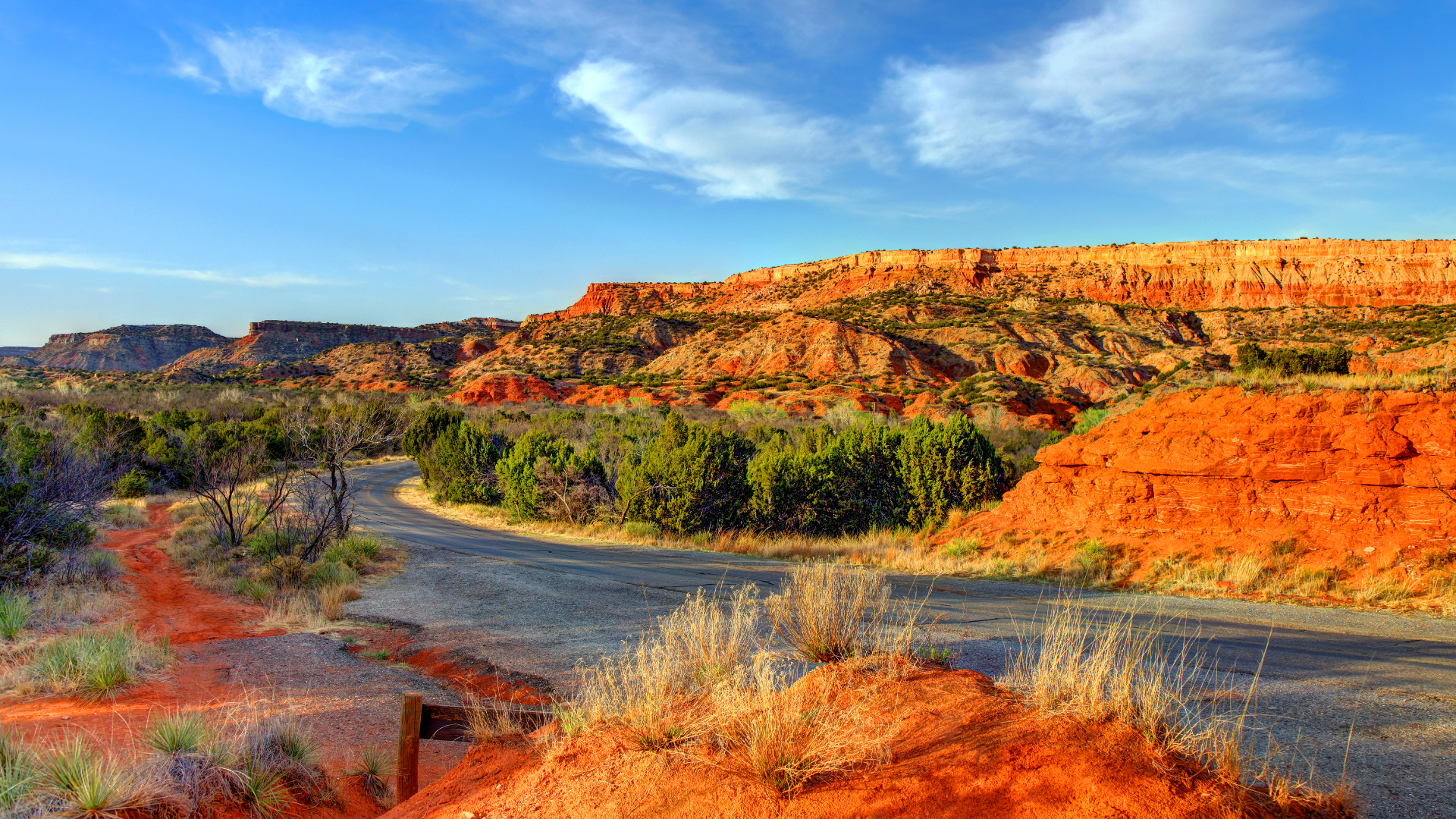
If you look at a map of Texas, the western side has a massive, flat plateau called the Llano Estacado. It is one of the largest flat spots in North America. But that flat land has to end somewhere.
Caprock Canyons State Park is exactly where it ends. The flat prairie just drops off into a steep, broken landscape of deep canyons and jagged cliffs. This drop-off is called the Caprock Escarpment. It looks like a giant step separating the high plains from the lower rolling hills to the east.
A Landscape Built On Rust
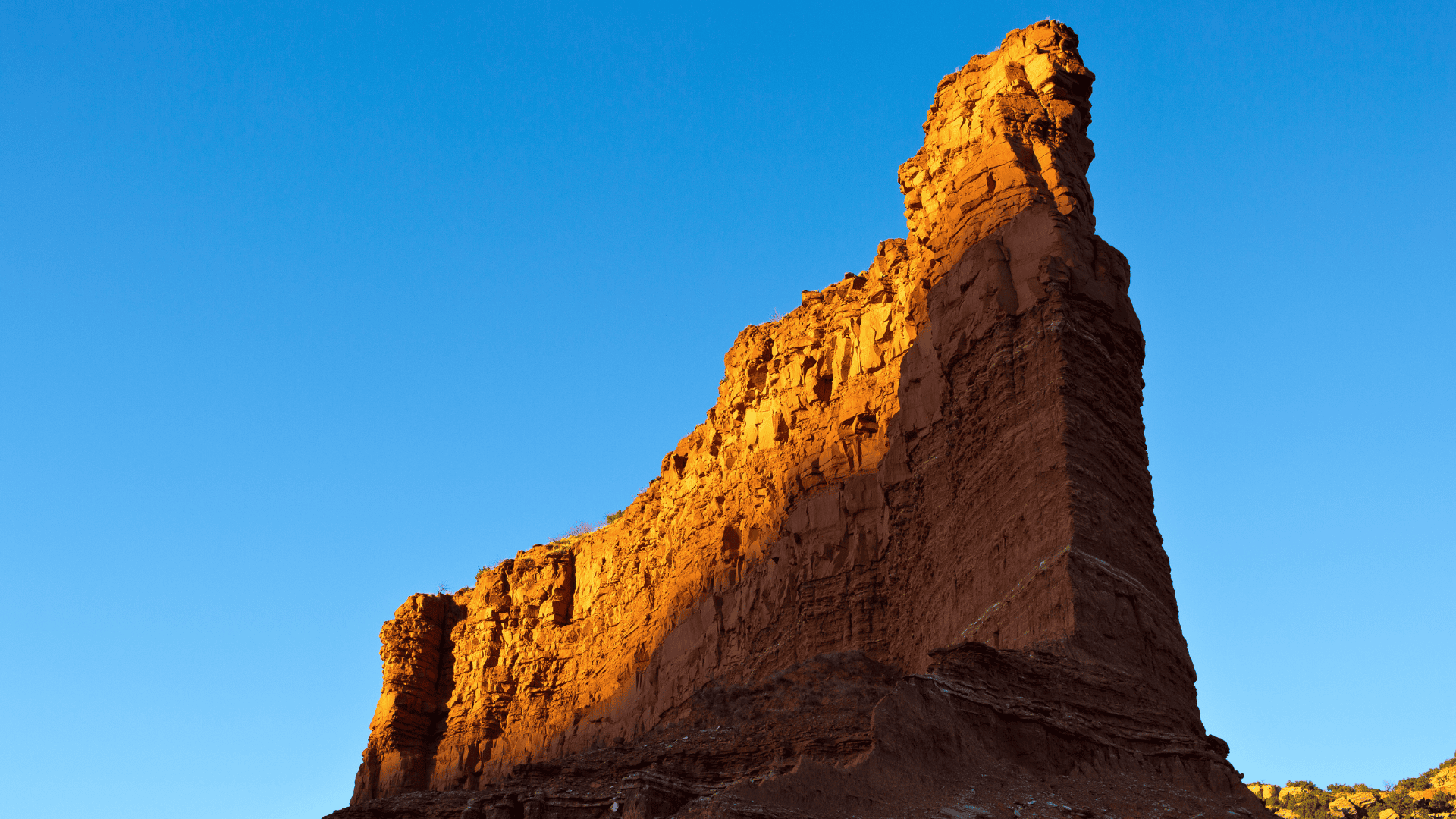
Just like Palo Duro, this area gets its dramatic look from the rock itself. The cliffs here are bright, rusty red.
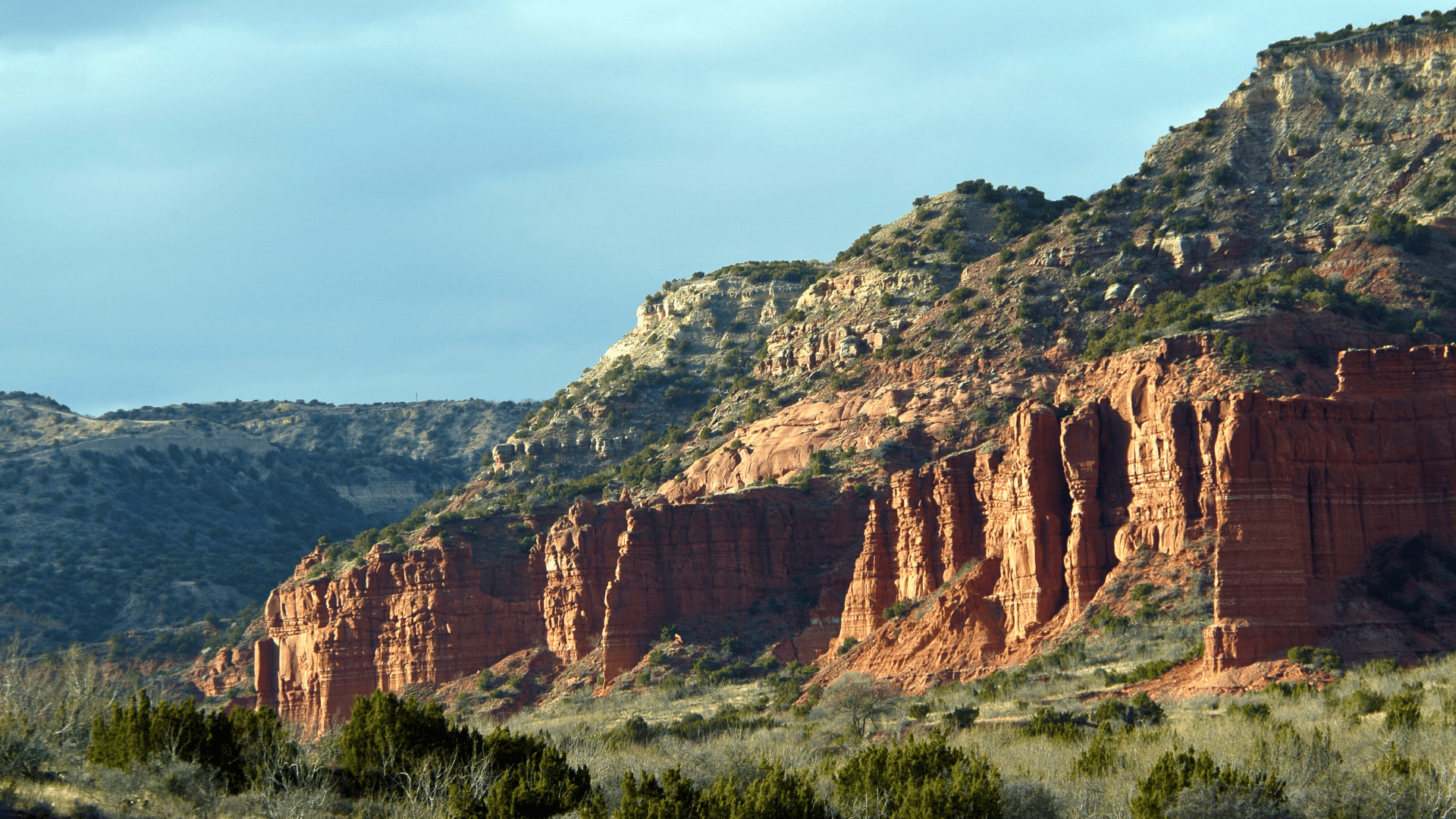
That color comes from iron oxide mixed right into the dirt. But the cliffs are not just solid red. If you look closely, you will see bright white lines cutting straight horizontally across the rock faces. That white rock is gypsum.
Advertisement
Millions of years ago, a shallow inland sea covered this part of Texas. When the seawater evaporated, it left behind heavy salt and gypsum deposits. Over time, rivers washed red mud over the top. Now that the canyons are carved out, you can see those ancient white salt layers stacked between the thick red mudstone like frosting in a cake.
Home To The Bison
The geology is a big draw, but the park is also famous for the life that lives on its rocks. It is the official home of the Texas State Bison Herd.
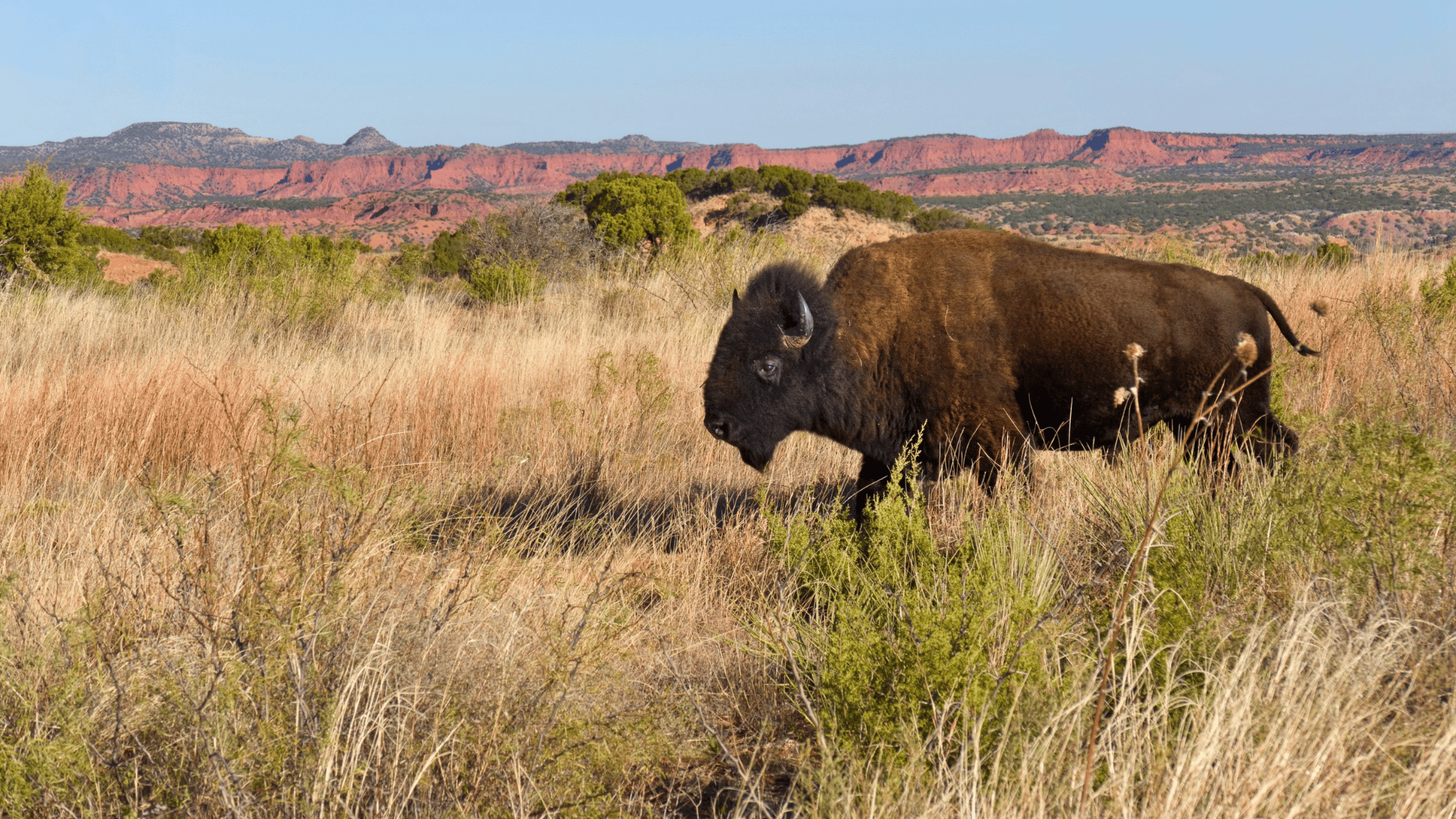
Back in the 1800s, millions of bison roamed the plains. By the 1870s, hunters had nearly wiped them out. A local rancher named Charles Goodnight managed to save a few calves from the canyon area and started breeding them.
The herd you see in the park comes directly from those rescued calves. You can literally just drive into the park and see massive, 2,000-pound bison walking right down the paved roads or grazing under the red cliffs. They are completely free to roam the 10,000-acre park. It gives you a really clear picture of what the entire Texas panhandle looked like before farms and cities took over.
 Read Exclusive Stories
 Bookmark & Save Articles For Later