Most canyons in Utah are massive. You usually stand on a high cliff and look down into a huge valley. Fantasy Canyon does the exact opposite.
It sits out in the middle of eastern Utah, surrounded by flat scrubland and oil fields. The whole site is tiny, covering just a few acres. But when you walk inside, the rocks look completely different from anything else in the state. They twist, loop, and fold into highly detailed, delicate shapes.
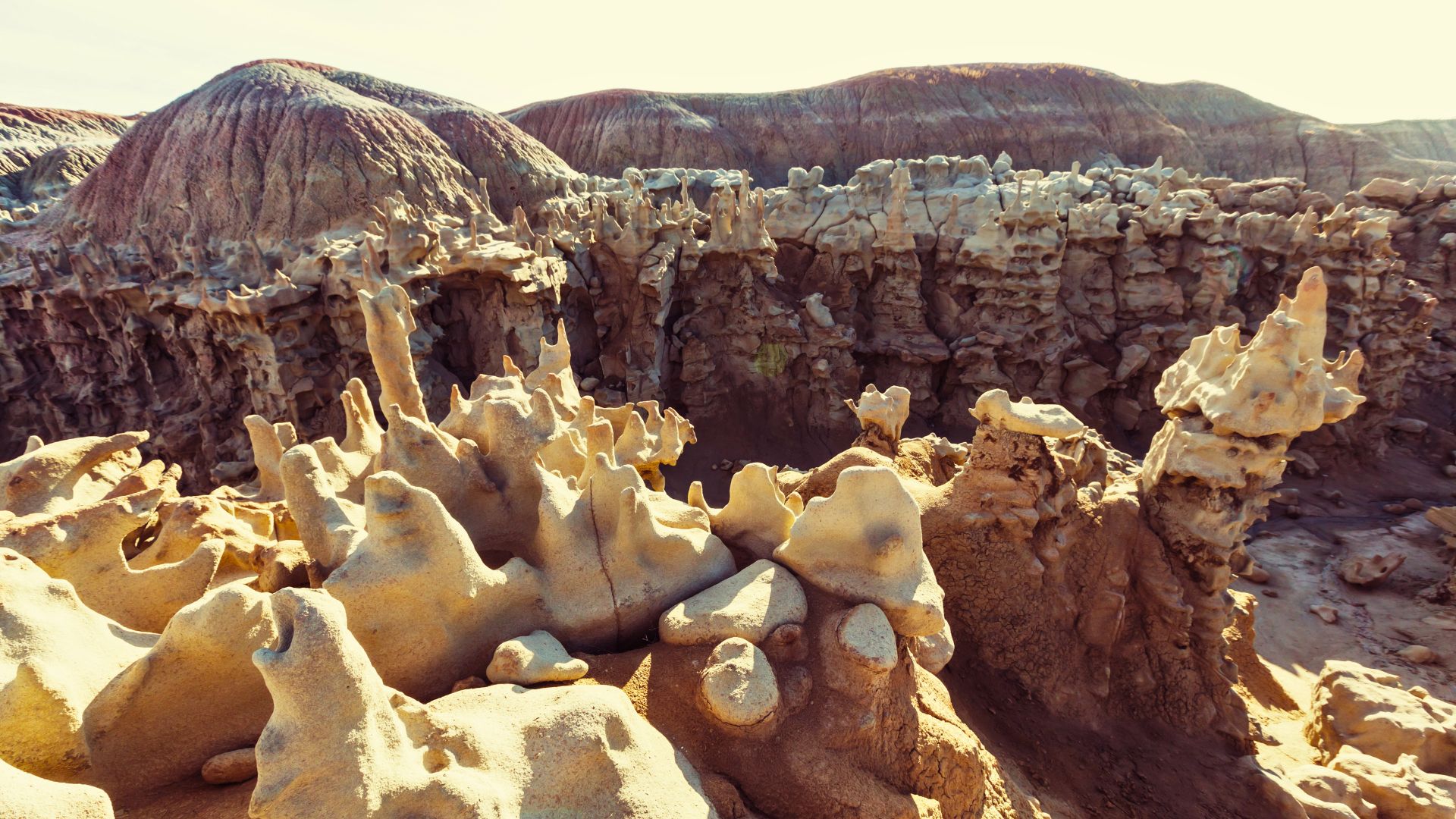
If you have ever dripped wet sand on a beach to build a tall sand castle, you know exactly what this place looks like.
An Ancient Lake Bed
To understand how these weird shapes formed, you have to go back about 50 million years. Back then, this part of Utah was a giant body of water called Lake Uinta.
Rivers carried loose dirt and sand into the lake. That sediment sank and piled up on the bottom. Over millions of years, the heavy weight pressed the sand and mud into solid stone. The mud became soft shale, and the sand became much harder sandstone.
Eventually, the lake dried up entirely. The ground shifted and cracked, pushing these buried rock layers back up to the surface.
Washing Away the Soft Dirt
The delicate shapes you see today are just the result of basic erosion.
Advertisement
Rain, wind, and melting snow constantly hit the exposed rock. Because the gray shale is very soft, it washes away quickly. But the tan sandstone is hard. It takes a lot more force to break it down.
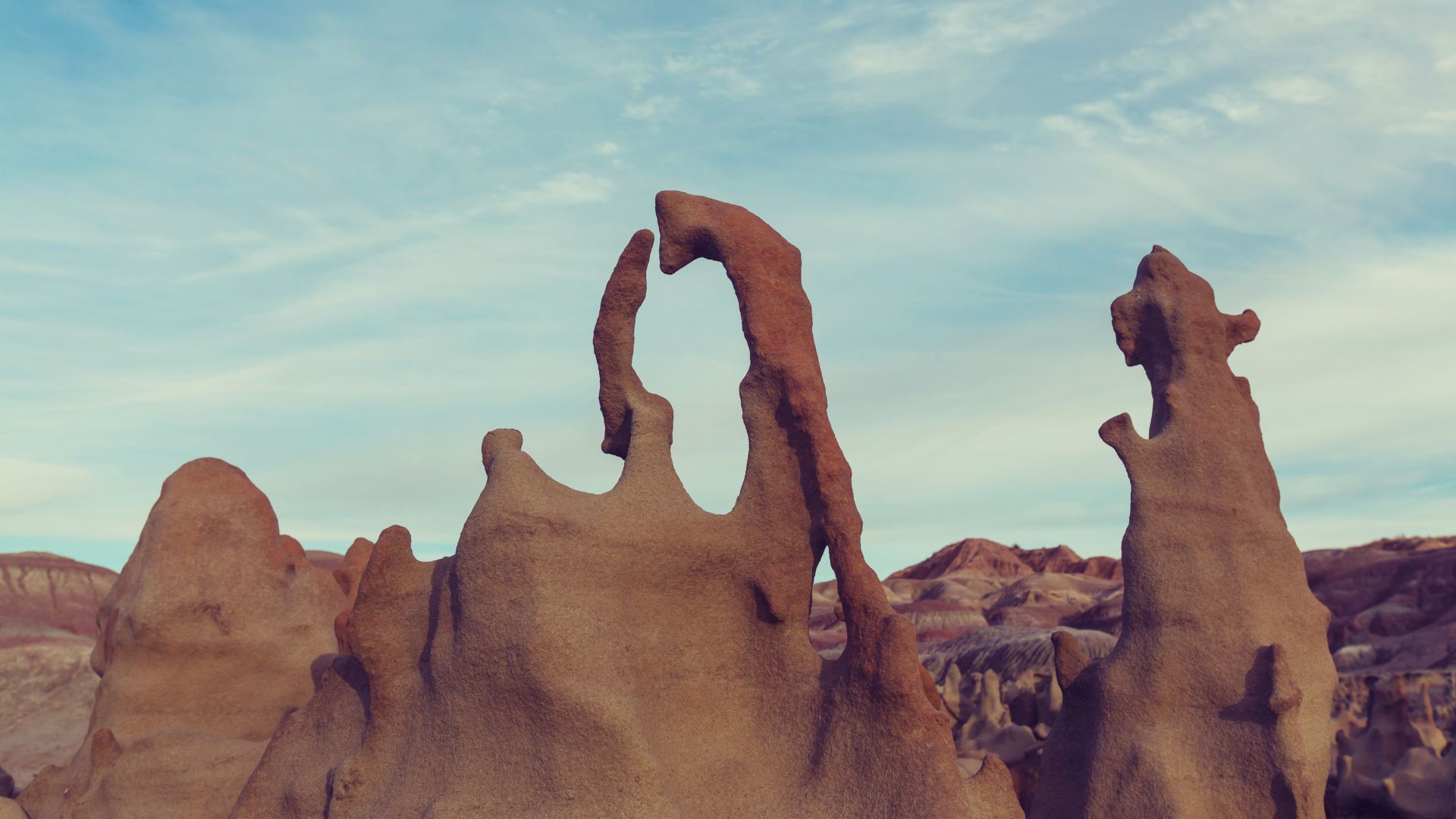
As the soft dirt disappears, only the hard sandstone gets left behind. Millions of years ago, that loose sand filled in random cracks and holes in the mud. So when the mud washes away today, the remaining sandstone takes on those exact tangled, twisting shapes.
Extremely Fragile Art
Because these rocks are so thin, they are incredibly fragile. Some of the stone fins and arches are barely an inch thick.
They look like they were carved by hand, but that also means they break easily. Extreme heat and cold naturally crack the stone. Heavy winds occasionally snap the thinnest pieces right off.
Visitors have to stay close to the short trail to avoid crushing the formations. If you accidentally bump into a rock here, there is a good chance you will break off a piece of natural history that took millions of years to make.
 Read Exclusive Stories
 Bookmark & Save Articles For Later