When people think of Montana, they usually picture tall pine trees, snowy mountains, and deep lakes. But if you head out to the far eastern edge of the state, the green mountains disappear.
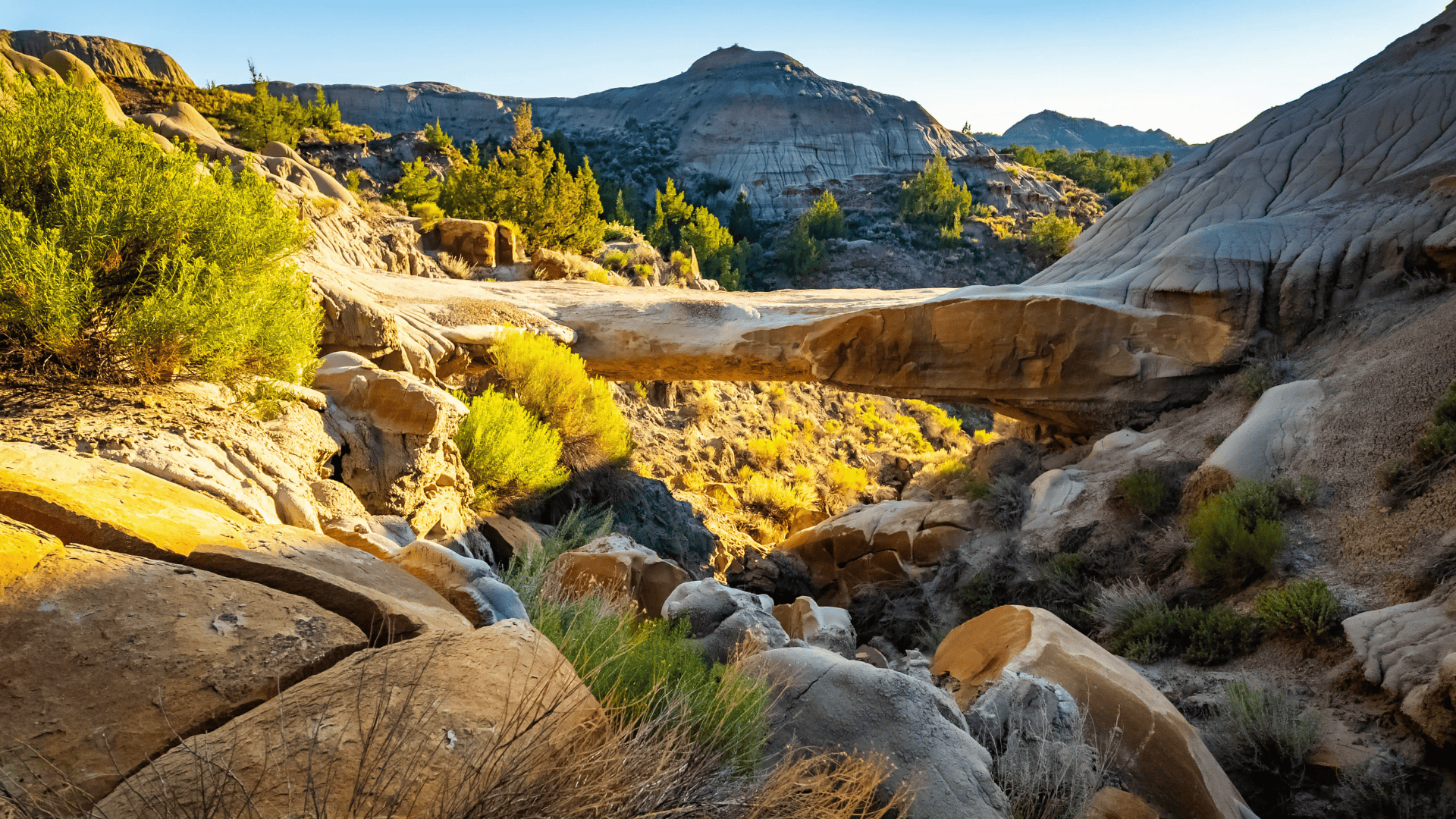
Instead, you find a massive stretch of dry, carved rock that looks like the surface of Mars. This is Makoshika State Park. It is the largest state park in Montana, and it is packed with colorful badlands, natural bridges, and tall stone pillars.
The name Makoshika comes from a Lakota phrase meaning “bad land.” When you see how rough and broken the ground is, you understand exactly why.
Carved By Water And Wind
The crazy shapes here are not carved out of hard rock like granite. They are made of sandstone, shale, and clay.
About 65 million years ago, rivers washed sand and mud into this area. That dirt settled and hardened into stacked layers of soft rock. Millions of years later, rain and melting snow started washing it all away.

Because the rock is so weak, water slices right through it. The runoff carves deep canyons and strange spires. Sometimes a flat piece of hard sandstone sits atop a soft clay pillar. The hard cap acts like an umbrella, protecting the soft dirt underneath from the rain. This leaves tall, thin rock towers standing straight up out of the valley floor.
A Giant Dinosaur Graveyard
Advertisement
The coolest part about this constant erosion is what it leaves behind. Makoshika is one of the best places in the country to find dinosaur bones.
Because the soft hills are always being washed away, fossils are constantly being pushed out into the open air. Paleontologists have pulled complete Triceratops skulls and Tyrannosaurus rex skeletons straight out of these hills. The dirt gives up new fossils every single year. You can actually see some of these ancient bones sitting directly in the rock layers as you hike the trails.
A Fragile Landscape
Badlands are temporary features, and they do not last forever.
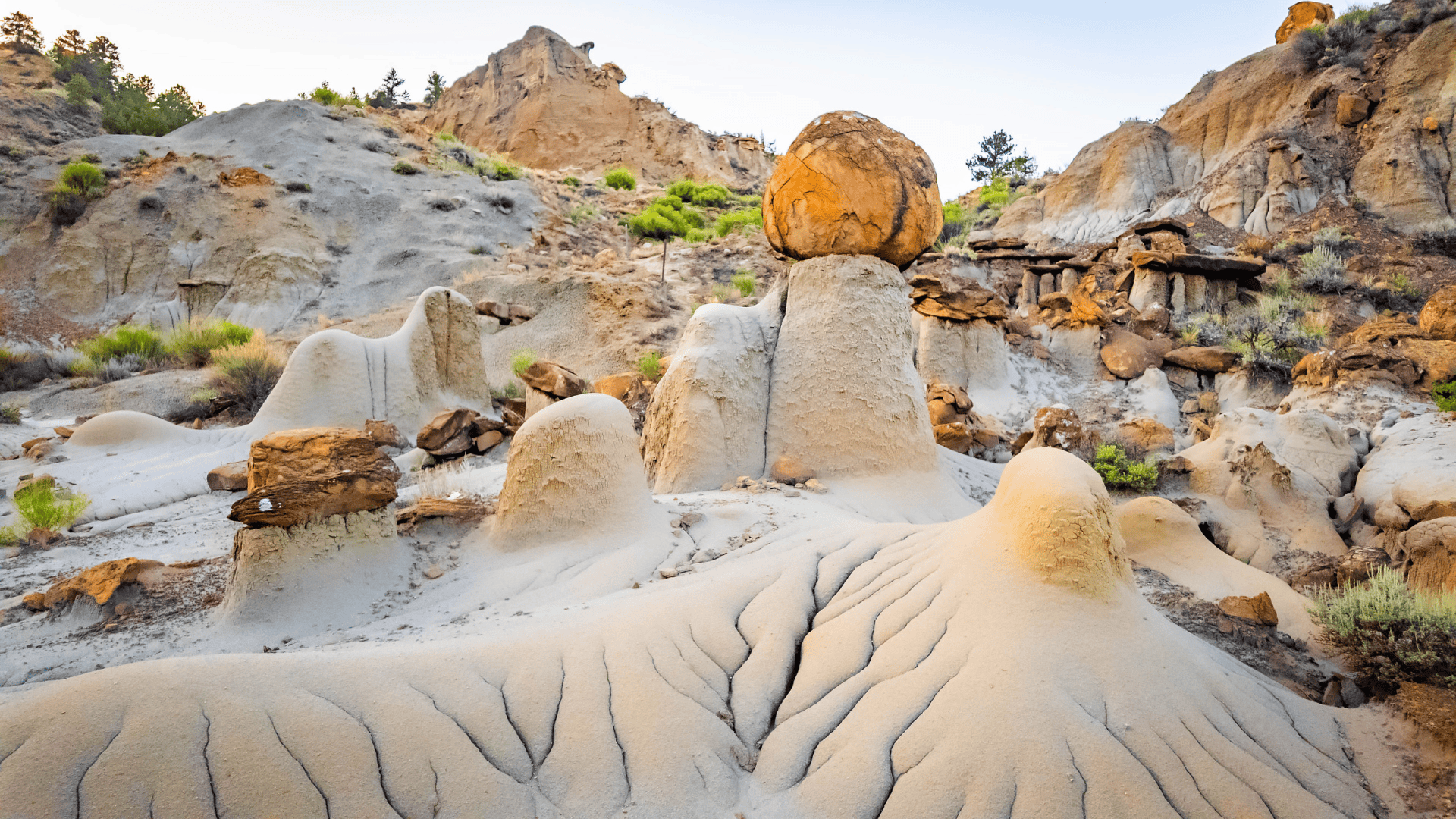
The exact same weather that carved these natural bridges and spires is still tearing them down. Every time a heavy summer thunderstorm rolls through, the hillsides wash away a little bit more.
A natural rock bridge that you walk under one year might completely collapse the next. The park is actively falling apart right in front of you. That makes it a great place to actually watch geology happen in real time.
 Read Exclusive Stories
 Bookmark & Save Articles For Later