When you think of Hawai’i, think of lush jungles, white sand beaches, and blue ocean water.
But if you drive to the western side of Kaua’i, the landscape is completely different. Here you’ll find a canyon covered in lush vegetation that stretches for 14 miles. It reaches a depth of 3,500 feet and features deep rust-colored rocks.
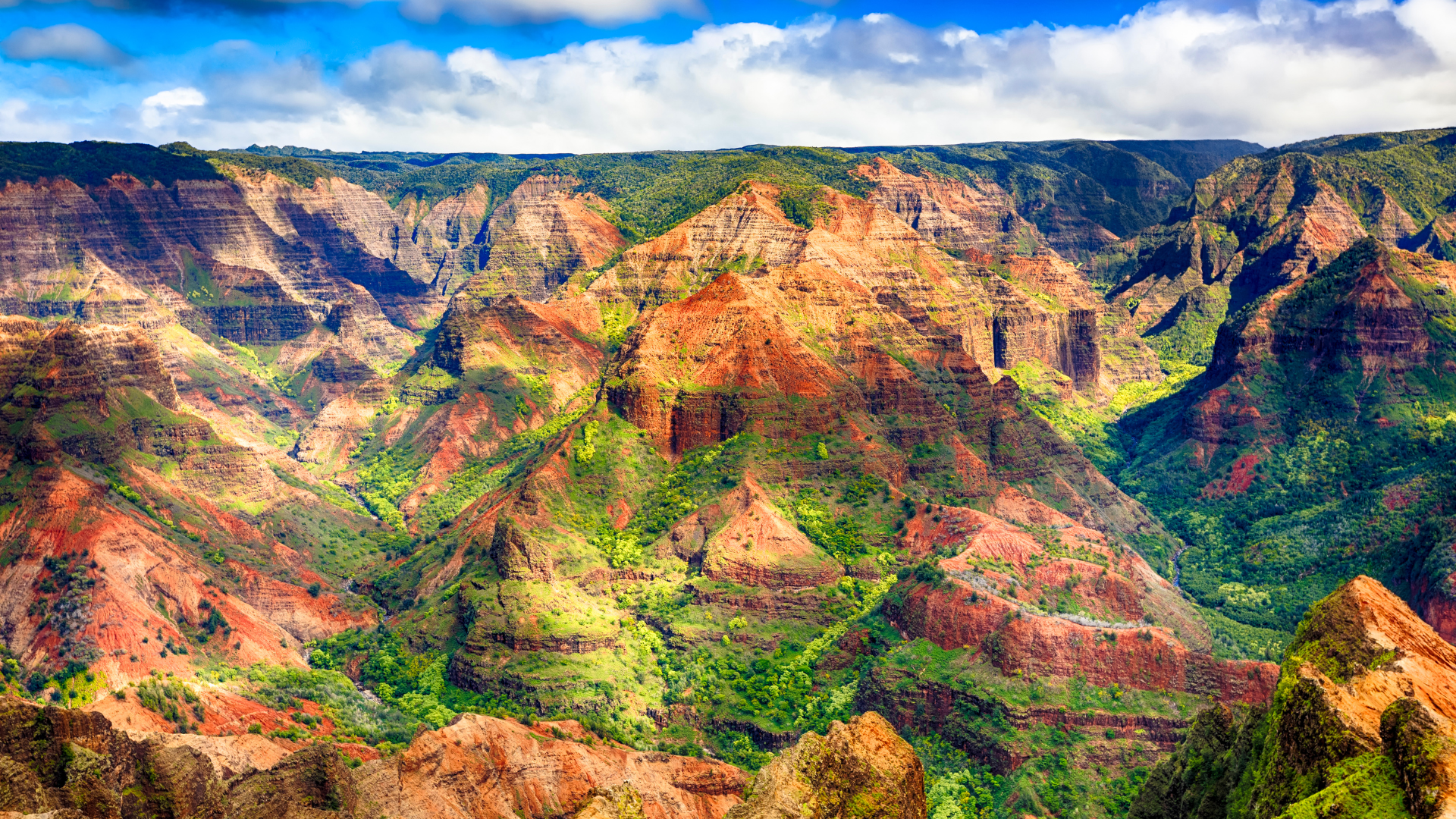
Waimea Canyon is often referred to as the “Grand Canyon of the Pacific.” The canyon features red rocks and cliffs that evoke the American Southwest. However, Waimea Canyon was not carved out in the same way as the Grand Canyon in Arizona was carved out. Instead, it was formed by the collapse of a volcano and the effects of extensive rainfall in the area.
A Collapsed Volcano
The entire island of Kaua’i is essentially one giant volcano that rose from the ocean floor. This is the oldest of the Hawaiian islands.
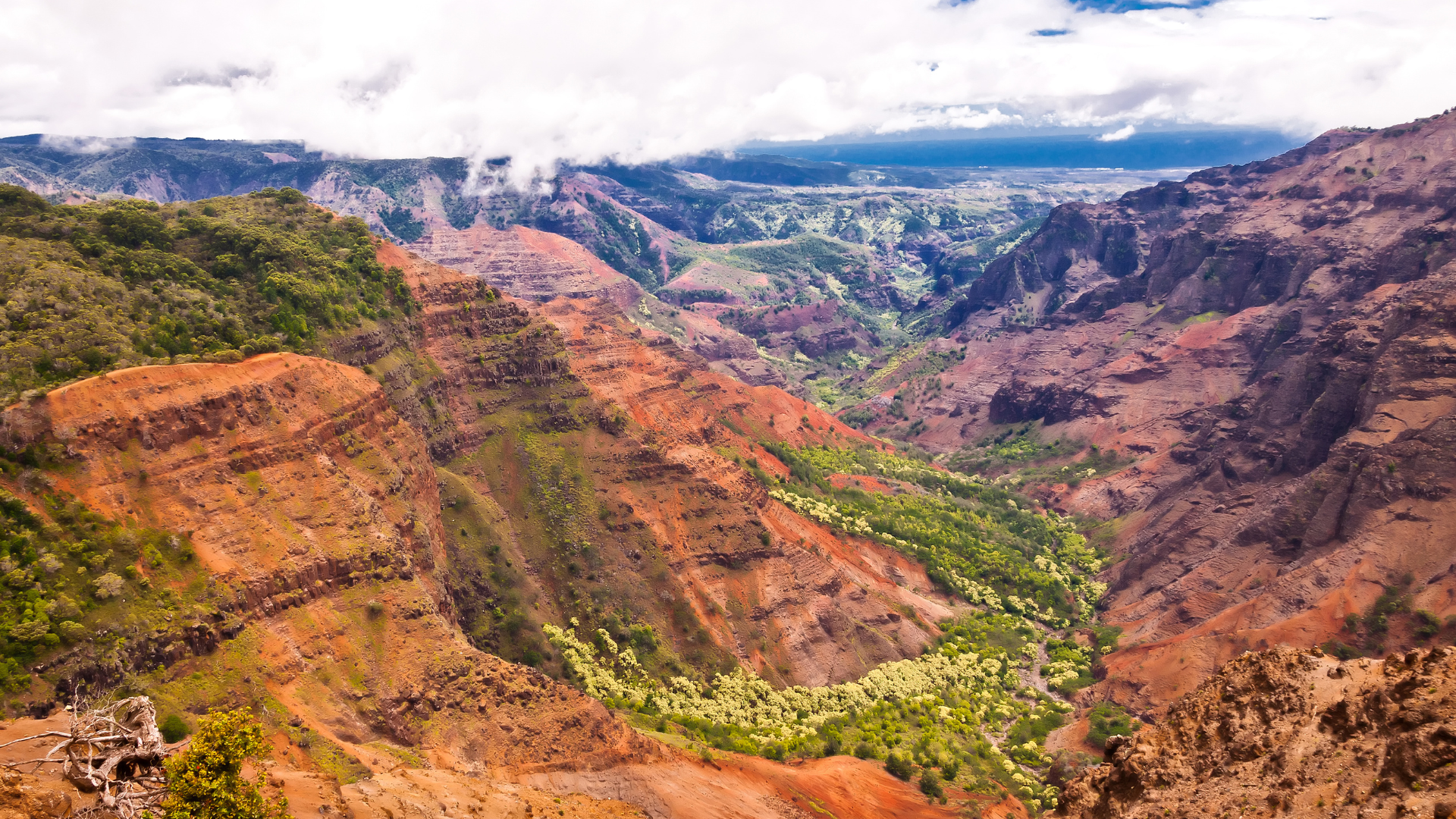
Around four million years ago, a volcanic chunk on the island collapsed. At the same time, the volcano was erupting lava, and a massive fault line cracked it open. The result was that a section of the volcano collapsed downwards into the volcano. This created a deep depression in the middle of the black volcanic rock.
The rain carved this canyon, which formed from the collapse of the volcano.
Carved By Extreme Rain
Right next to the canyon is Mount Wai’ale’ale. This mountain receives around 420 inches of rain every year.
Advertisement
All of that rain has to go somewhere. The mountain’s Waimea River collects all of that water. The Waimea River flows through the same fault line that cuts the mountain.
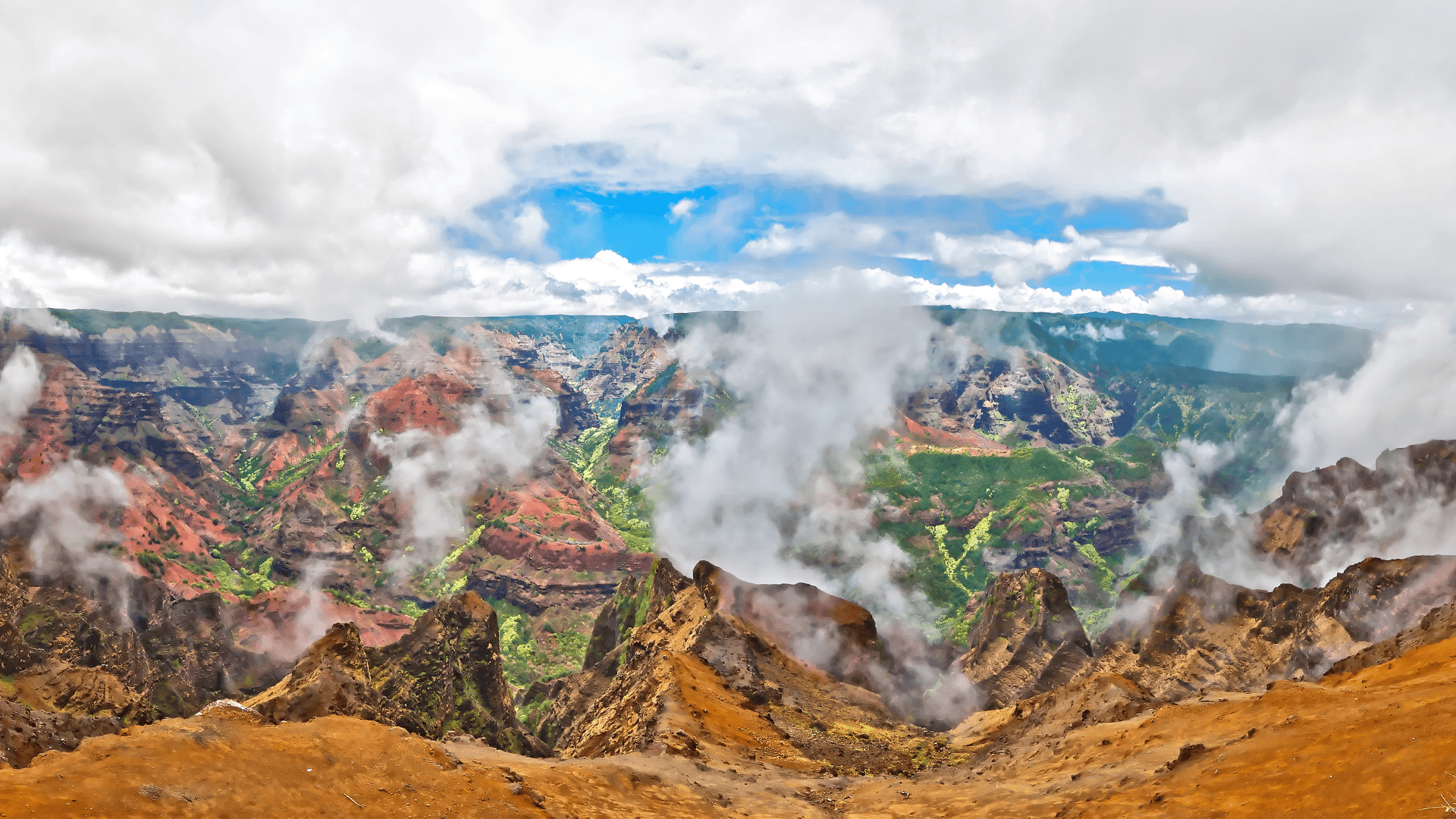
For millions of years, the Waimea River has flowed through this fault line, eroding the mountain rock with each flood. Each year, the river has carved out the canyon further than the year before. Today, the canyon walls expose different layers of ancient lava flows.
Rusting In The Sun
The island’s red soil is due to the chemistry of the soil.
The volcanic basalt rocks that make up the island contain a lot of iron. The river cut into these volcanic rocks, exposing the different layers of rock to the tropical rain and open air. The iron in these rocks reacted with the oxygen and the water in the air.
The canyon naturally rusted, producing the bright red dirt that covers the area. The Hawaiian name for Waimea means “reddish water,” which is the rust-colored dirt from the soil that drains through the river after heavy rains.
Despite the vibrant green plants and waterfalls in the area, the canyon’s steep red cliffs contrast violently with the tropics around it. This is contrary to the typical look of a tropical island.
 Read Exclusive Stories
 Bookmark & Save Articles For Later