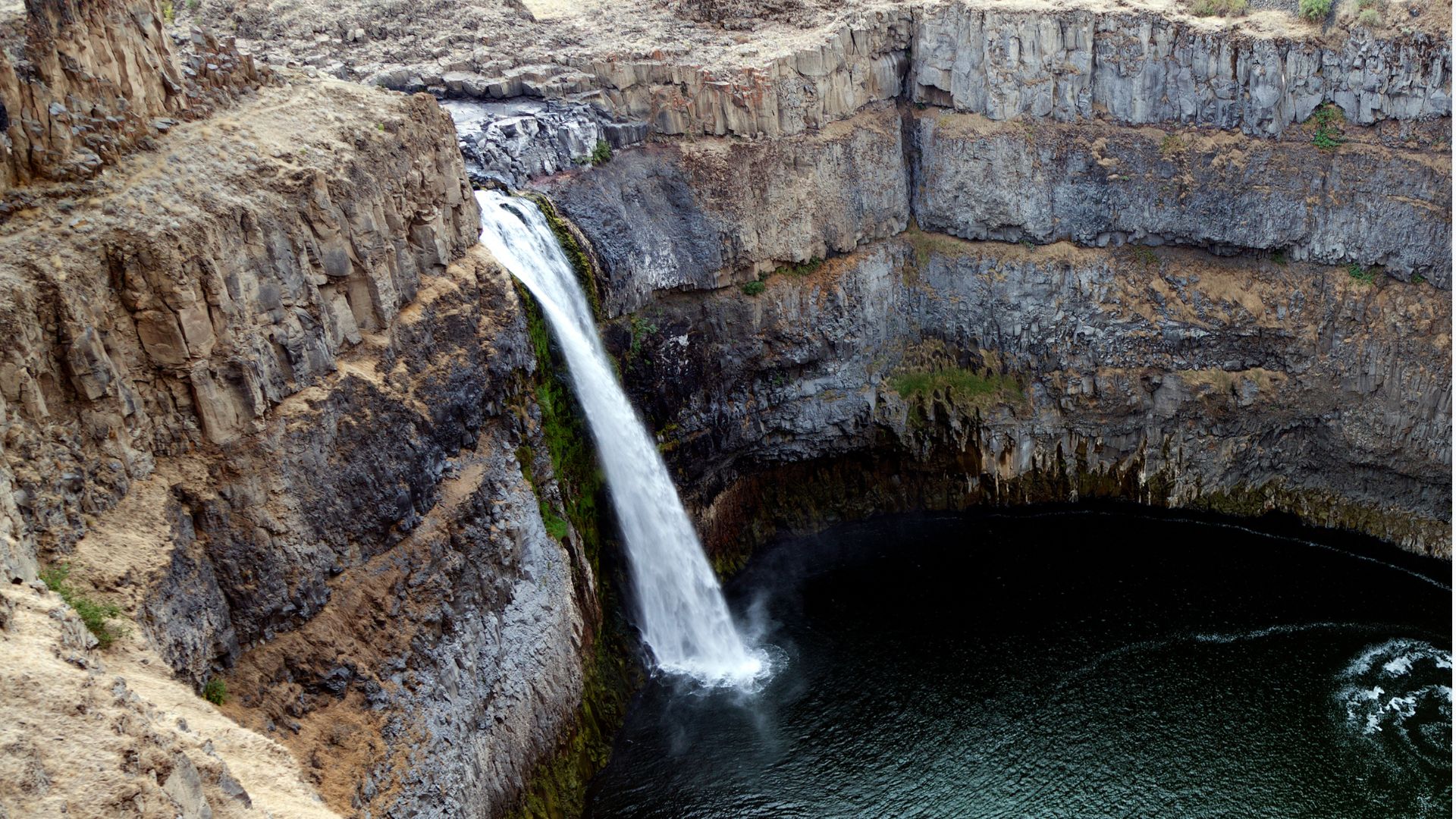
Eastern Washington is mostly rolling hills and dry farm country. But if you drive out to the Palouse River, the ground suddenly drops away. You find yourself looking down into a massive canyon. At the end of it is Palouse Falls, a 198-foot waterfall dumping into a giant bowl of black rock.
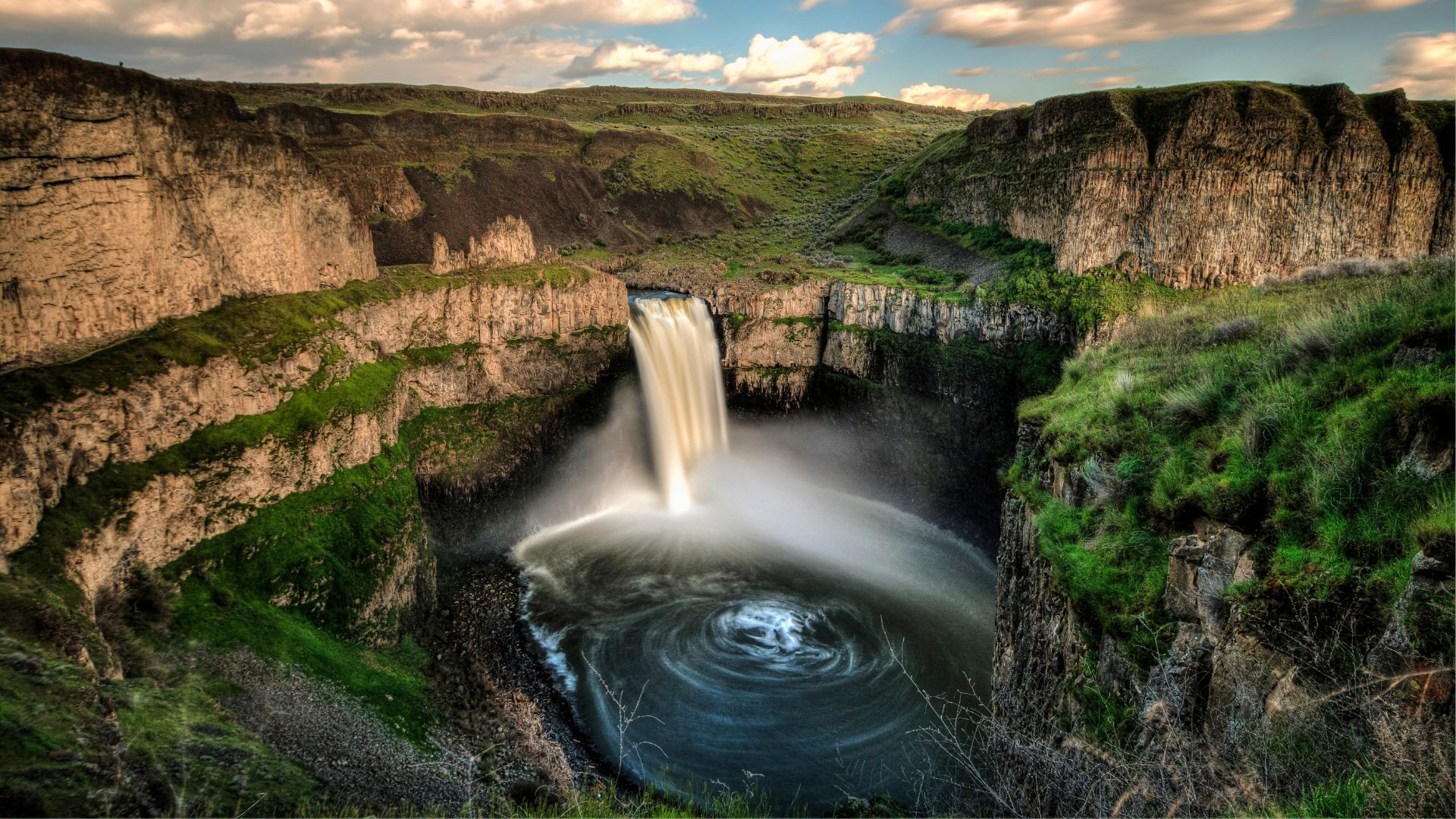
It looks completely out of place in such a dry area. That is because normal weather did not make this landscape. It was not carved slowly over millions of years by a trickling river. Instead, it was carved in a matter of days by one of the biggest floods in Earth’s history.
The Breaking of an Ice Dam
To understand the falls, you have to go back to the last Ice Age. A massive glacier moved down from Canada and completely blocked a river in Montana. This created a giant wall of ice, trapping an inland sea of meltwater called Glacial Lake Missoula.
Eventually, the water got too deep. The pressure lifted the ice dam until it finally shattered.
When it broke, a wall of water hundreds of feet high rushed across Idaho and Washington. It traveled at highway speeds. The flood carried more water than all the rivers in the world combined. It was so powerful that it just washed away all the dirt and topsoil in its path, exposing the hard bedrock underneath.
Tearing Through Solid Volcanic Rock
The rock under eastern Washington is mostly basalt. This is hard volcanic rock left over from ancient lava flows. A normal river takes millions of years to cut a canyon through basalt. But the ice age flood was different.
Advertisement
The water moved so fast that it grabbed rocks and boulders, using them like giant wrecking balls. It ripped out massive chunks of the basalt bedrock in just a few days. The flood carved a brand new, deep path for the Palouse River.
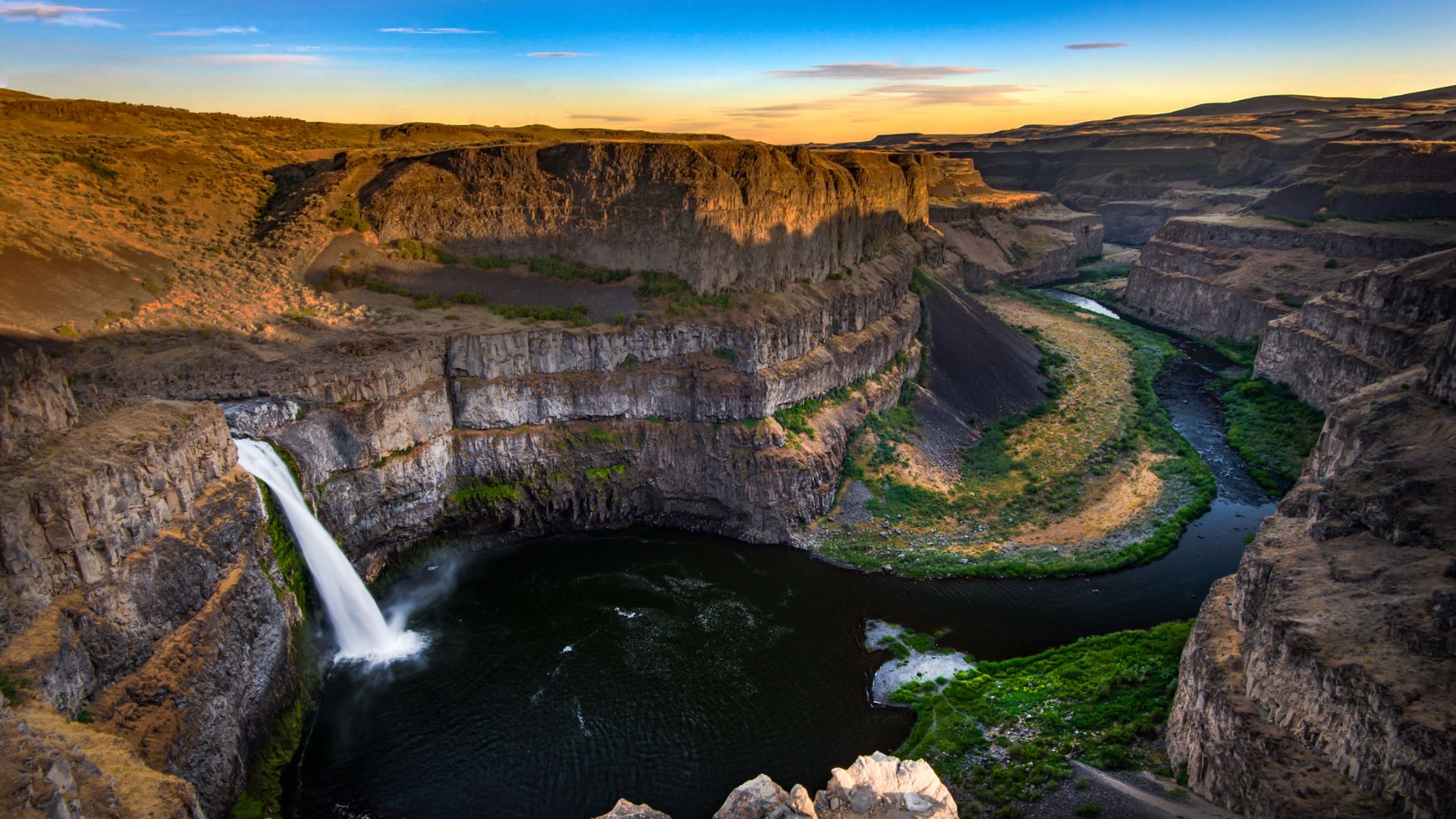
The massive circular bowl at the bottom of the falls is a leftover plunge pool. It formed when the heavy floodwaters slammed into the ground at their highest and angriest.
A Rare Look at Ancient History
The crazy thing is that this did not just happen once. The ice dam would form, break, and reform dozens of times over thousands of years. Each massive flood dug the canyon a little deeper.
The water is now calm, and the floods are long gone. But Palouse Falls remains one of the only active waterfalls left along this ancient flood path. Most of the other giant canyons carved by the water are totally dry now. So, standing at the overlook is one of the best ways to see just how much damage those ancient floods left behind.
 Read Exclusive Stories
 Bookmark & Save Articles For Later