When you enter the Finger Lakes region of New York, the terrain appears generally flat and agricultural. However, in the middle of a small town, there is a large crack in the ground.
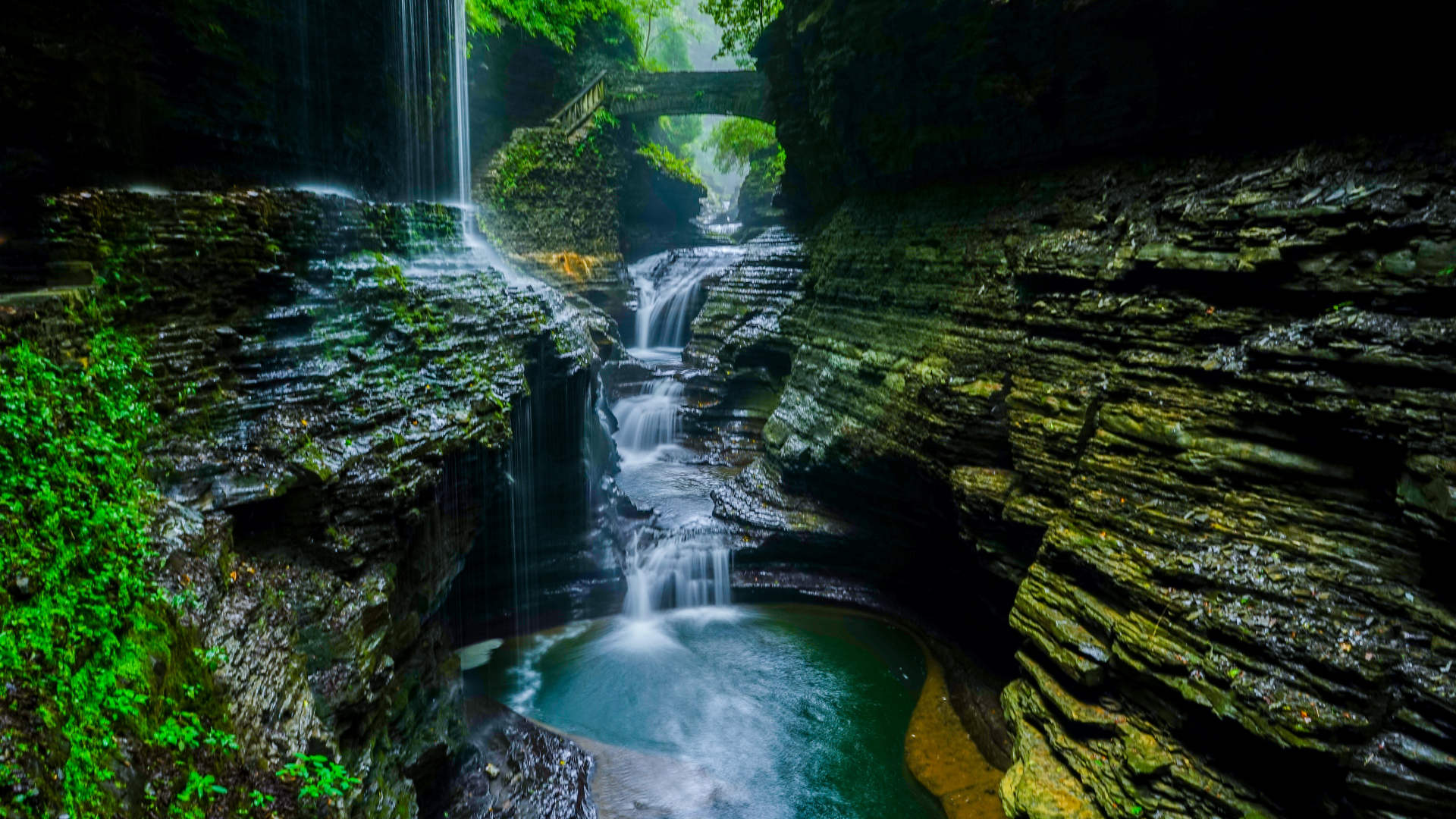
This is Watkins Glen State Park. There is a set of stone steps that lead you down into a 400-foot-deep gorge. The path follows closely along the side of a stream that plunges down the mountain. On a two-mile hike along the path, there are 19 waterfalls. As you walk through the park, it seems like you have traveled from New York into another part of the country.
Carved By Glaciers And Streams
The formation of this rift in the landscape is linked to the last ice age. During that time, large glaciers traveled across New York and carved the deep valleys that now contain the Finger Lakes.
As the glaciers melted, water began to flow rapidly down the steep slopes into the deep lakes. Then, over several thousand years, a small stream flowed through layers of soft sandstone and shale. As the stream flowed through the rock, it acted like a giant saw, cutting through the rock layer by layer.
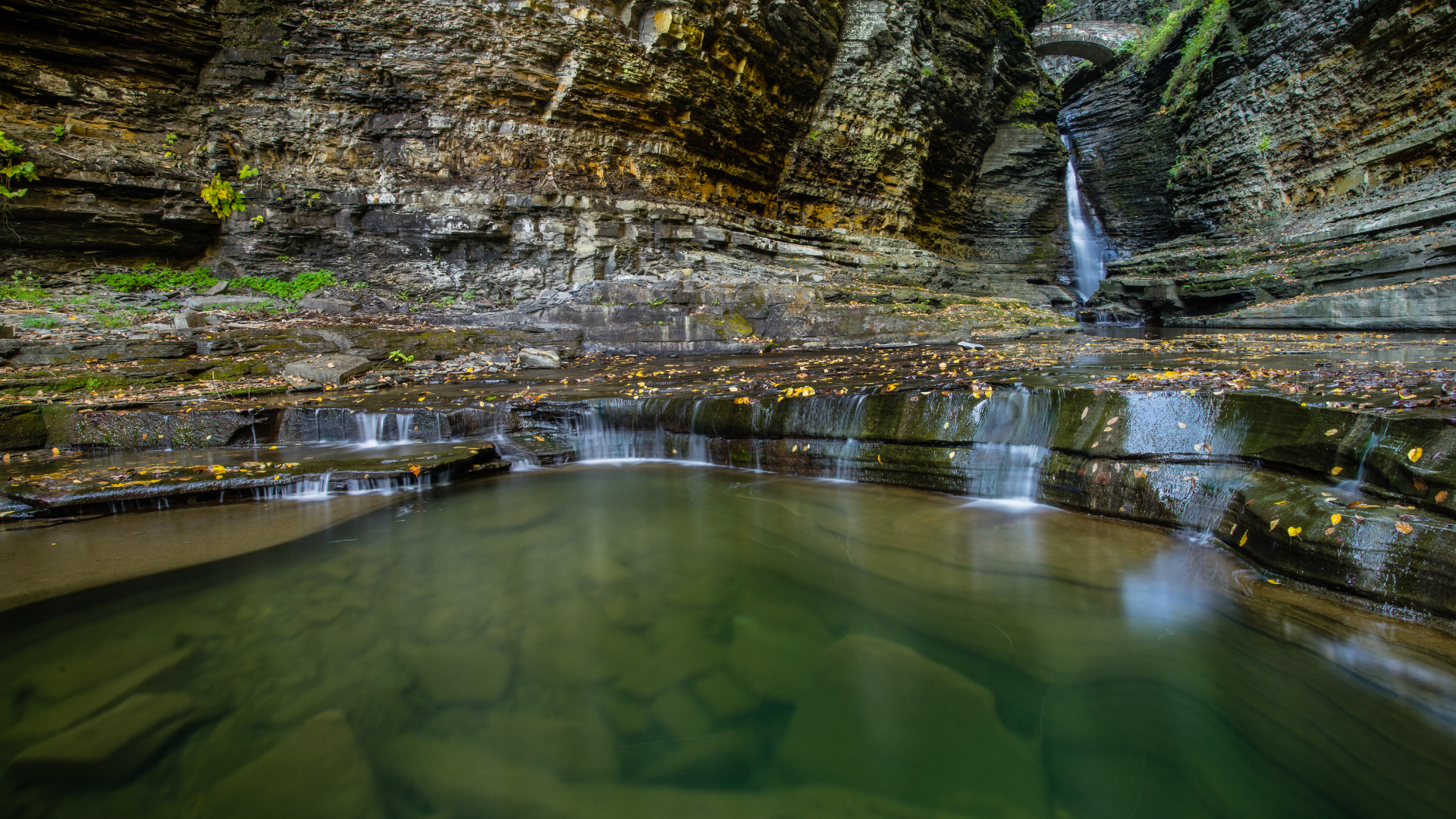
Since some layers of rock are harder than others, the stream did not produce a smooth slope. Rather, the stream created pools and steep drops. This is why so many waterfalls are stacked on top of one another in the park.
Walking Right Through The Rock
Advertisement
In the 1930s, workers constructed a stone trail that runs directly through the middle of the canyon.
Rather than using modern concrete, they created stone stair treads and arched bridges that appear to have always been part of the canyon walls. The trail crosses over the creek behind several large waterfalls and passes through tunnels carved completely through the rock. The stone becomes very slippery from the constant mist that moves through the canyon. At the bottom of the canyon, you can feel the cool and damp air.
A Temporary Natural Setup
Gorges formed in soft shale exhibit an interesting characteristic: they are continuously disintegrating.
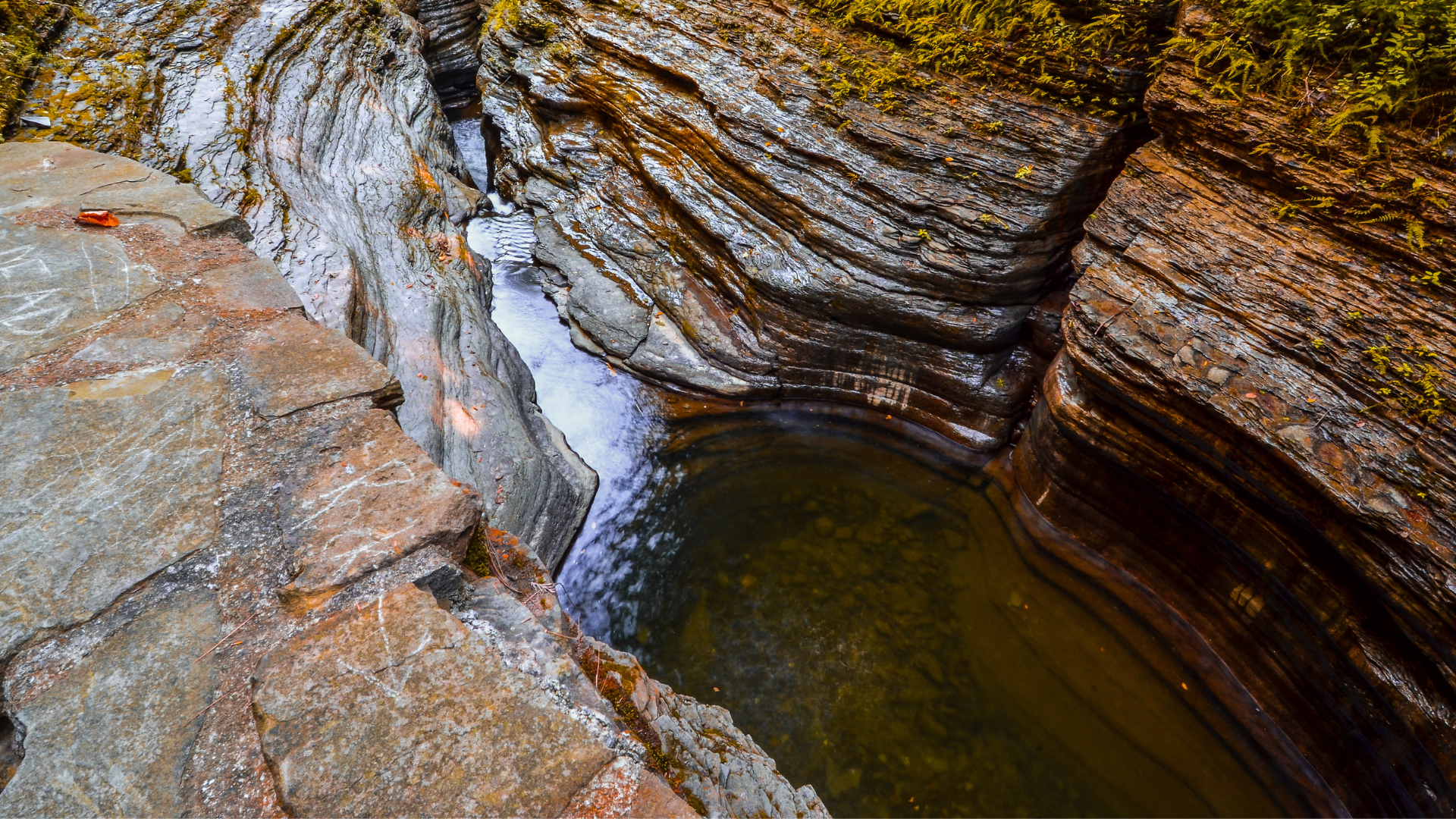
Daily, the stream continues to erode downward into the land. In the winter, the rocks crack in the cold climate of New York, and heavy spring rains continuously pick up large debris from the canyon walls and carry it away. In the winter months, the main canyon trail is closed due to the dangers posed by heavy ice and falling rocks.
The park exists in a drastically different state from what it was a century ago. Also, erosion will continue long after we are gone.
 Read Exclusive Stories
 Bookmark & Save Articles For Later