Bamboo has been used to build things for thousands of years. But over the last century, it got pushed to the side. As industrialization took over, we swapped natural materials for steel, concrete, and masonry.
A big reason for this wasn’t just preference, but safety rules. Strict construction codes were built for steel and concrete, but nobody wrote a rulebook for bamboo. As a result, it created a huge gap in how to build safely with it.
Now, a team of engineers led by the University of Warwick is changing that. Working with the University of Pittsburgh and groups like Arup, INBAR, and BASE, they have created the first-ever structural engineering manual for bamboo.
“Bamboo is a fast-growing, strong, inexpensive, and highly sustainable material, and, amongst other things, it is a very effective carbon sink (naturally absorbing CO2 from the atmosphere),” Dr. David Trujillo, from the University of Warwick, explained.
A New Standard For Bamboo
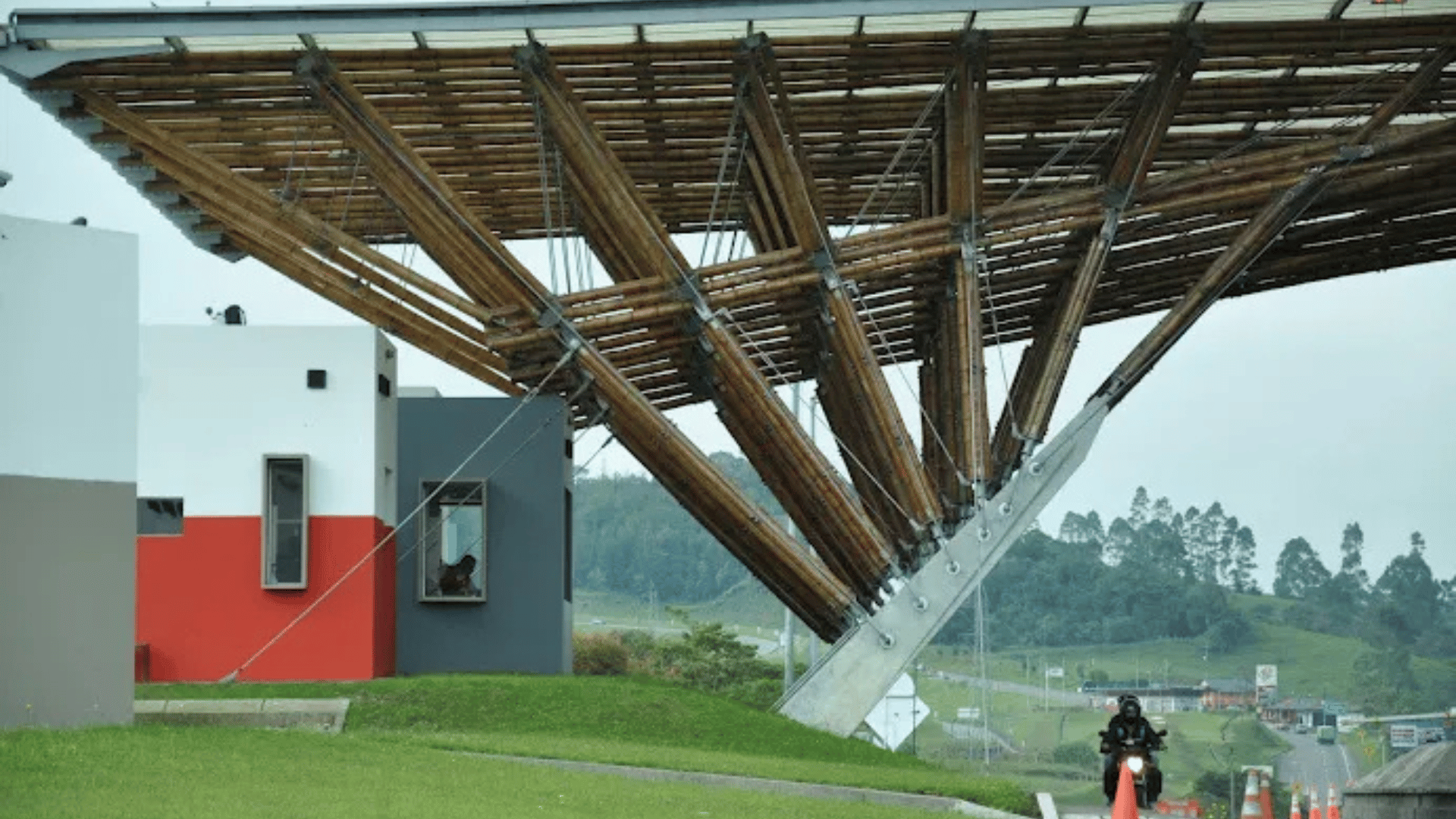
The problem was never the bamboo itself. As Dr. Trujillo notes, the countries that knew how to write building codes weren’t the ones interested in bamboo. It took an international team to fix this.
Advertisement
The result is a guide from the Institution of Structural Engineers (IStructE). It’s free, which means engineers in the tropics and subtropics can start using it right away. This is a big deal because there are over 1,600 species of bamboo growing on almost every continent.
“Structurally, bamboo has remarkable mechanical properties. It has also become a very promising bio-based resource, with growing credentials as a sustainable construction material,” Professor Kent Harries from the University of Pittsburgh said. “Nonetheless, this is hugely dependent on designing and building safe and durable structures. Our detailed manual helps to achieve this.”
Safety First
The manual focuses on using bamboo poles, or the stems, as beams and columns. It also covers a system called Composite Bamboo Shear Walls (CBSW). Researchers say this is really effective for making houses strong enough to handle earthquakes and typhoons.
Importantly, safety is the main priority here. The guide even addresses fire safety for permanent buildings. This is especially relevant following the recent Hong Kong tower block fires.
“Importantly, and given the wide use of bamboo, this guide sets out provisions for its safe use, including for fire, covering permanent buildings and not scaffolding,” Dr. Trujillo added.