Diabetes management may soon see an innovative change, thanks to a noninvasive method for measuring blood glucose levels. This new method, developed by MIT researchers, offers the potential to eliminate the need for patients to prick their fingers multiple times a day. Although it is standard, this practice often results in inadequate testing and serious complications.
“For a long time, the finger stick has been the standard method for measuring blood sugar, but nobody wants to prick their finger every day, multiple times a day,” said MIT research scientist Jeon Woong Kang, the study’s senior author.
“Naturally, many diabetic patients are under-testing their blood glucose levels, which can cause serious complications,” Kang added. “If we can make a noninvasive glucose monitor with high accuracy, then almost everyone with diabetes will benefit from this new technology.”
Needle-Free Blood Glucose Monitoring
Advertisement
The imaging device utilizes a technique called Raman spectroscopy that uses near-infrared light to show the chemical composition of tissues. MIT’s previous attempts calculated glucose levels indirectly. However, the research team has recently filtered out unwanted tissue signals to measure the faint glucose Raman signal in the skin directly. Researchers called this achievement a breakthrough.
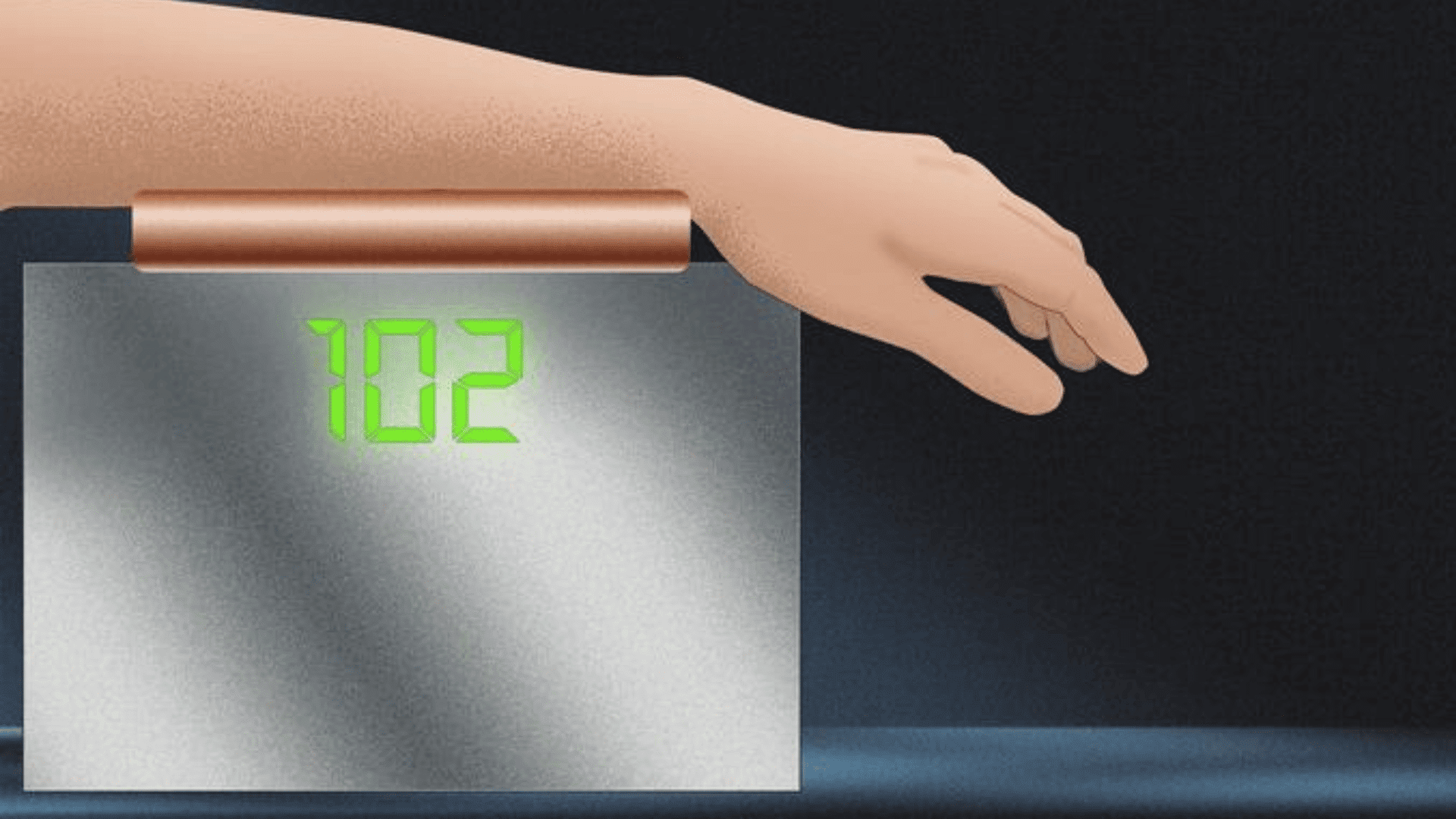
Their latest prototype is a dramatically shrunk version of the previously required equipment.
“By refraining from acquiring the whole spectrum, which has a lot of redundant information, we go down to three bands selected from about 1,000,” said lead author Arianna Bresci. “With this new approach, we can change the components commonly used in Raman-based devices, and save space, time, and cost.”
According to the researchers, the size of the required equipment has shrunk from the size of a computer to the size of a shoebox.
Clinical test results demonstrated that the shoebox-sized device had similar accuracy to commercial continuous glucose monitors. Researchers still believed the device could be smaller. The team has since deployed an even smaller, iPhone-sized wearable version. However, this device is currently undergoing testing with healthy and prediabetic volunteers.