A team of scientists from Northwestern, Rice, and Carnegie Mellon is working on a “living pharmacy,” a tiny device that sits under your skin and makes medicine for you.
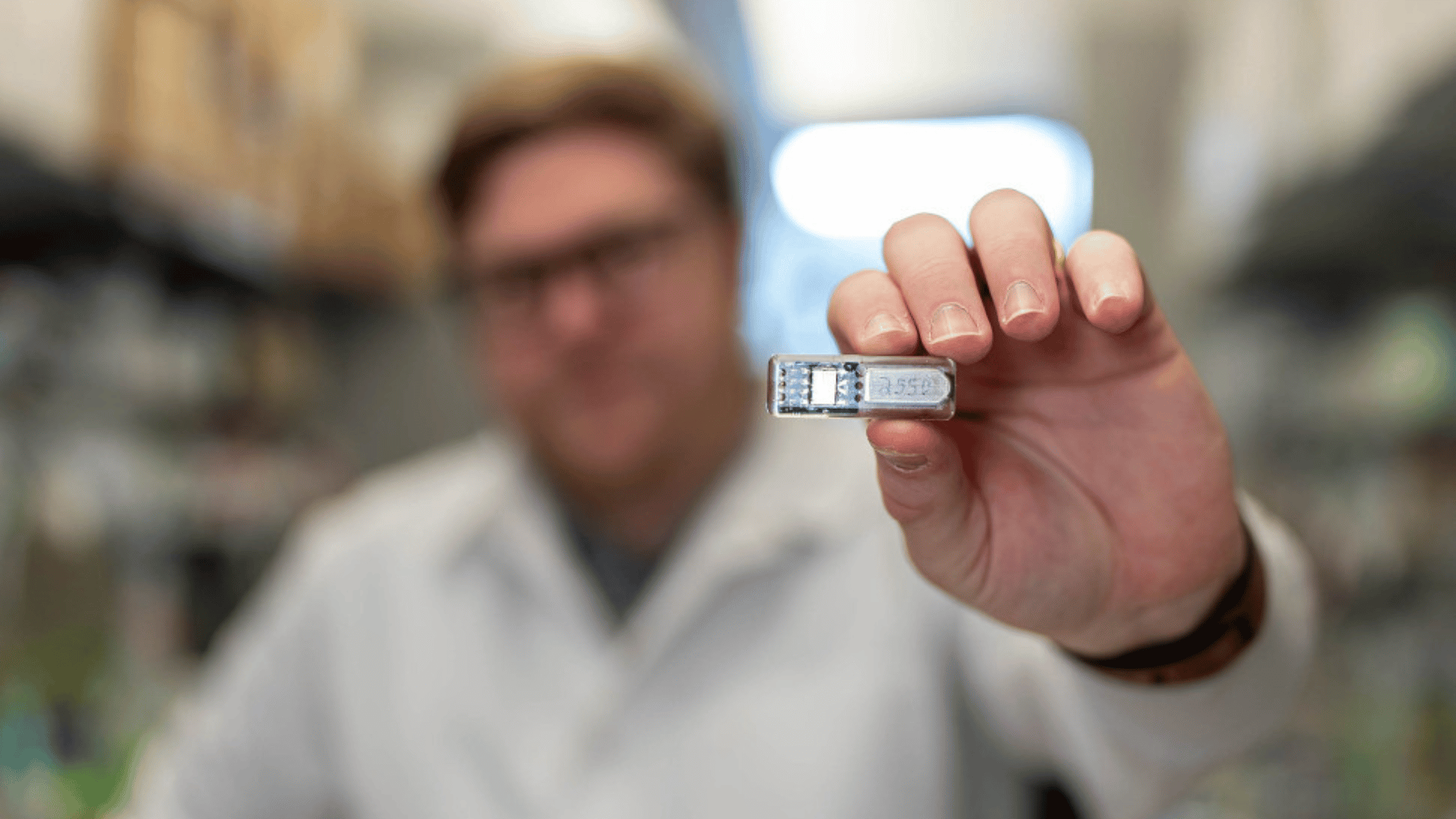
In a recent study published in the journal Device, researchers showed off a gadget called HOBIT. Inside, they packed engineered cells that can produce three different types of medicine: an anti-HIV antibody, a diabetes treatment, and a hormone that helps regulate metabolism.
A Living Pharmacy Medicine Device
The idea of implanting “cell factories” isn’t brand new, but oxygen has always been a challenge. When you pack a bunch of hard-working cells into a small container, they usually suffocate and die before they can do anything.
To fix this, the team added a miniature oxygen generator to the device that splits water molecules from the surrounding area to keep the cells breathing.
“We are producing oxygen directly where the cells need it,” said Jonathan Rivnay, a professor at Northwestern who helped lead the project. “That allows us to support much higher cell densities in a much smaller space. Cell densities in HOBIT were roughly six times higher than conventional unoxygenated encapsulation approaches.”
Advertisement
Staying Alive
By keeping the cells “breathing,” the device can pump out medicine for weeks. In tests with rats, the oxygenated devices kept about 65% of the cells alive and healthy for a month. In devices without the oxygen tech, that number dropped to just 20%, and the medicine levels in the blood disappeared quickly.
The goal here is to create a system that can handle complex diseases without the patient having to do much of anything. Since different medicines break down in the body at different speeds, the device acts like a steady faucet, keeping everything at the right level.
“This work highlights the broad potential of a fully integrated biohybrid platform for treating disease,” Rivnay said. “Traditional biologic drugs often have very different half-lives, so maintaining stable levels of multiple therapies can be challenging. Because our implanted ‘cell factories’ continuously produce these biologics, keeping the cells alive with our oxygenation technology allows us to sustain steady levels multiple different therapeutics at once.”
The team is now looking at testing this in larger animals. Down the road, they hope it could even be used to house pancreatic cells to help people living with diabetes.
“We’re beginning to see how bioelectronics and cell therapy can work together in a single platform,” Rivnay said. “As these technologies continue to develop, devices like this could eventually act as programmable drug factories inside the body — delivering complex therapies in ways that simply aren’t possible today.”