Right now, the U.S. has a problem making nuclear reactor fuel. Most advanced reactors require HALEU (high-assay low-enriched uranium), but there are no domestic suppliers. In 2025, 77% of enrichment services for U.S. civilian reactors were sourced from foreign suppliers.
A startup, however, recently became the first startup in history to produce HALEU.
They did this using their own machine, a first-generation calutron, which sorts atoms by mass inside a magnetic field. Just weeks before, this same machine made a different product, enriched ytterbium-176, for a paying customer.
Bypassing the Bottleneck
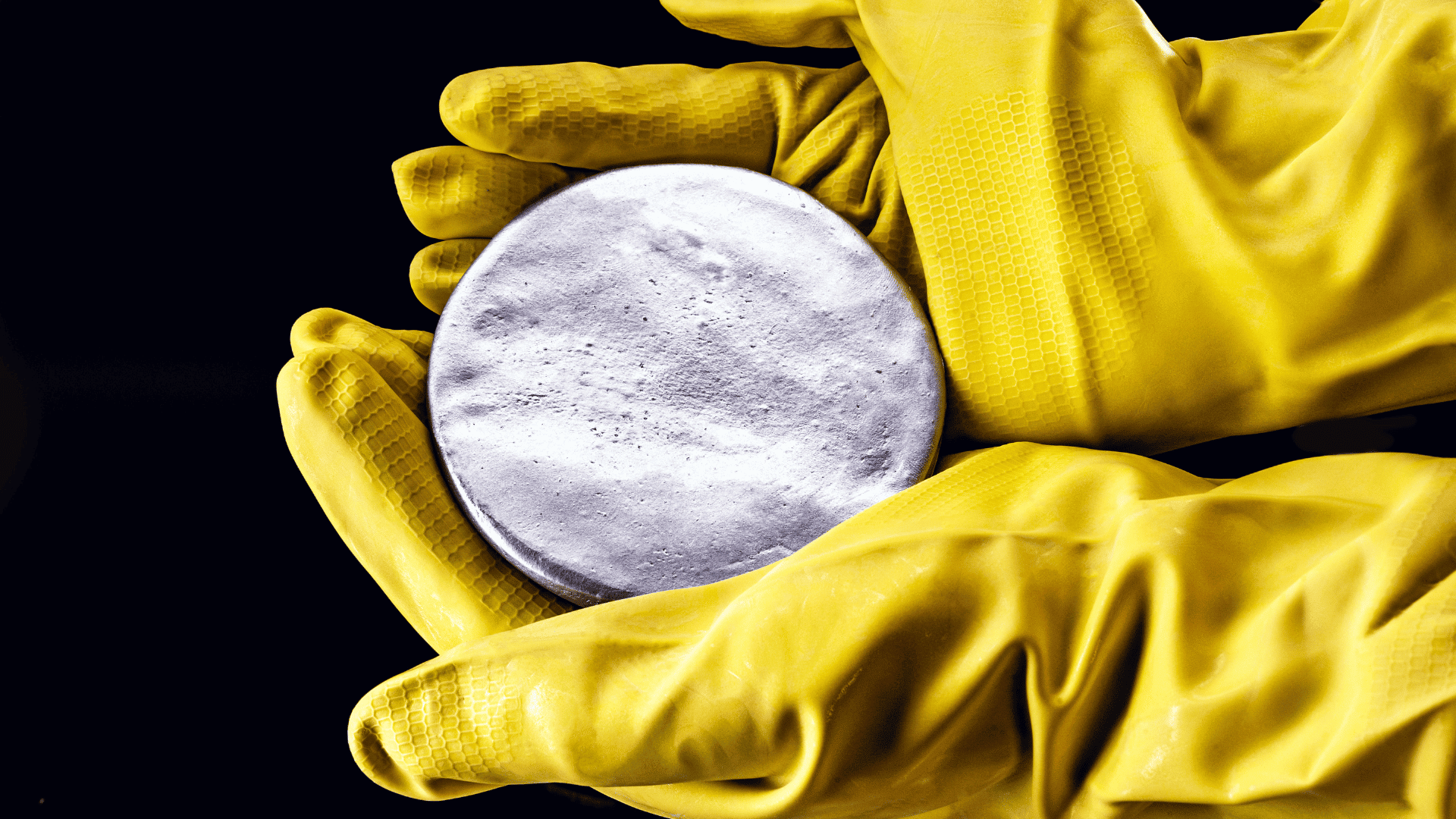
Traditional uranium enrichment plants produce a gas that must be converted into a solid before it can be used as fuel, and the U.S. currently has zero commercial capacity to do so. Actinide’s machine bypasses this problem by producing solid HALEU directly.
The startup has only made research quantities for now. Plus, this material still needs to be made into rods or pellets before a reactor can actually use it.
Advertisement
“This demonstration is a testament to the power and flexibility of our technology,” Robert Mendelsohn, co-founder and CTO of Actinide, said. “A centrifuge plant does one thing, costs billions, and takes years to stand up. Our machines cost a few hundred thousand dollars, produce material within months, deploy anywhere, and can be reconfigured in a matter of days to separate various isotopes as they are needed.”
Rebuilding the Uranium Supply Chain
Eric Olszewski, co-founder and CEO of Actinide, added, “America should not have to ask another country for the materials that determine whether a reactor runs or a cancer treatment gets made.”
The company is building its second-generation machine, called Fortitude. They estimate that just one of these machines will have half the capacity of the U.S. government’s current fleet.
“Whether the application is nuclear energy, cancer medicine, or quantum computing, the choke point is the same: access to the right isotope. And almost everyone attacking it is years from producing anything,” Tom McQuillen of Onto Ventures, which helped fund the startup, explained. “Eric, Robert, and the Actinide team designed and built their own separator, shipped material to a paying customer, and then made HALEU. They’re rebuilding America’s isotope capacity, and we’re proud to be on that journey with them.”
 Read Exclusive Stories
 Bookmark & Save Articles For Later