Developing cancer vaccines is difficult enough, but creating a custom medication for an individual patient is another challenge. MIT researchers are attempting to do so with a harmless virus.
The team works with the M13 bacteriophage, a virus that does not infect humans. Researchers have used the virus as a microscopic scaffold to build batteries and solar cells. For decades, it’s been the most common use for the virus. Now, the researchers are turning that same approach into a personalized medicine.
Turning a Tiny Virus into a Personalized Cancer Vaccine
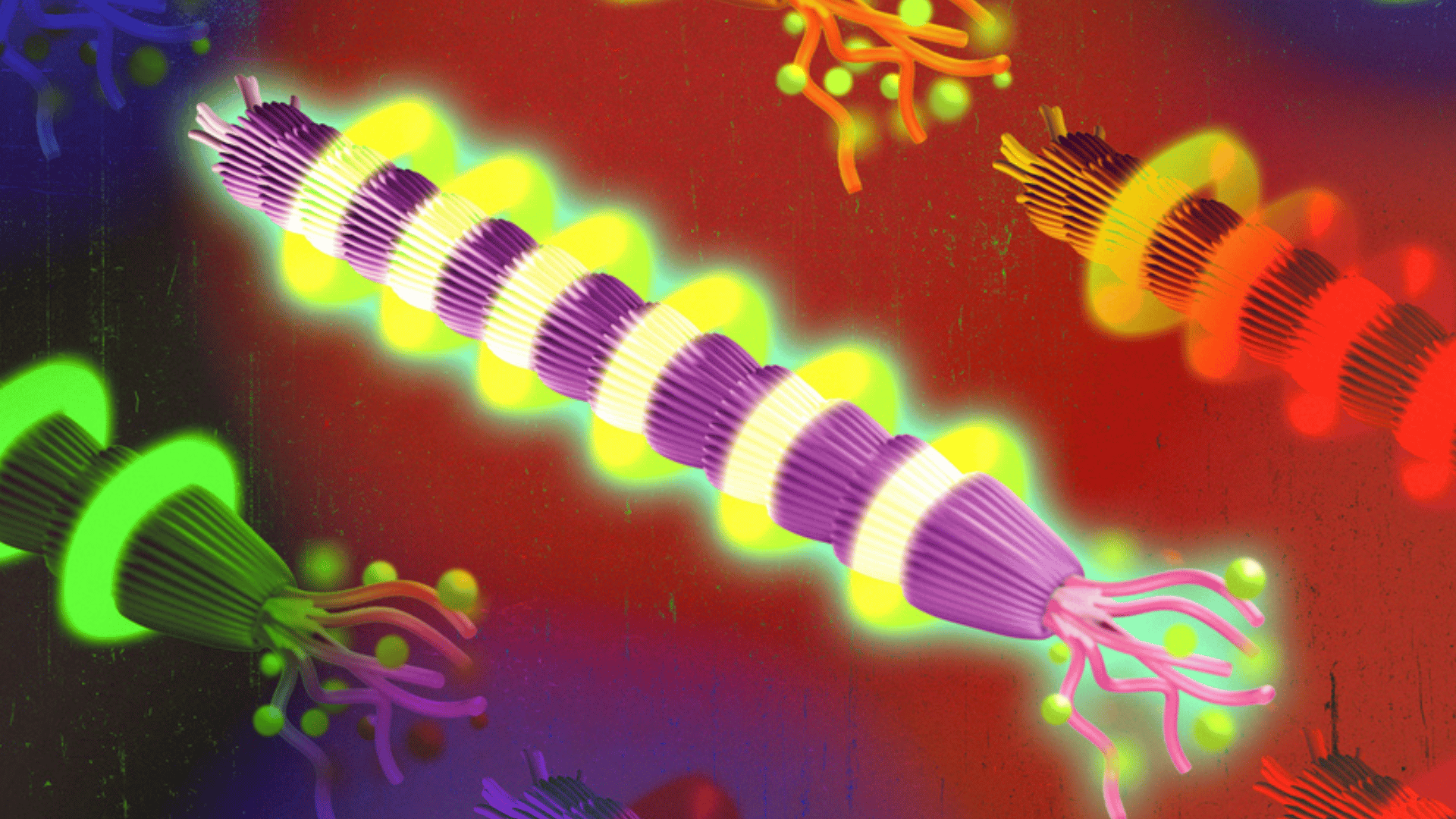
The virus naturally grows into a long nanofiber coated with proteins. By editing its genes, scientists can stick cancer-target markers, called antigens, directly onto its outer coat.
“The great thing about this is that it’s modular and we could switch out different antigens on demand, so you could design it to be patient-specific and target a known antigen for a particular kind of cancer,” said Angela Belcher, the James Mason Crafts Professor of Biological Engineering and Materials Science and Engineering and a member of the Koch Institute.
The researchers also learned how to fine-tune the density of those target proteins. By tweaking a few amino acids, they can pack the antigens tightly together, which helps the body take notice. Additionally, the virus carries its own built-in boost. Most vaccines need an added booster ingredient to wake up the immune system, but the single-stranded DNA inside this virus triggers an immune alert on its own.
“We can control the exact length. We can control the exact antigen expression, density, pattern, the exact adjuvant amount,” Belcher explained. “A lot of times with a vaccine, you’ll have to put a different adjuvant with it, but now it’s all genetically encoded.”
Stopping Tumors in Mice
Density makes a huge difference in how well the vaccine works. In tests on mice, a vaccine with 35 percent antigen density protected the animals far better than one with just 6 percent.
In another run, the team loaded the fibers with a specific protein found in colon cancer cells. Mice that received this high-density shot were much less likely to develop colon tumors.
“Because this is a modularly engineered platform, we can change the antigen we are interested in,” said lead author Shengnan Huang. “For colon cancer, we use this specific antigen. For other types of cancer, we can just plug in other antigens, and they can be assembled in this platform.”
The U.S. research team tested the platform to prevent tumors, but earlier work showed it could also treat established tumors in mice. In the future, they hope to plug in targets for other cancers, too.
Advertisement
 Read Exclusive Stories
 Bookmark & Save Articles For Later