Why Cleaning Habits Affect Indoor Air
Household dust is rarely just dirt. More often, it’s a mix of pollen, pet dander, dust mite matter, mold spores, and shed skin cells that settle on every surface in a home. Cleaning isn’t only about appearances—staying on top of it can help cut down on settled dust and make for a more comfortable living space. When it comes to carpets, rugs, and upholstered furniture, a vacuum earns its place as part of a broader routine, working alongside damp-cleaning methods for hard surfaces. The real goal isn’t cleaning more often—it’s cleaning smarter, in ways that keep dust from getting kicked back up into the air in the first place. What follows are practical, realistic habits, not promises of eliminating indoor pollutants or curing allergy symptoms.
Understand What Household Dust Contains
Dust builds up from sources both inside and outside the home. Pet dander, pollen tracked in from the yard, dust mite waste, mold spores, human skin cells, and soil carried in on shoes all contribute to the mix. Much of it stays invisible until it’s stirred into the air—something that happens easily enough during sweeping, dry dusting, or even just walking across a carpet.
It’s worth drawing a distinction between settled particles, which sit on surfaces and furniture, and airborne particles, which circulate for a while before settling back down. Ordinary household dust isn’t necessarily a health hazard, and no amount of routine cleaning will eliminate every allergen from a home. That said, extensive mold growth or ongoing moisture damage is a different matter entirely—those situations usually call for a professional assessment rather than a thorough scrub.
Start With Source Control
Reduce Dust Before It Spreads
Keeping dust out of the house in the first place tends to work better than cleaning it up after the fact. Doormats at entrances, removing shoes when it’s practical, and cutting down on clutter all make surfaces far easier to keep clean. Well-maintained windows, doors, and seals also go a long way toward limiting how much outdoor dust and debris makes it inside.
Manage Moisture
Checking regularly for leaks, condensation, and damp spots matters because excess moisture creates the conditions mold needs to grow. Drying wet materials quickly and fixing the root cause of recurring water problems does far more good than repeatedly cleaning up the visible aftermath. Mold that’s extensive or persistent may call for qualified remediation rather than standard household cleaning. Environmental-health guidance generally treats source control, moisture management, ventilation, and cleaning as pieces of the same puzzle, not standalone fixes.
Use the Right Method for Each Surface
Hard Surfaces
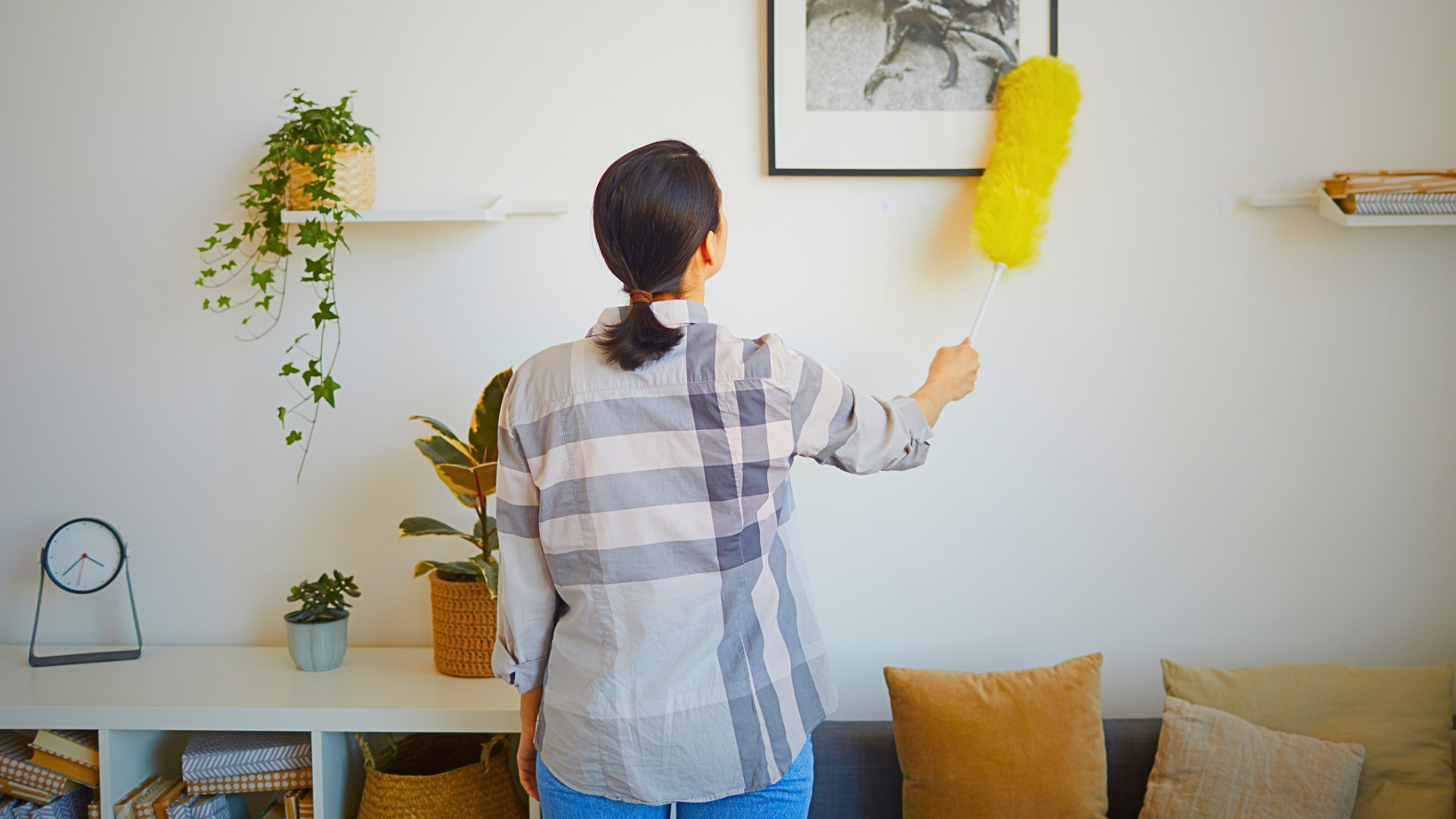
Damp microfiber cloths, or similar dust-trapping materials, tend to capture particles far more effectively than dry feather dusters, which often just scatter dust back into the air. Working from higher surfaces down to lower ones keeps loosened dust from resettling on spots you’ve already cleaned. It’s easy to overlook baseboards, shelves, blinds, ceiling fans, and the space behind and beneath furniture—but these spots deserve regular attention too.
Floors, Carpets, and Upholstery
Soft furnishings accumulate dust, pollen, and pet dander over time, so it’s worth following manufacturer care instructions for rugs, mattresses, and upholstery. How often you vacuum should depend on your household’s actual conditions rather than some fixed rule of thumb: a low-traffic guest bedroom might need only occasional attention, while an entryway collecting outdoor dirt daily calls for far more frequent cleaning—and homes with pets often need regular attention to soft surfaces no matter how much foot traffic passes through.
Create a Manageable Cleaning Schedule
Advertisement
Daily or as-needed tasks include wiping up spills right away, dealing with tracked-in debris at entry points, airing out rooms when conditions allow, and managing pet hair before it spreads further.
Weekly tasks typically cover damp-dusting hard surfaces, cleaning floors in a way suited to their material, vacuuming carpets and upholstered furniture, and washing frequently used bedding and textiles according to their care labels. Public-health guidance often points to weekly cleaning as a reasonable baseline for carpets and furniture.
Periodic tasks include cleaning vents, blinds, and ceiling fans; checking or replacing HVAC and appliance filters per manufacturer instructions; and periodically reassessing which areas collect dust fastest so the routine can be adjusted as needed.
A practical minimum routine:
- Damp-wipe high-touch surfaces weekly
- Vacuum carpets and upholstery weekly, more often with pets
- Wash bedding regularly and dry it completely
- Check filters and vents periodically
- Address moisture issues as soon as they appear
Reduce Dust During Cleaning
Here’s the catch: cleaning itself can temporarily send dust and allergens airborne. Damp dusting and damp mopping help limit this compared with dry methods. Airing out the room during and after cleaning—when outdoor air quality cooperates—helps clear out whatever gets disturbed. Unnecessary powders or aerosol sprays only add to the airborne particle count, so it’s best to use them sparingly. Always follow product labels, never mix cleaning chemicals, and reach for protective equipment or professional help when dealing with significant mold, animal waste, or other unusual contamination.
Consider Household-Specific Needs
Cleaning routines reasonably look different from one household to the next. Homes with pets, young children, extensive carpeting, or older, poorly ventilated construction often need more frequent attention than others. Washing bedding regularly and drying it thoroughly is one practical step linked to reduced dust-mite exposure. Anyone with diagnosed asthma or allergies should lean on guidance from their healthcare provider—cleaning supports a healthier environment, but it’s no substitute for medical care.
Take a household that keeps noticing dust returning quickly despite regular cleaning. After taking a closer look at their habits, they realize an entryway is tracking in outdoor dirt, so they switch to damp-dusting, pay more attention to textile care, and adjust their schedule to match actual accumulation rather than habit. The payoff is less visible dust and a routine that’s easier to stick with—not some guaranteed medical outcome.
Common Cleaning Mistakes to Avoid
- Dry dusting in ways that scatter particles instead of capturing them
- Focusing only on visible areas while neglecting filters, upholstery, or entryways
- Overusing fragranced sprays or powdered products
- Letting damp fabrics stay wet, which invites persistent moisture
- Ignoring recurring leaks or condensation
- Treating one deep clean as a stand-in for ongoing maintenance
- Disregarding manufacturer instructions for equipment or products
Final Takeaway: Build a Routine That Fits the Home
An effective approach brings together source control, moisture management, damp dusting, suitable floor care, and consistent upkeep. The best routine is simply the one a household can realistically keep up with—adjusted for pets, foot traffic, flooring, furnishings, and individual sensitivities. Start by figuring out which three areas collect the most dust, choose cleaning methods that capture rather than scatter particles, and work them into a schedule that actually fits daily life.
Key takeaway: Reduce dust at its source, use methods that capture rather than redistribute particles, and maintain the home consistently instead of relying on occasional intensive cleaning.
This is a sponsored post by Jett SEO. All reviews and opinions expressed in this post are not based on the views and opinions of Tomorrow’s World Today.
 Read Exclusive Stories
 Bookmark & Save Articles For Later