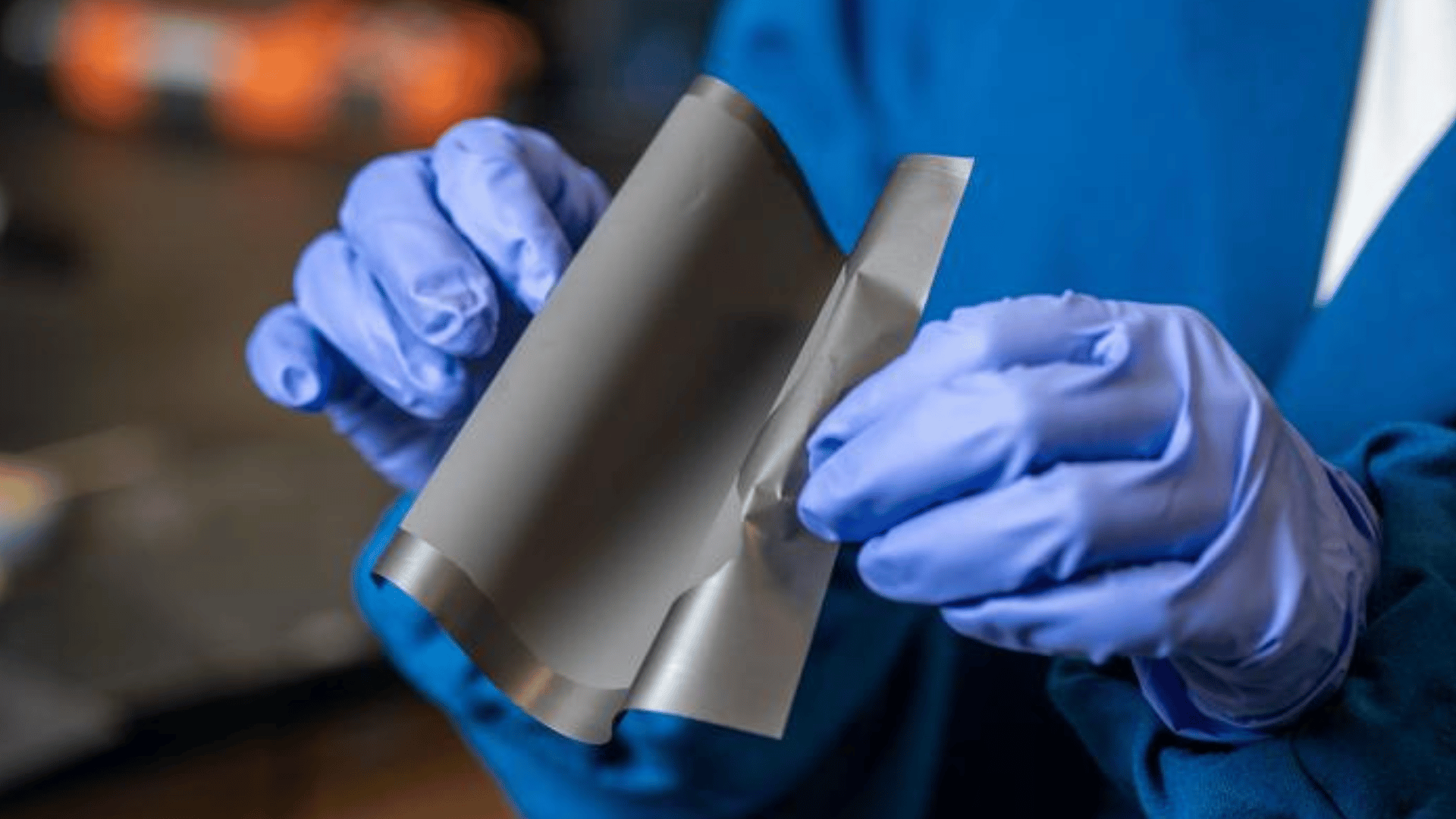
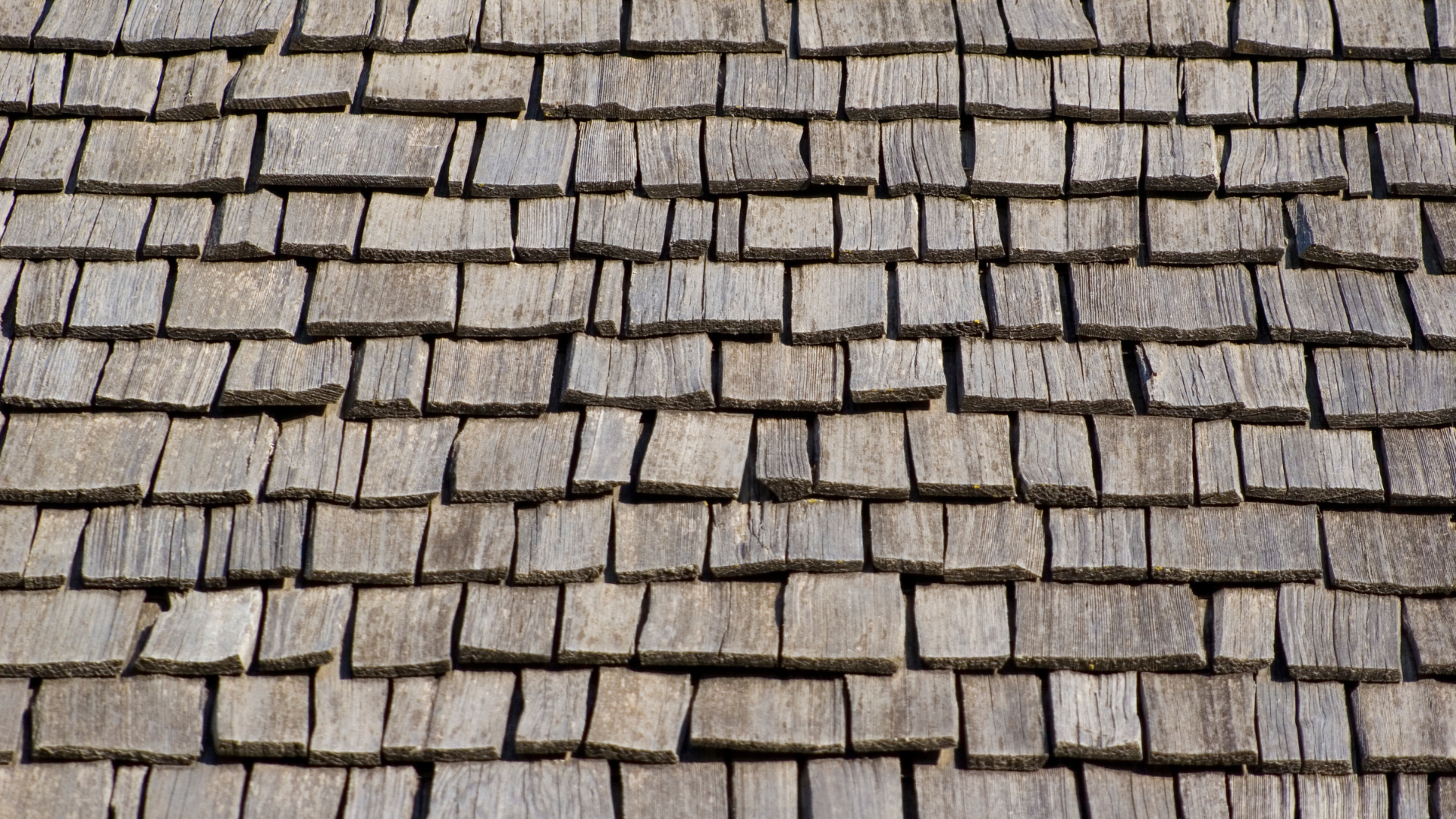
Most roofs are covered in asphalt. You buy bundles of it at the store and nail it down. But people used to make roofs out of wood. They mostly used cedar. And they made every single piece by hand.
You don’t use a saw to make a cedar shingle. You use thick metal blade with a wooden handle sticking straight up called a froe. You stand a short piece of a cedar log on its end. You place the froe across the top of the log. Then you hit the blade with a heavy wooden mallet.
One important feature of wood is its grain, which is just the natural lines running up and down the tree. When you hit the froe, the wood splits exactly along those natural lines. A maker reads the wood before they strike. They look for straight grain. If they place the blade right, a flat sheet of cedar pops off.
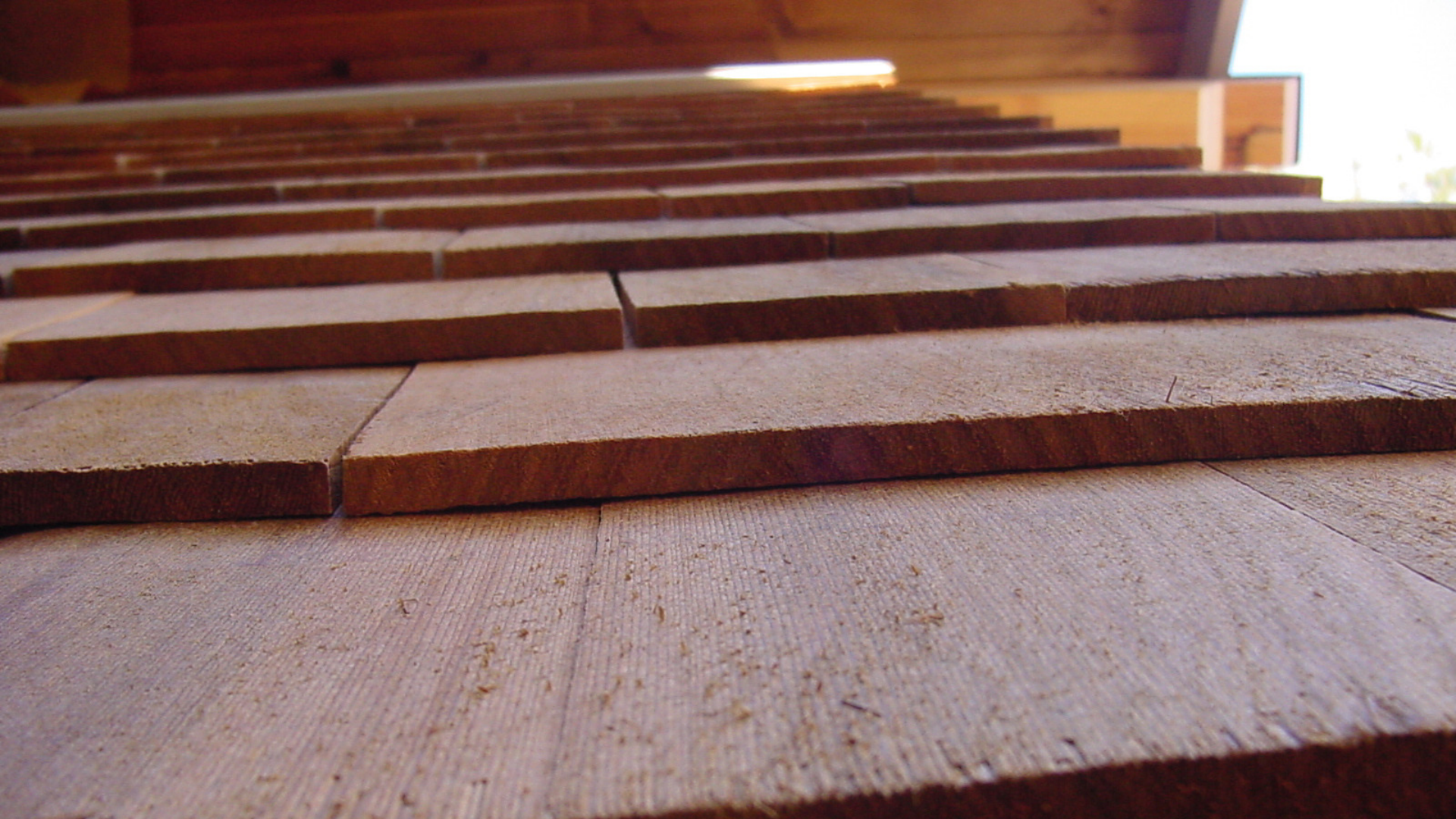
It sounds simple, but that is not the case because trees don’t always grow straight. For example, they have knots and twists. If a maker misjudges the grain, the shingle snaps in the wrong place. Sometimes it ends up too thick on one edge. As a result, you end up with a useless piece of scrap wood.
Advertisement
So why do it this way instead of just cutting them? A saw cuts right across the wood grain. That tears the wood fibers open. When it rains, water soaks into those open fibers. The wood eventually rots.
Splitting is different. Splitting pulls the wood apart along its natural seams. The fibers stay closed. Water just runs right off the smooth surface. A hand-split cedar roof can sit in the rain and snow for fifty years without rotting.
It is slow and heavy work. You swing a mallet for hours. But you end up with a roof that lasts a lifetime.
 Read Exclusive Stories
 Bookmark & Save Articles For Later