Cornell University physics researchers built microscopic robots that can sense the temperature around them. These robots don’t just measure it, they work together to change it.
“Little things can have a large impact,” said Itai Cohen, a leader in developing microscopic robots and a corresponding author on the study.
This is the first time ever that microrobots have been able to alter their physical surroundings. They do this by pumping liquid from hot areas to cold areas, or vice versa. The system senses the environment, moves fluid, and lets the microchips talk to each other.
How the Microrobots Work Together
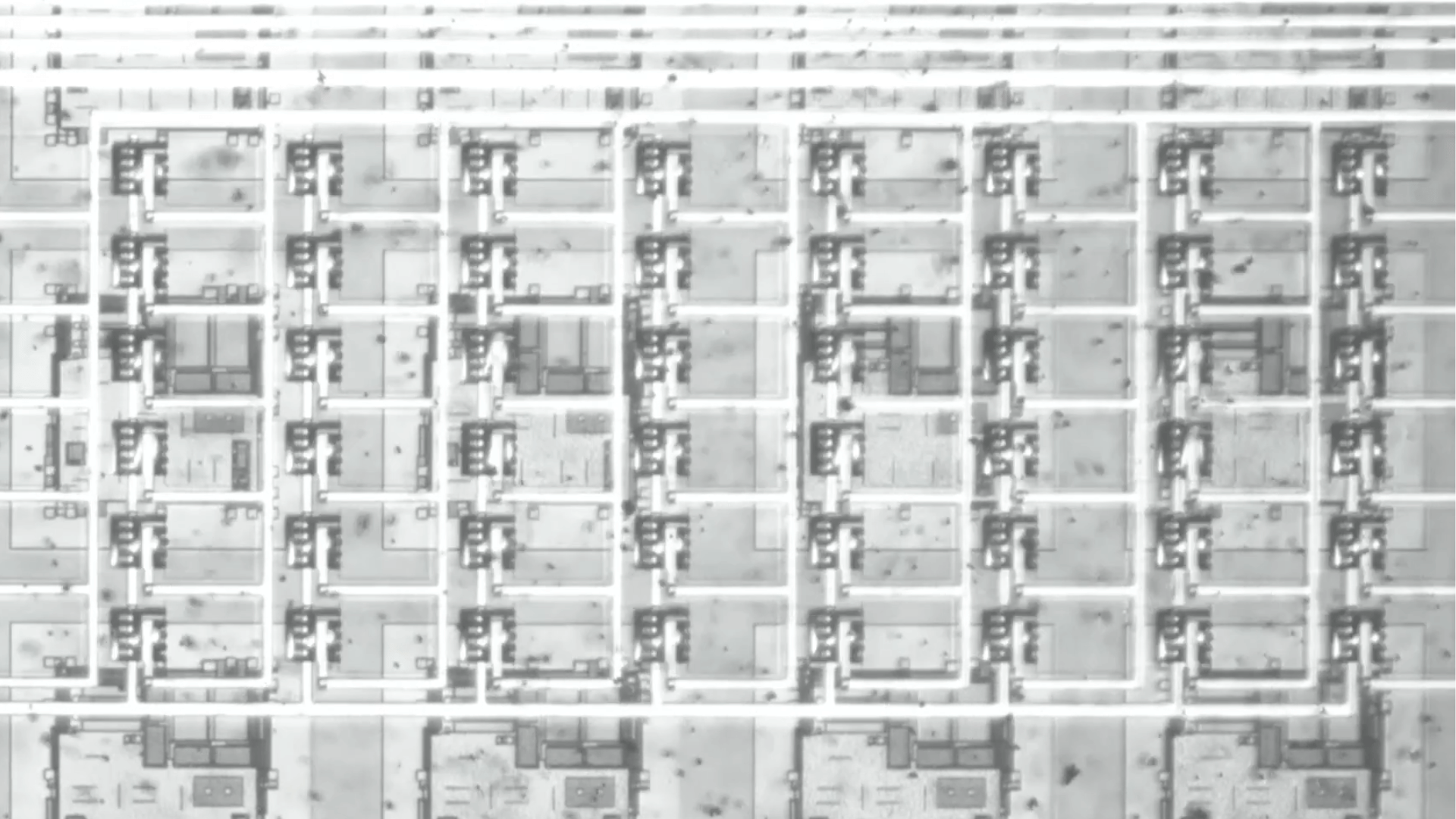
The researchers used artificial “cilia” to move the fluid. Postdoctoral researcher and co-first author Jinsong Zhang said these are inspired by the way natural cilia pump liquids. Instead of copying nature exactly, they built a two-hinge design controlled by electronic signals. These hinges move in a sequence, acting like a tiny paddle to push the liquid.
Advertisement
The team put 54 of these hinged cilia into a grid and added two temperature-sensing circuits, a leader and a follower. These circuits communicate and make all the cilia pump at the same time based on the heat.
“These circuits essentially tell the cilia array which hinge should pump when,” Cohen said. “If the temperature is above a certain point, then it says pump in the forward direction. If it’s a lower temperature, it says pump in the reverse direction.”
Building on Early Designs
This new project combines skills from earlier designs. Cohen’s lab previously made robots about a hair’s-breadth in diameter that could walk autonomously, take images, and communicate.
“We’re building out the repertoire of things these robots can do,” Cohen said. “The idea here is, how do we get them to work together to achieve big manipulations of their environment, and this is a first step.”
The study, published Sept. 23 in Nature Electronics, hints at future uses in medicine or agriculture. Down the road, these robots might respond to light or pH levels to start chemical reactions or physical movements. And instead of sitting in a fixed grid, they could be programmed to walk around independently to react to new cues in their environment.
 Read Exclusive Stories
 Bookmark & Save Articles For Later